Île de Ré – Master Pool Builder – by Travel Paradise
Île de Ré
Pool
The finest pools on the island, bespoke or turnkey
OUR EXPERTISE
Exceptional Services
From design to maintenance, we guide you through every step to make your pool a true haven of tranquillity.
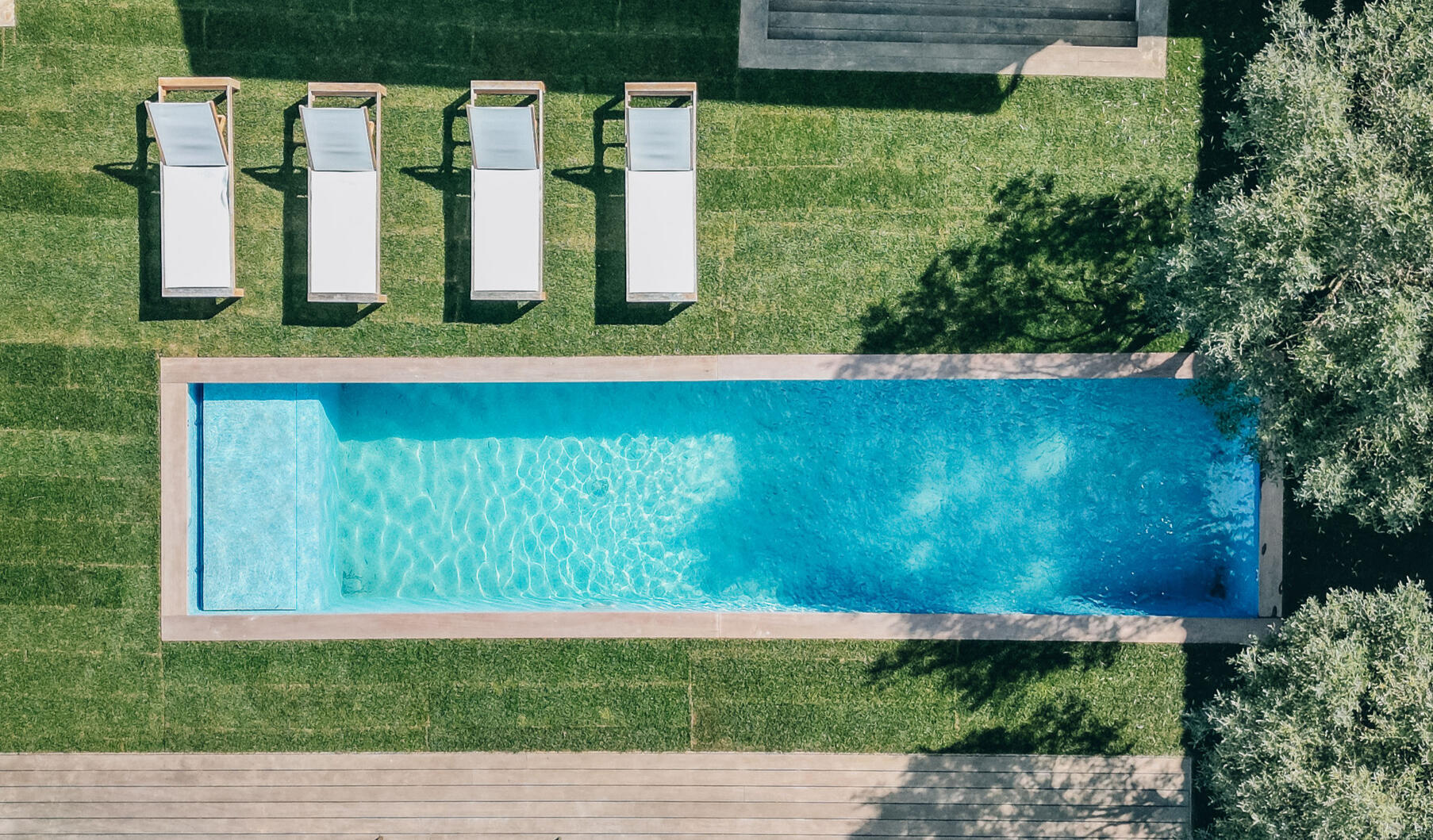
Bespoke Construction
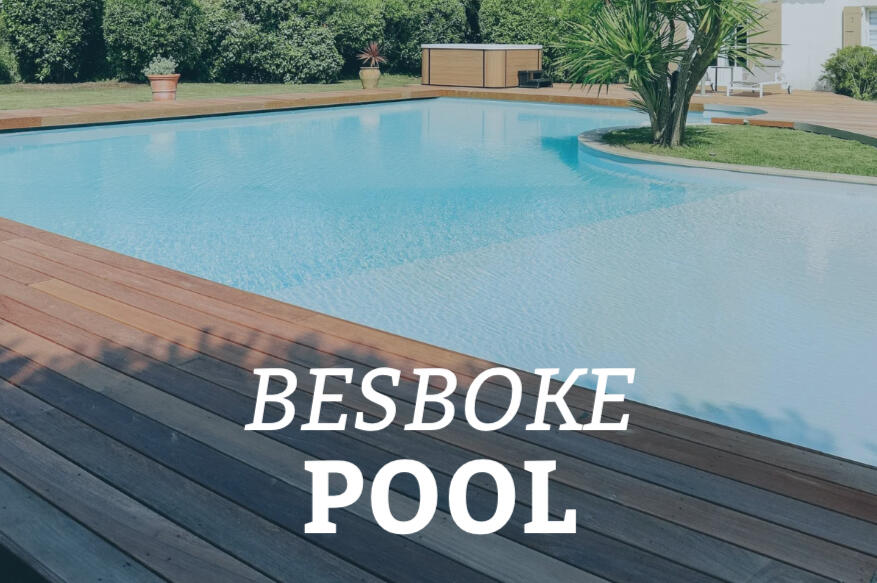
From design to completion, we create your ideal pool, seamlessly blended into the landscape of the Île de Ré. Every pool is unique, crafted to your wishes and the specific features of your plot.
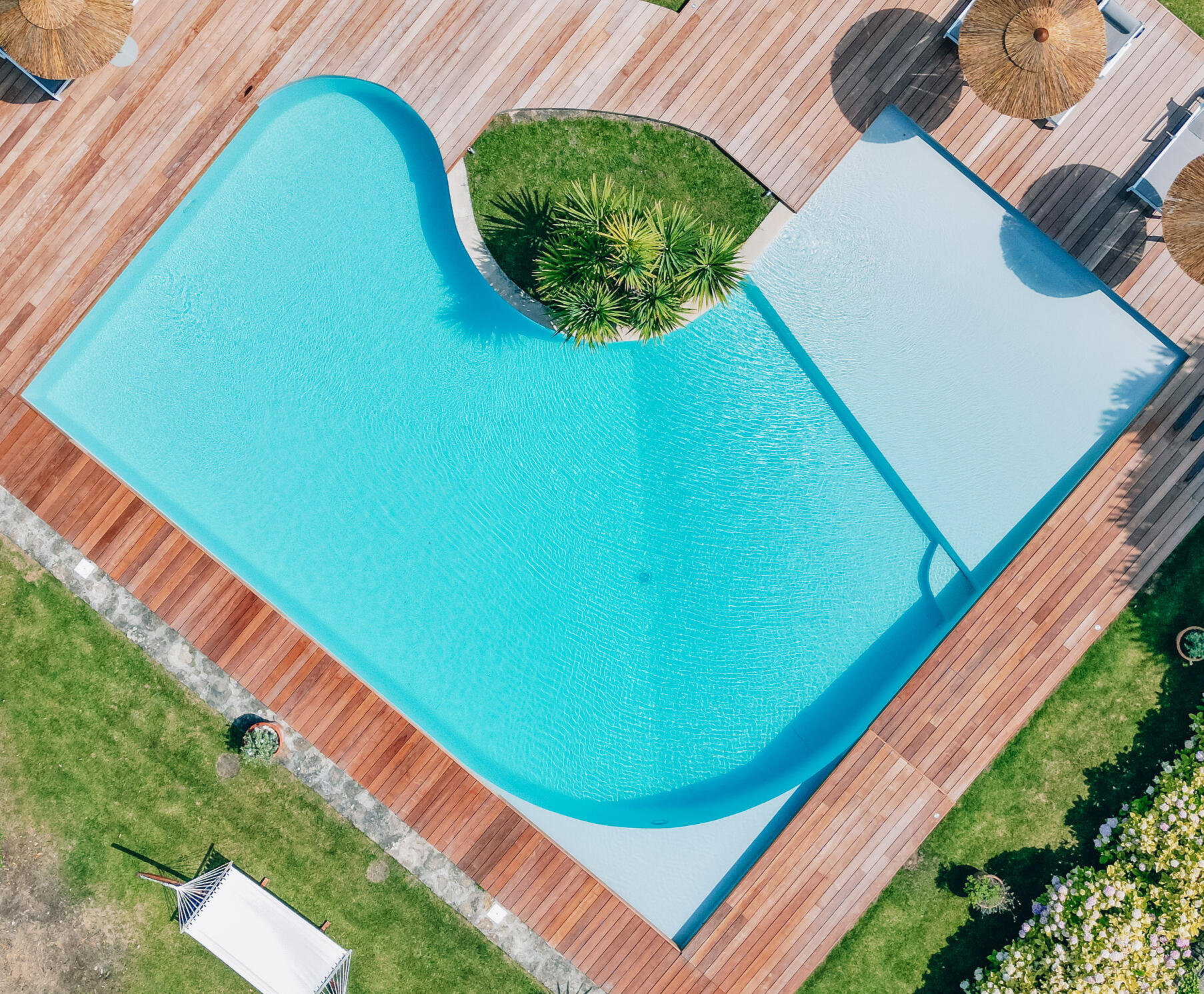
Turnkey & After-Sales Service
Dreaming of a pool without a single worry? Our turnkey package handles everything: design, groundworks, construction, landscaping and filling.
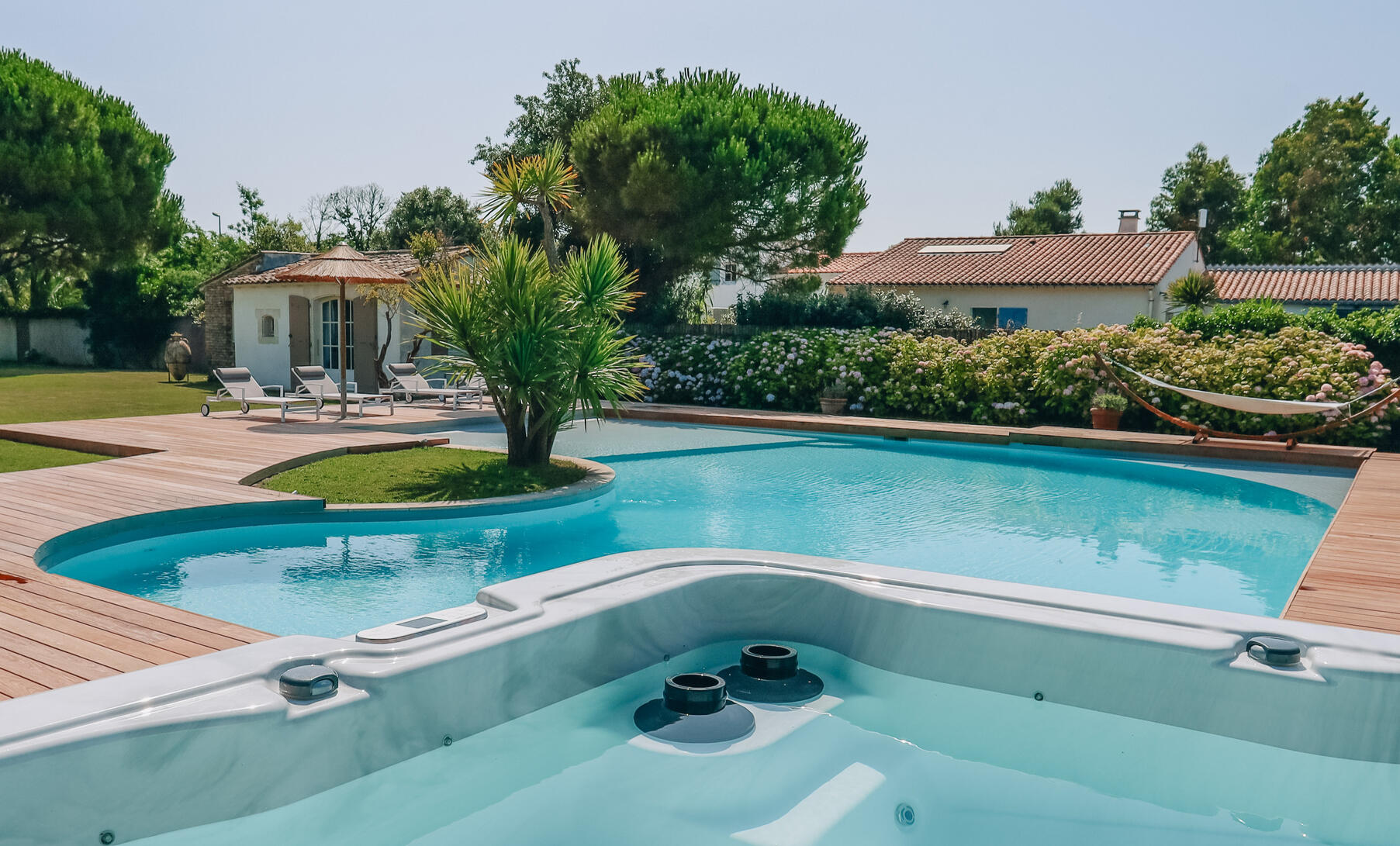
Regular Maintenance
A comprehensive maintenance service to keep your water crystal clear at all times. Water treatment, cleaning, winterisation and reopening, we take care of your pool throughout the year.
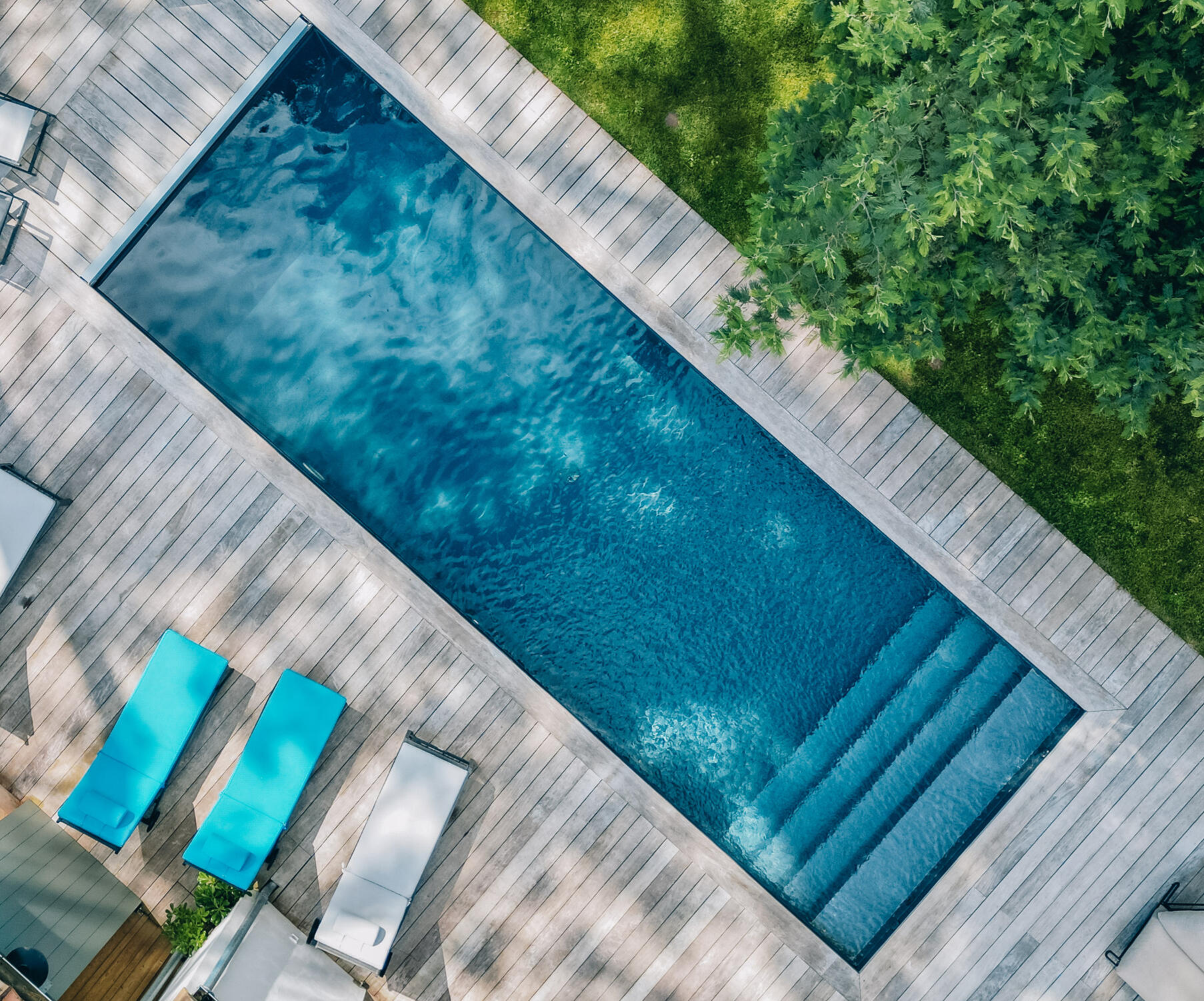
Renovation, Modernisation & Survey
Breathe new life into your existing pool. New lining, compliance upgrades, additional features, we transform your pool so it regains its full splendour.
CATALOGUE
Our Expertise
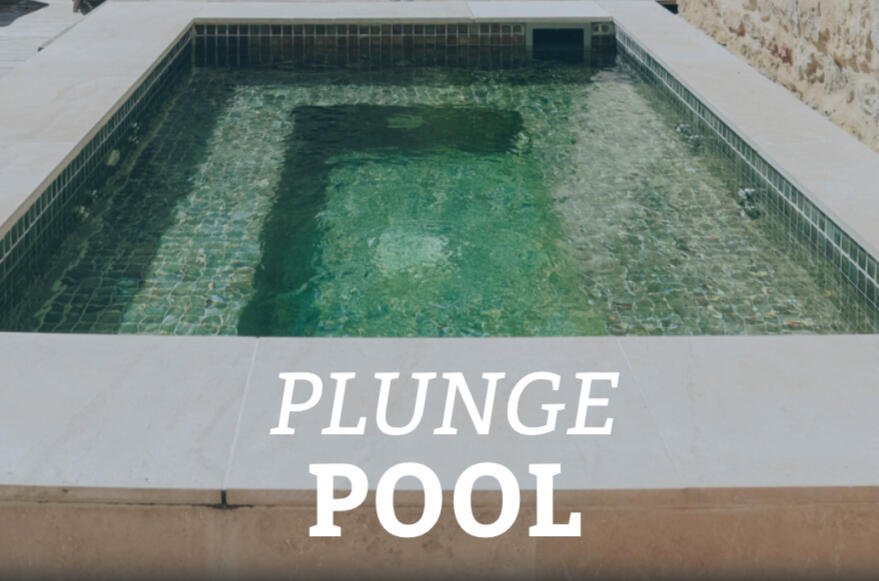
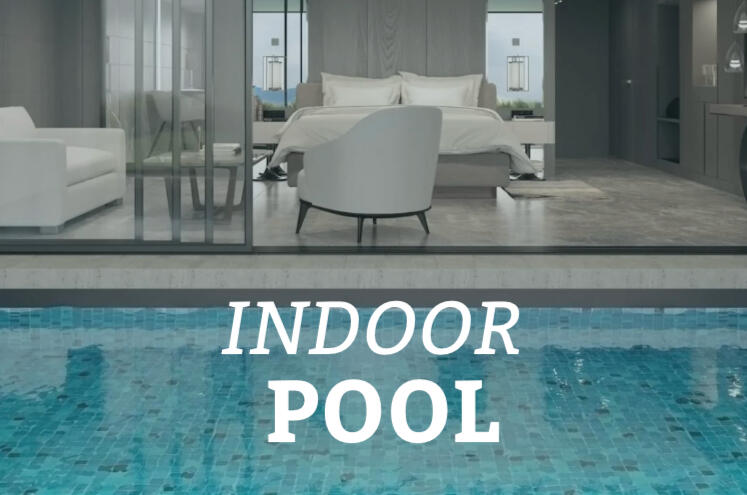
Discover our full range of pool solutions and let us guide you in finding the one that perfectly suits your project, your plot and your aspirations.
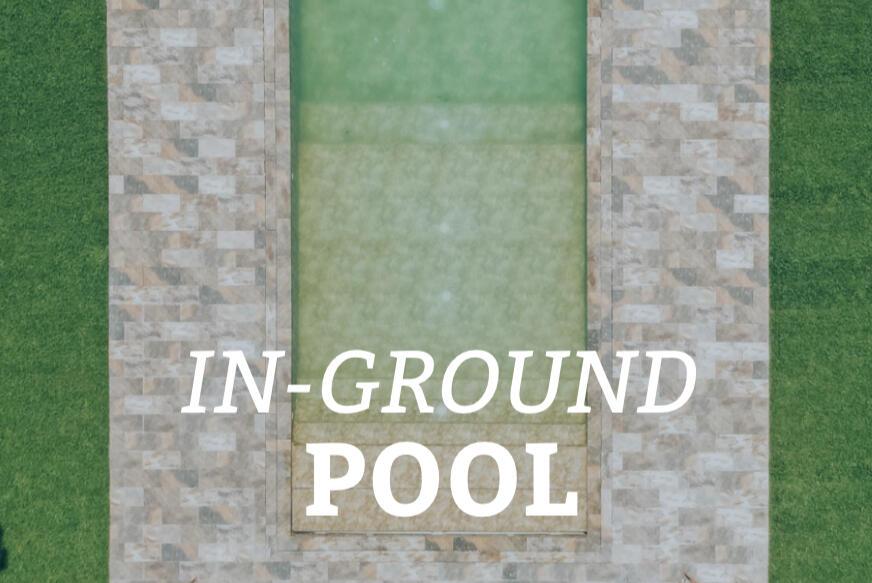
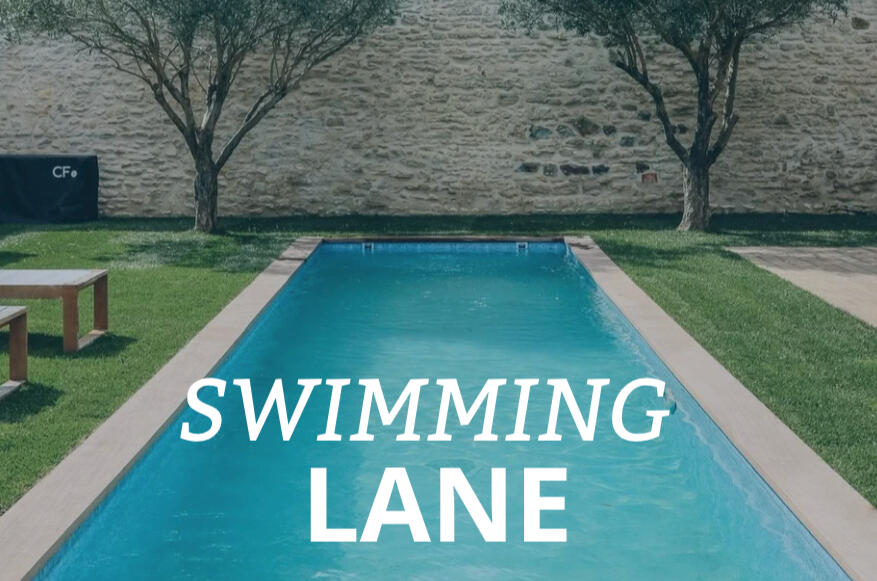
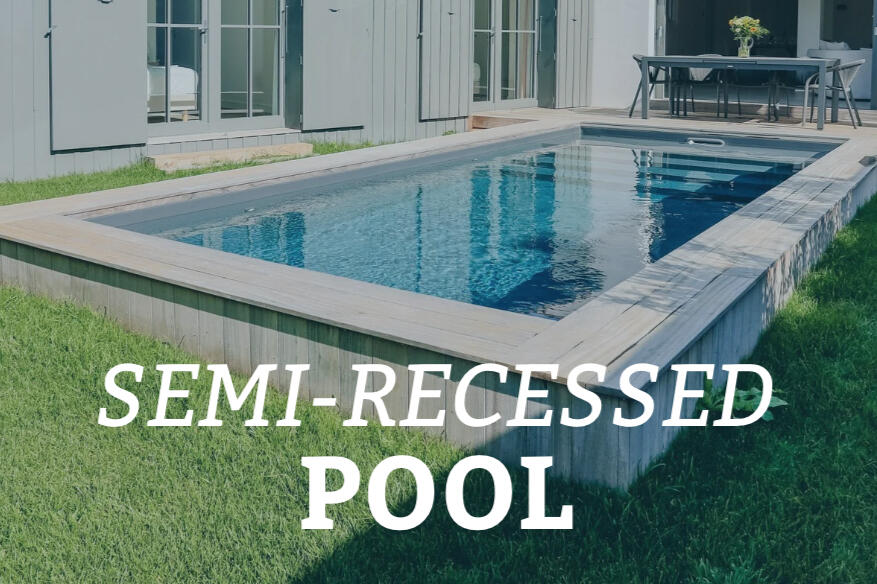
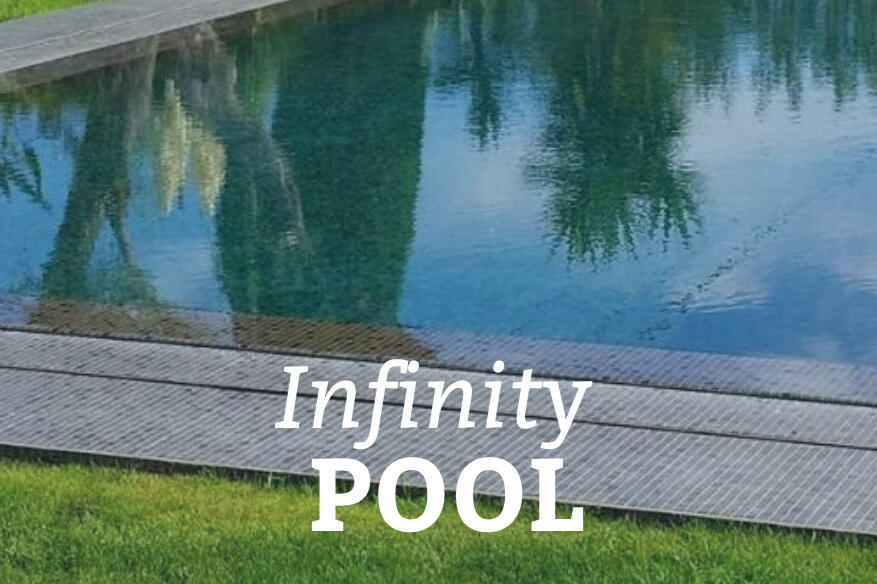


PORTFOLIO
Our Creations
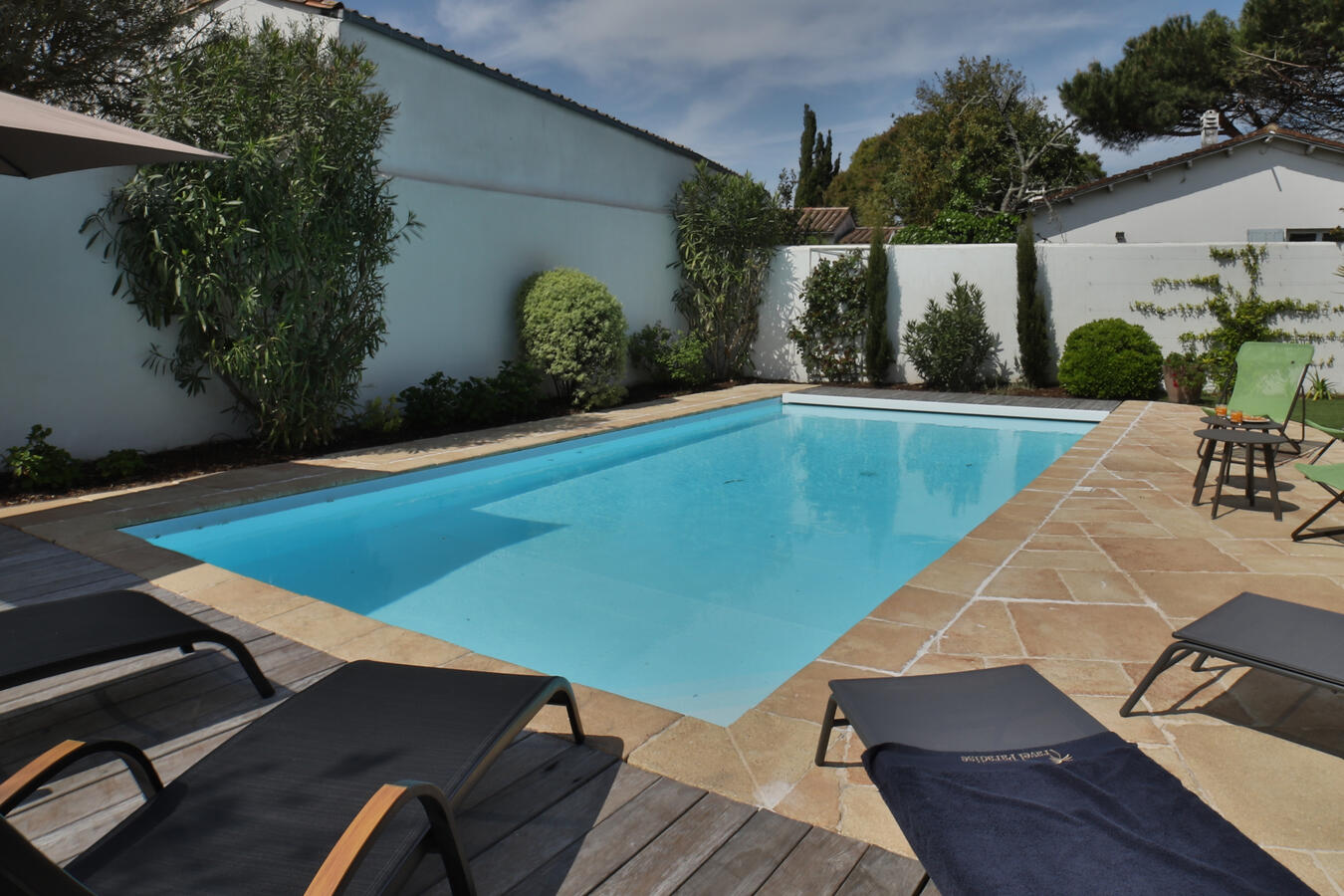
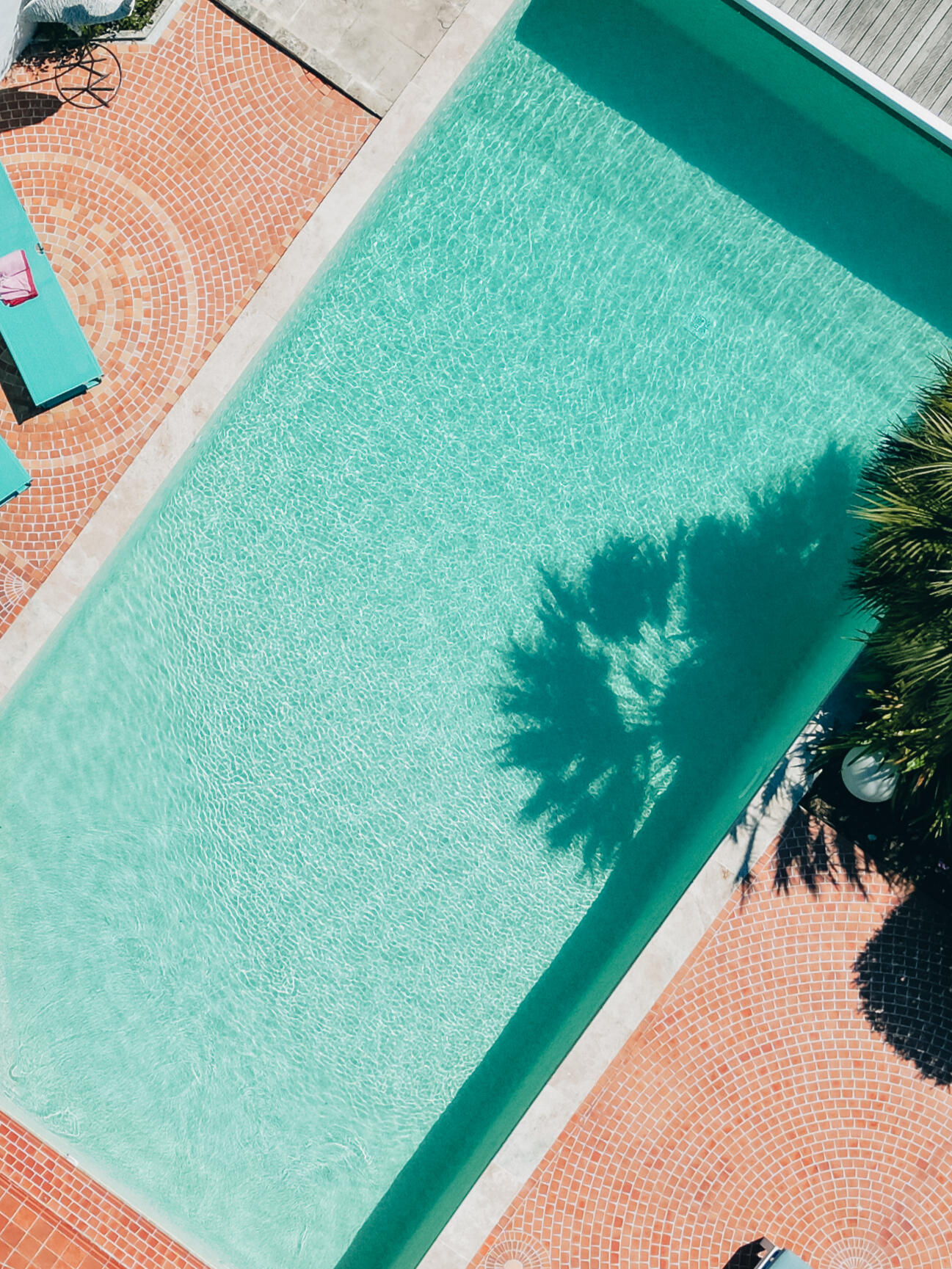
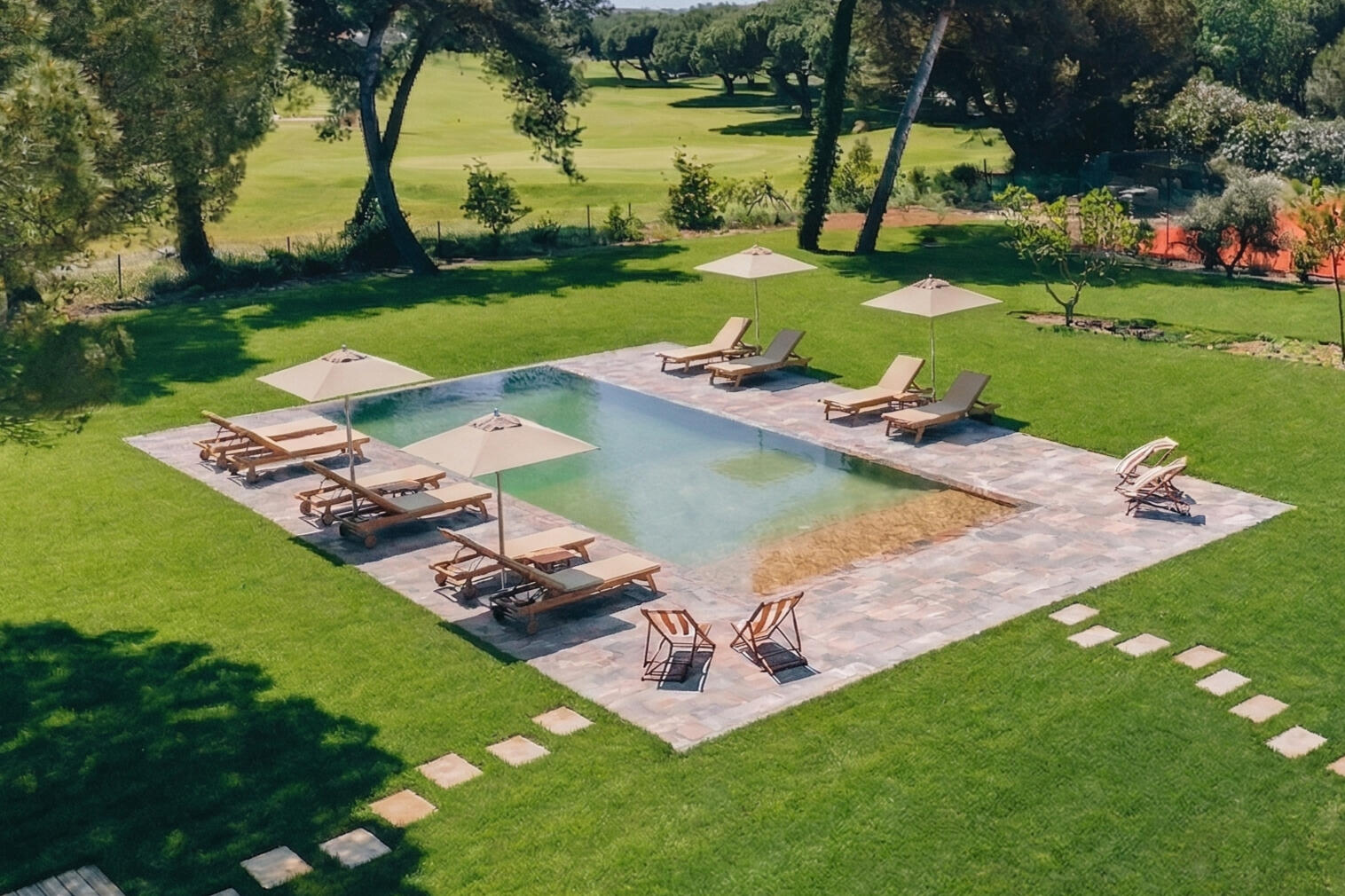
Every pool tells a story. Discover some of our creations across the Île de Ré.
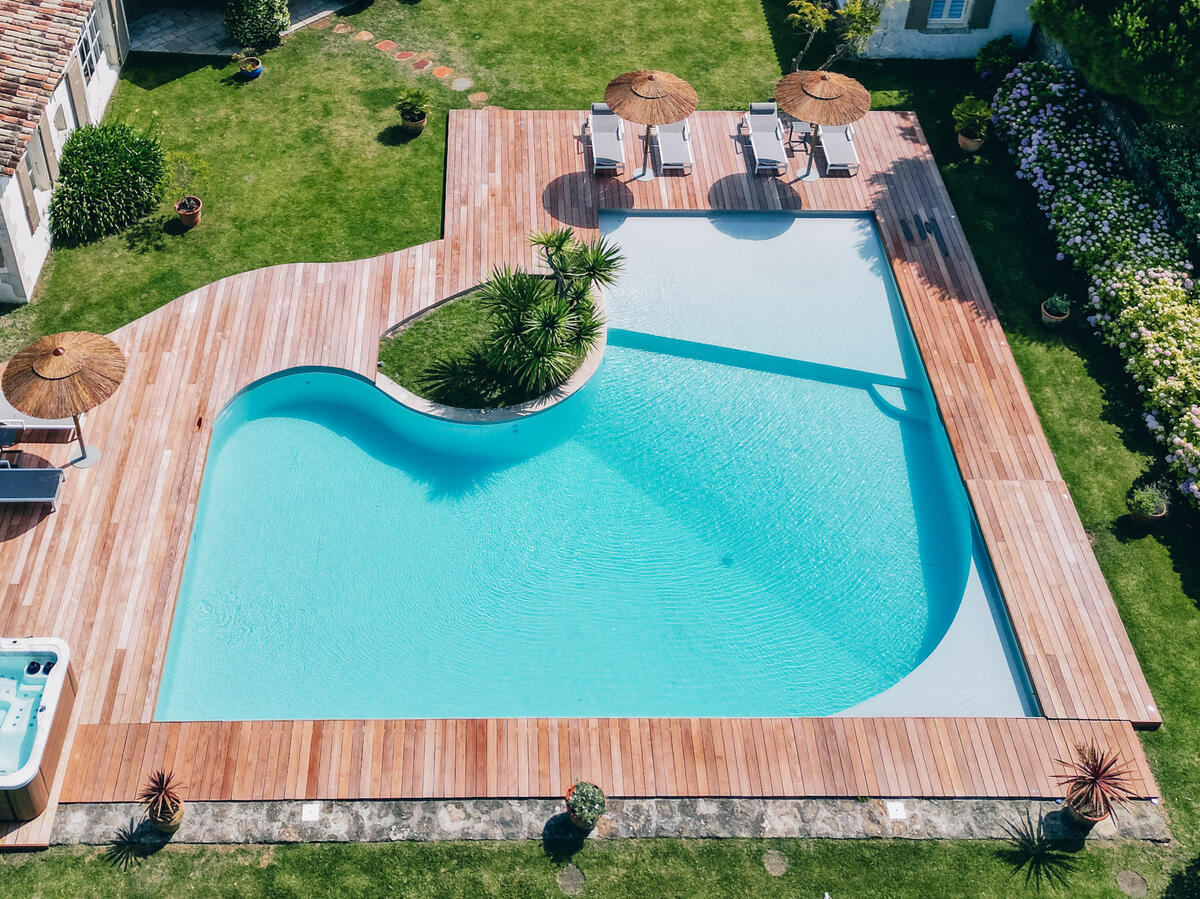
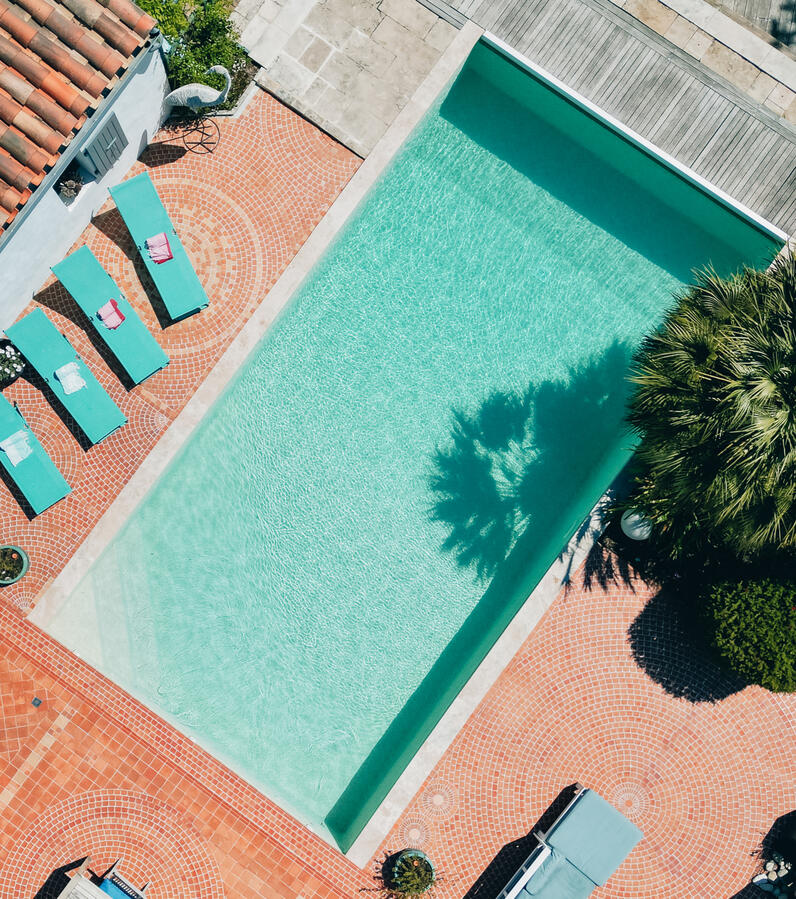
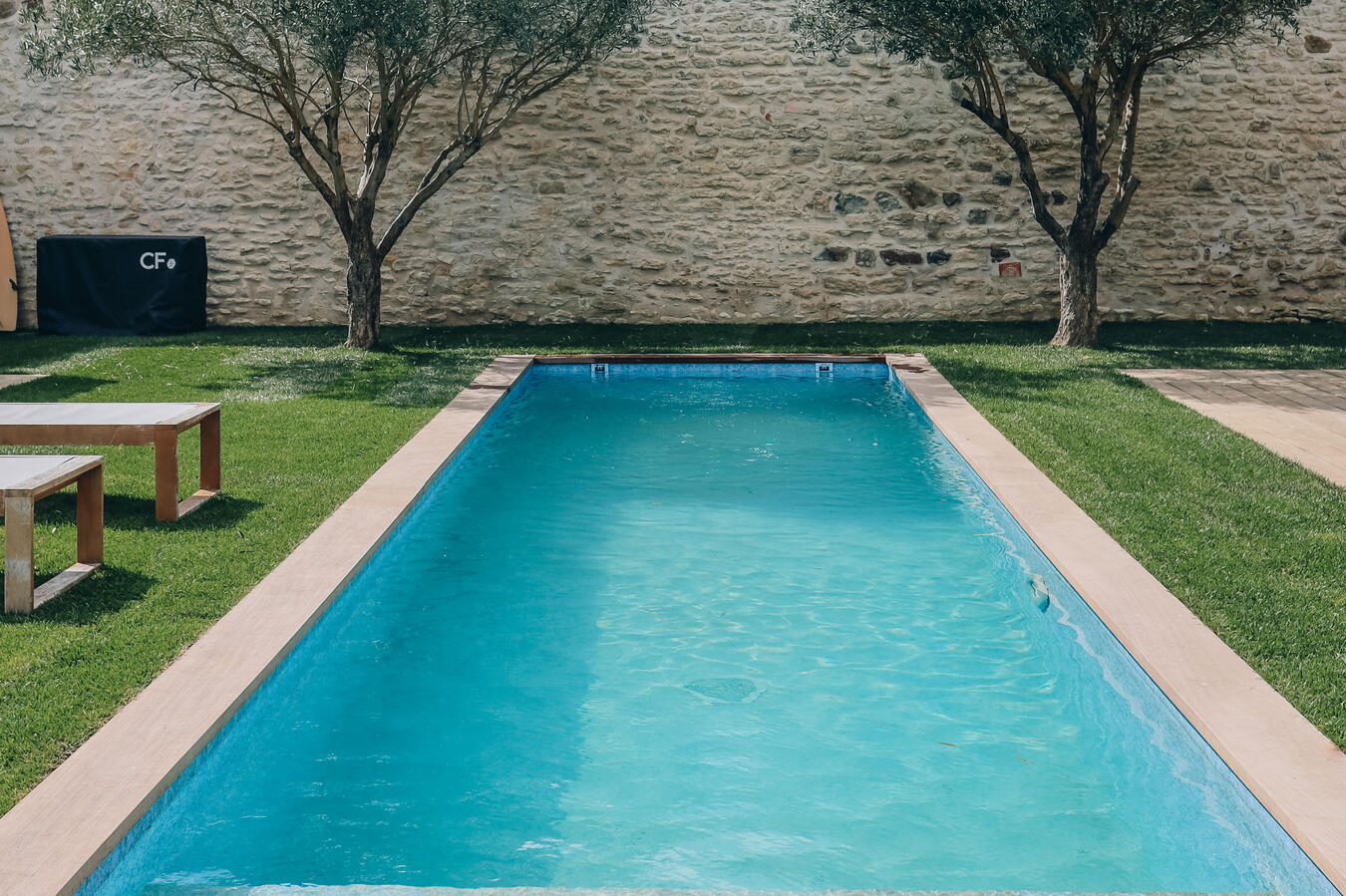
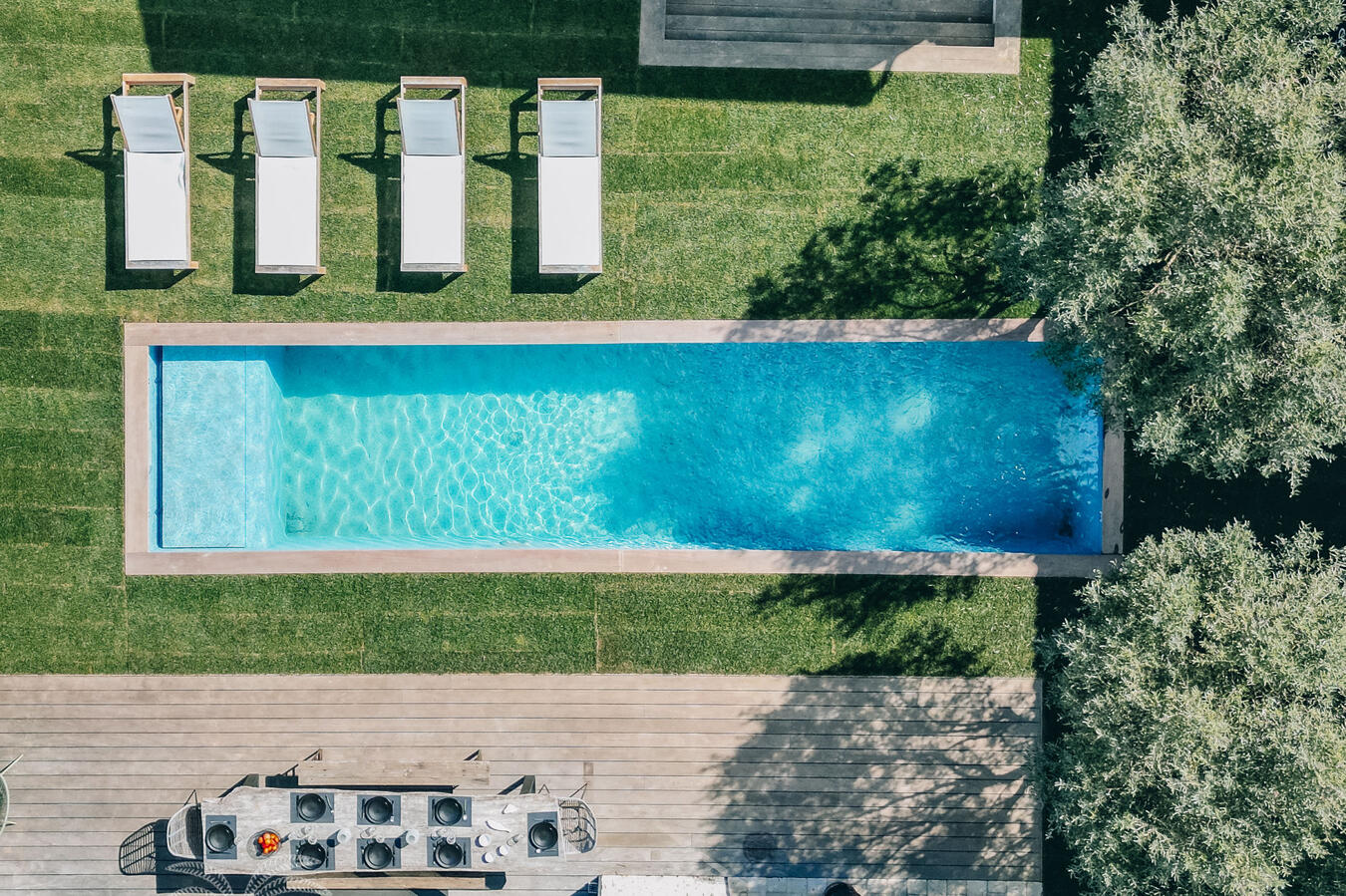
Who Are We?
The Art of the Pool, Rooted in the Island
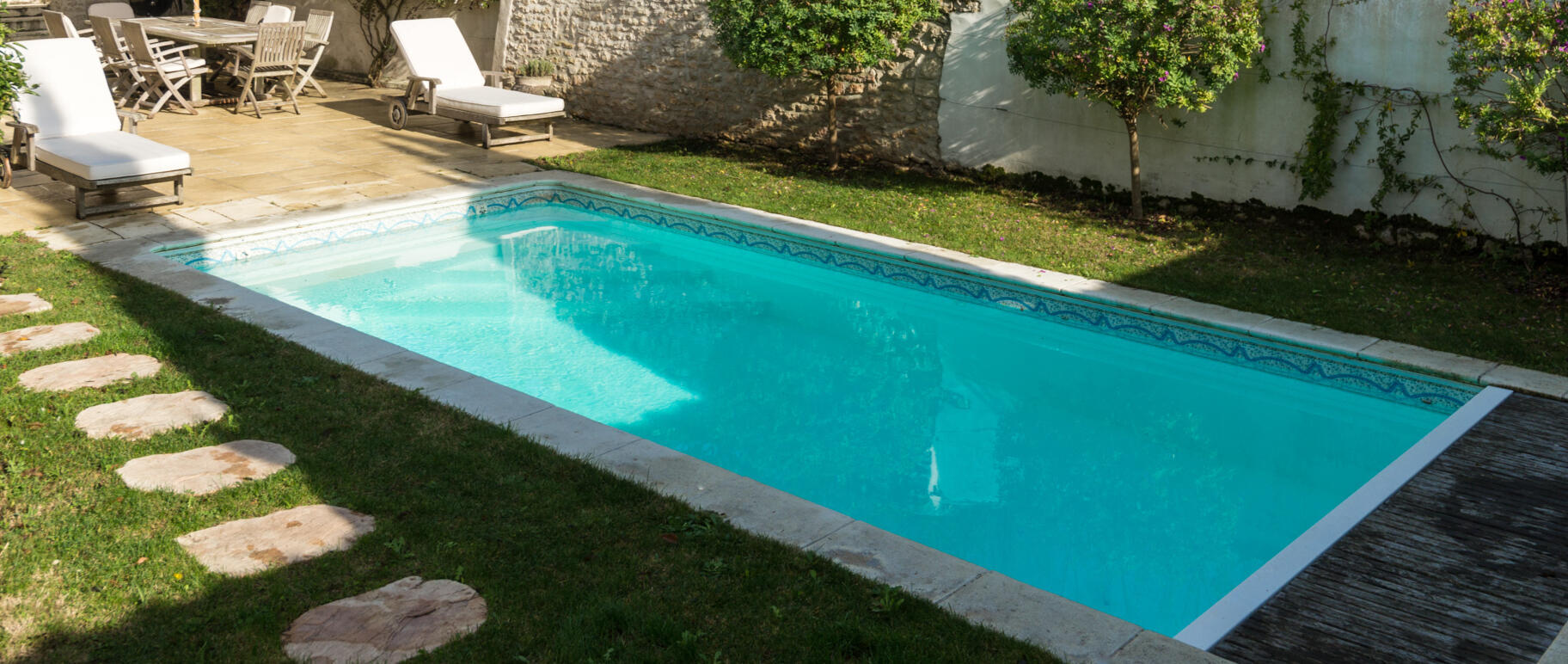
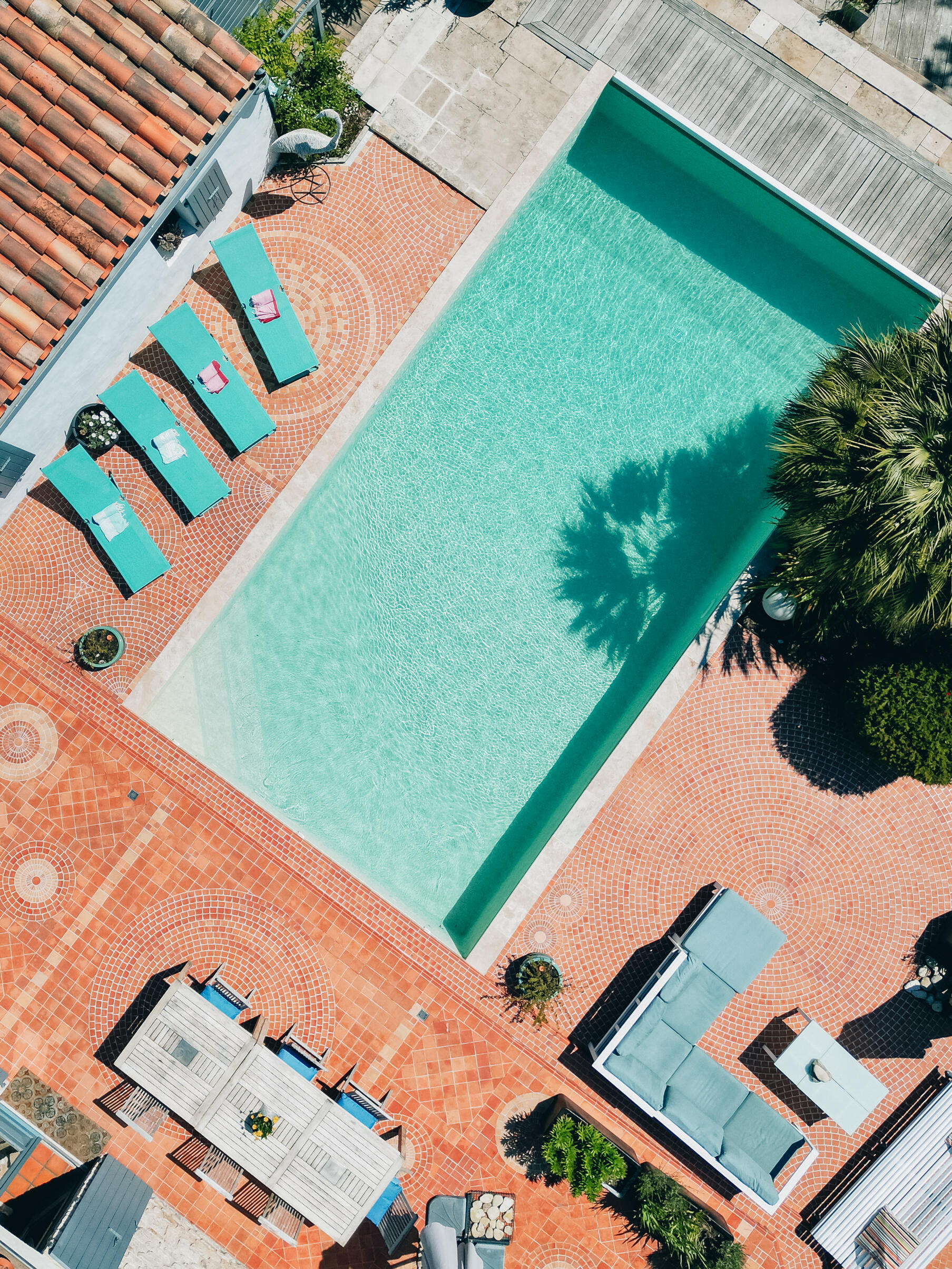
Les Bassins de Ré is a passionate, locally rooted team based on the Île de Ré.We design, build and maintain bespoke pools for private clients and professionals who expect nothing but the finest.Our promise is straightforward: personalised support from start to finish, carefully selected materials, deadlines that are met and attentive listening at every stage of your project. Whether you dream of an intimate pool tucked away at the bottom of your garden or an aquatic space designed to welcome dozens of holidaymakers, we bring our full expertise to bear on your vision.Young, demanding and passionate, we build our reputation one creation at a time.
TESTIMONIALS
What Our Clients Say
OUR STYLES
The Île de Ré, Seen Differently
Les Bassins de Ré is part of an ecosystem of services dedicated to the art of living
on the Île de Ré.
Discover our other ventures.
TRAVEL & STAYS
TRAVEL PARADISE
Prestige villa rentals and exceptional stays on the Île de Ré. So that your summer is every bit as remarkable as your pool.
SERVICES & CONCIERGE
CONCIERGERIE RÉTAISE
Whether you are a property owner or a holidaymaker, enjoy the island without a care in the world. La Conciergerie Rétaise handles everything on your behalf, with discretion and expertise.
GET IN TOUCH
Let's Talk About Your Project
Thinking of having a pool on the Île de Ré? Get in touch for a free, personalised quote.
GET IN TOUCH
Let's Talk About Your Project
Thinking of having a pool on the Île de Ré? Get in touch for a free, personalised quote.
Bespoke pool construction
You have a plot, a desire, a vision? We bring it to life. Our team takes charge of your entire project, from the initial technical survey through to your first swim.Every pool we build is conceived in harmony with the architecture and unique character of the Île de Ré : white stone, Atlantic light, unspoilt gardens. Nothing here is off the shelf. Everything can be configured to your requirements.From groundworks to filling, we remain your single point of contact, guaranteeing both quality and timescales.
TURNKEY PROJECT
What Your Project Includes
① On-site visit & feasibility study
② Bespoke design and 3D plans
③ Groundworks and civil engineering
④ Sprayed concrete construction (gunite)
⑤ Choice of finish
⑥ Filtration, plumbing & fittings
⑦ Bespoke steps, pool deck and coping stones
⑧ Filling, commissioning & handover briefing
Regular maintenance of your pool
SPRING
Reopening, chlorine shock treatment, post-winter equipment check
AUTUMN
Winterisation preparation, algaecide treatment, pool protection
Crystal-clear, well-balanced water doesn't happen by chance. It is the result of regular, precise monitoring carried out by trained technicians, not a handful of products thrown in at the weekend.Our maintenance contract frees you from all technical concerns, from the spring opening through to the autumn winterisation. You enjoy, we manage.After each visit, you receive a full service report : water parameters, work carried out, any recommendations. Complete transparency.
SUMMER
Regular visits, water analysis, thorough pool
cleaning
WINTER
Active or passive winterisation depending on your installation and the weather
① Water analysis and treatment
② Thorough pool cleaning
③ Sand filter draining and cleaning
④ Pump inspection and servicing
⑤ Safety equipment inspection
⑥ Skimmer and basket cleaning
⑦ Wall brushing and floor vacuuming
⑧ Active or passive winterisation at the end of the season
⑨ Spring reopening & chlorine shock treatment
⑩ Service report after every visit

Turnkey & After-Sales Service –
From Zero to Your First Swim
① Scoping meeting & personalised advice
② Administrative procedures & planning permission
③ Construction, finish & fittings of your choice
④ Installation of pool fencing & safety features
⑤ Filling, calibration & first water analysis
The Turnkey package means absolute peace of mind. You have a project, a vision, or perhaps simply a desire. We take care of everything else.From the first meeting through to the handover of keys, a single point of contact coordinates architects, builders, pool specialists, landscapers and all administrative procedures. You manage nothing.Furthermore, a Les Bassins de Ré pool is an investment built to last. To ensure it continues to meet your expectations year after year, we offer a comprehensive after-sales service: survey, parts, callout and ongoing support.You enjoy, we watch over it.
⑥ Architectural design & landscaping integration
⑦ Groundworks and all trades
⑧ Pool deck, terrace & surround landscaping
⑨ Plant room & equipment installation
⑩ Handover of keys
EVERYTHING IS INCLUDED
- Bespoke design & 3D plans
- Planning permission and - declarations
- Coordination of all trades
- Complete exterior landscaping
- Safety compliance and standards
- Handover and user training
Renovation, modernisation & survey of your pool
BEFORE
Cracks, worn lining, ageing equipment… Your pool has lost its lustre and no longer meets current safety standards.
An ageing pool is not a lost cause. With the right survey and the right approach, we give it a lasting new lease of life, often for considerably less than a full rebuild.We work on all types of pools: concrete, liner and polyester, and handle compliance with current safety regulations (the 2004 legislation and its subsequent amendments).A single point of contact from survey through to recommissioning. No unwelcome surprises.We carry out comprehensive surveys to swiftly identify any anomalies and ensure the performance of your installation. This approach allows us to intervene efficiently and prevent more significant repairs further down the line.
AFTER
A pool as good as new: watertight, safe, bright and energy-efficient. Ready to welcome your Île de Ré summers once more.
① Full condition survey of the pool
② Waterproofing restoration & crack treatment
③ Lining replacement
④ Safety compliance upgrade
⑤ Filtration unit replacement
⑥ Colour LED lighting modernisation
⑦ Addition of swimming jets, waterfalls or hydrotherapy
⑧ Pool deck and coping stone renovation
⑨ High-pressure cleaning & algaecide treatment
⑩ Recommissioning & quality control
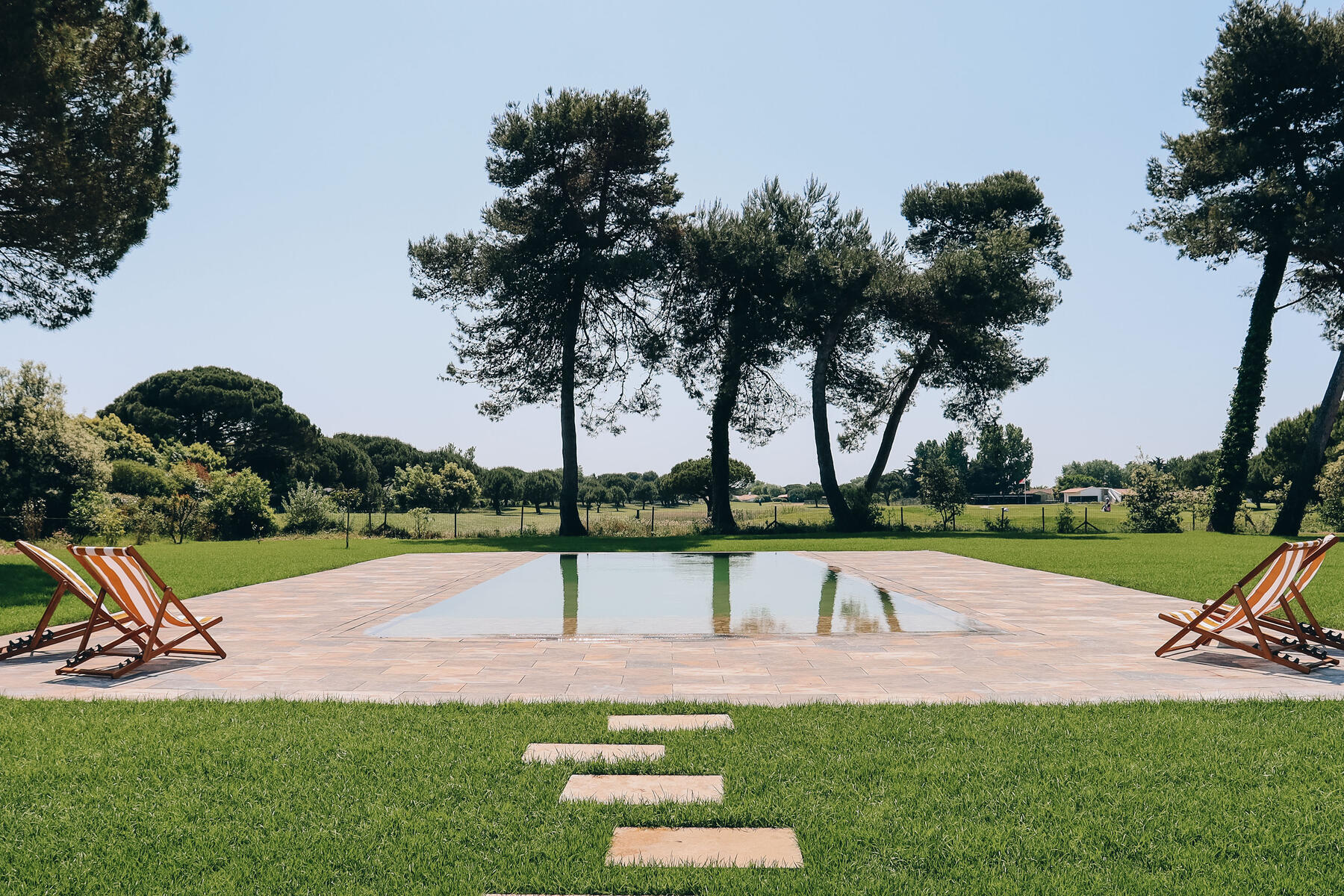
PORTFOLIO
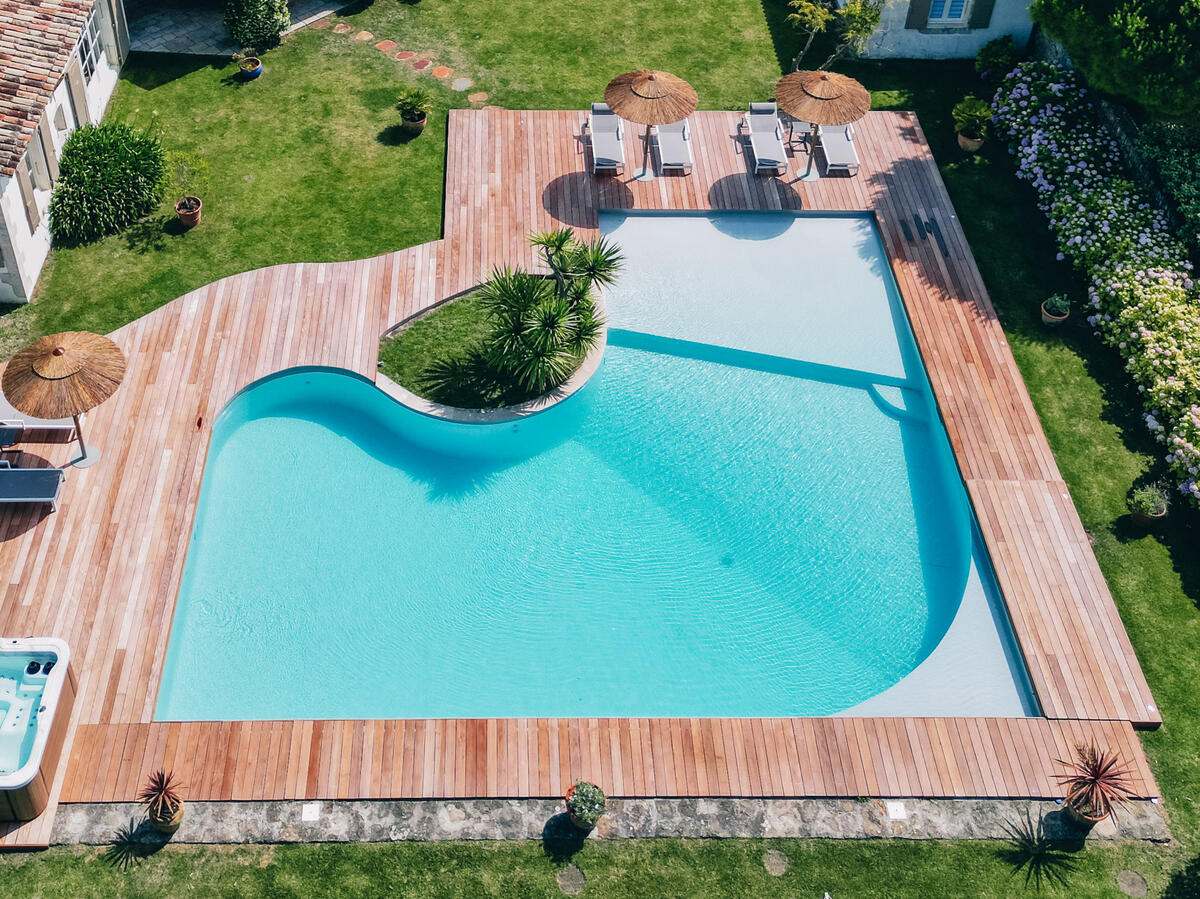
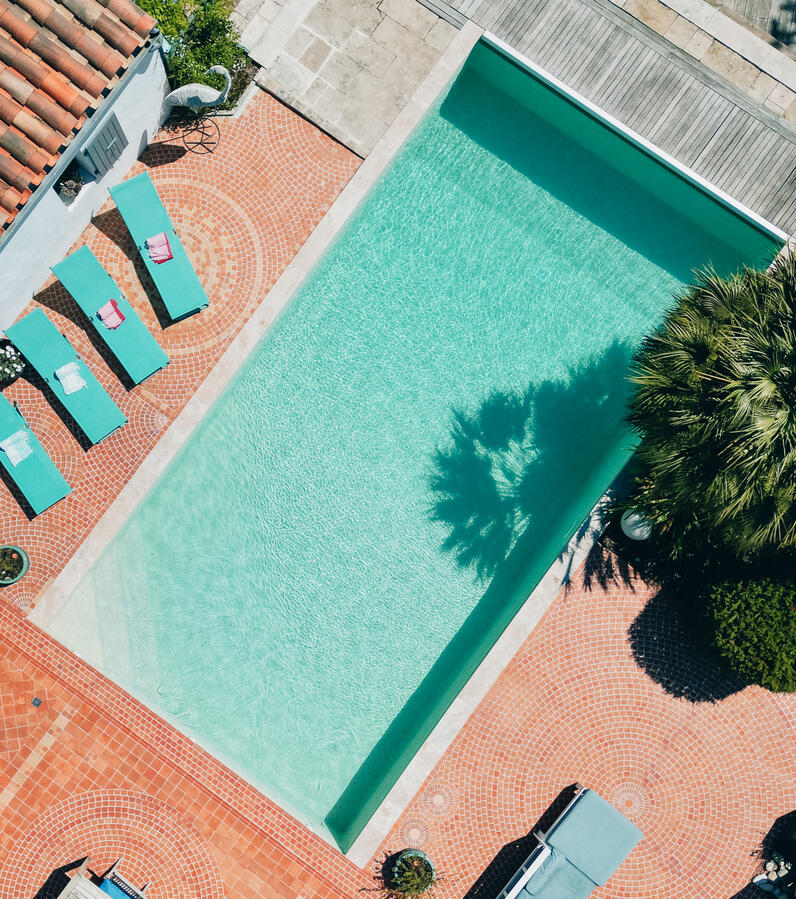
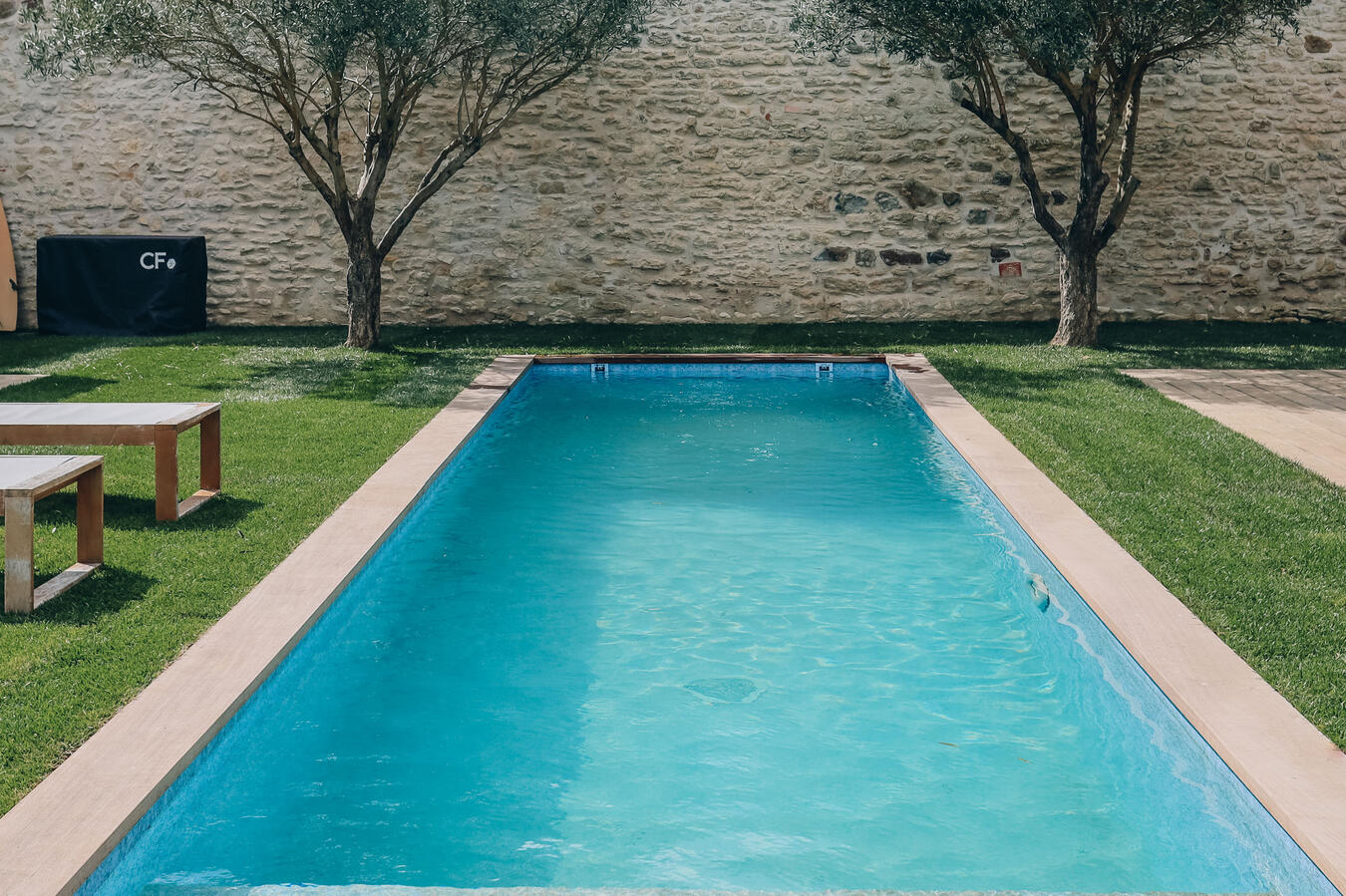
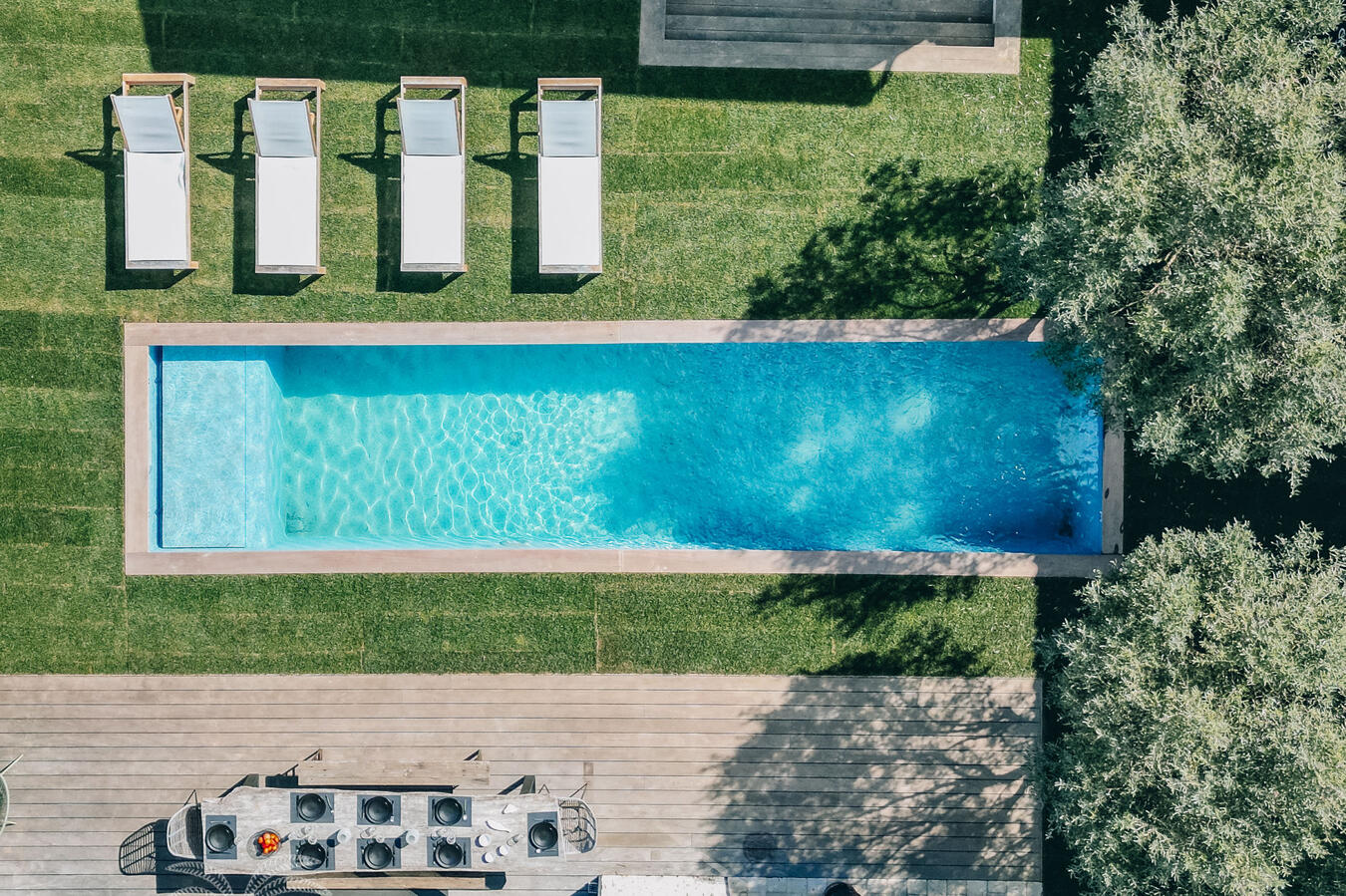
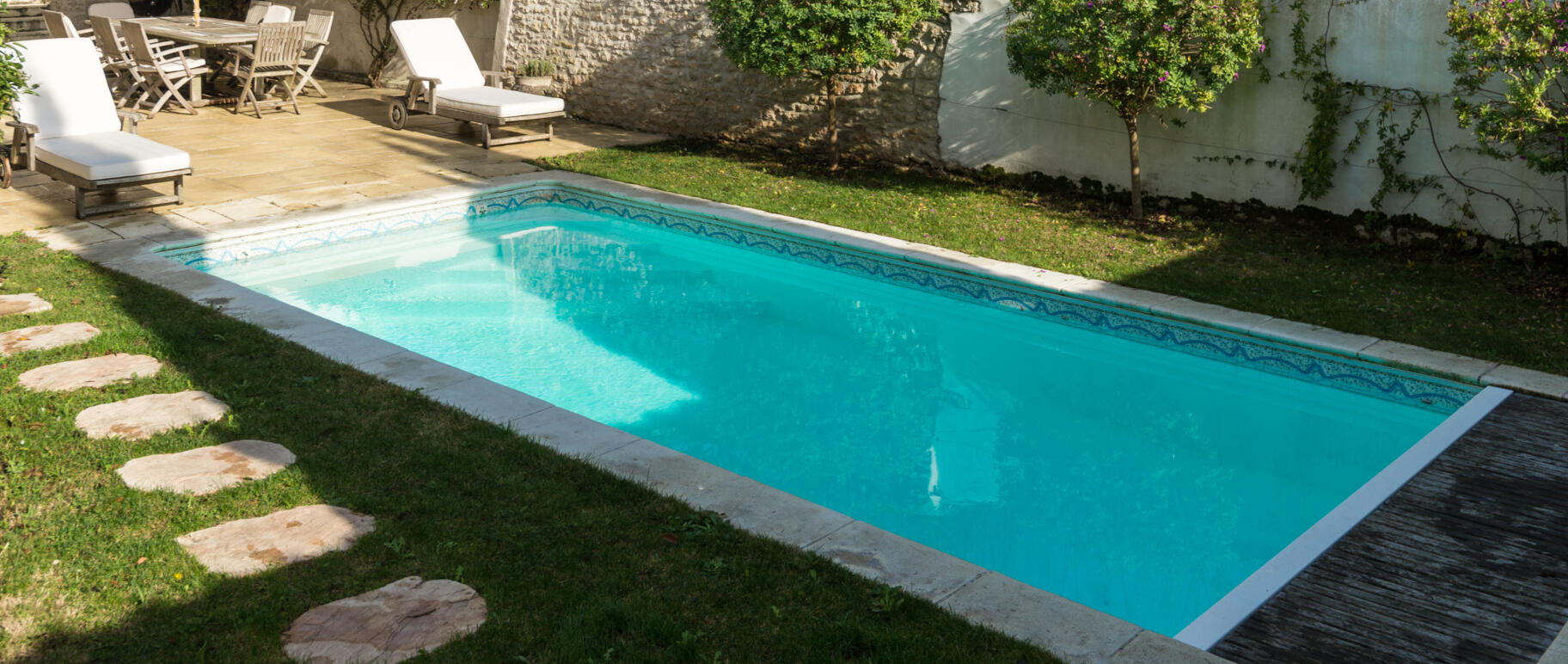
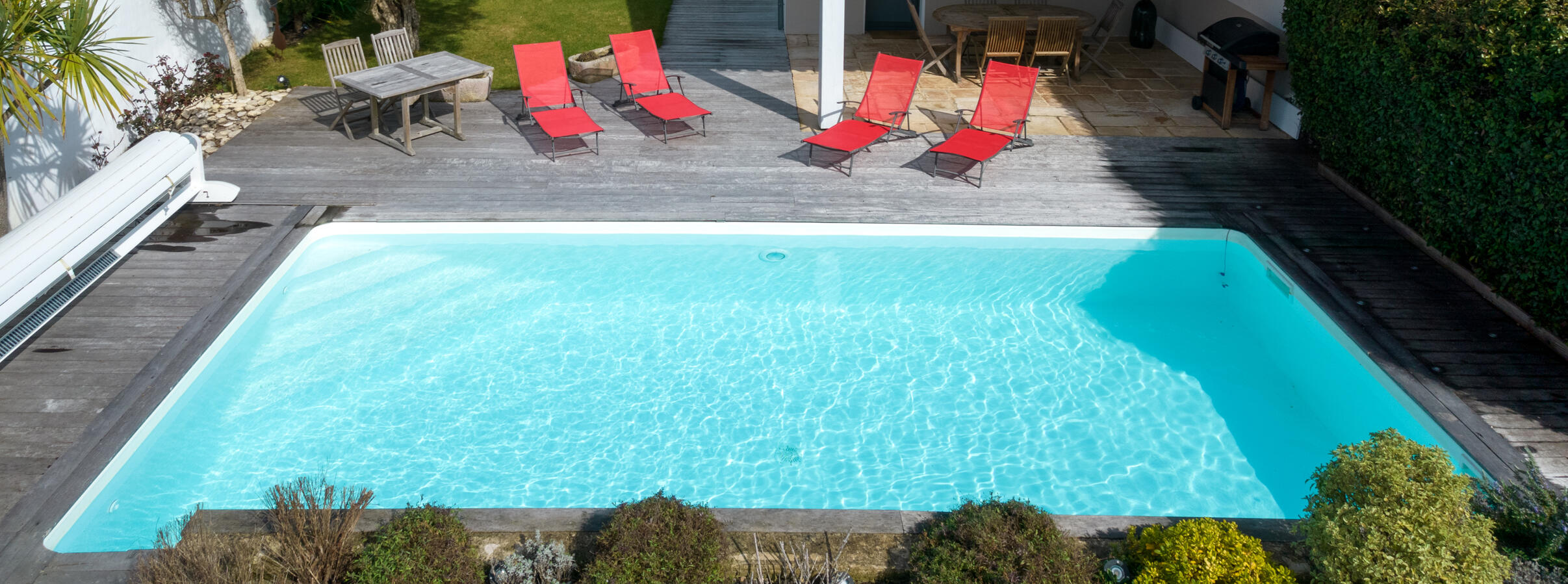
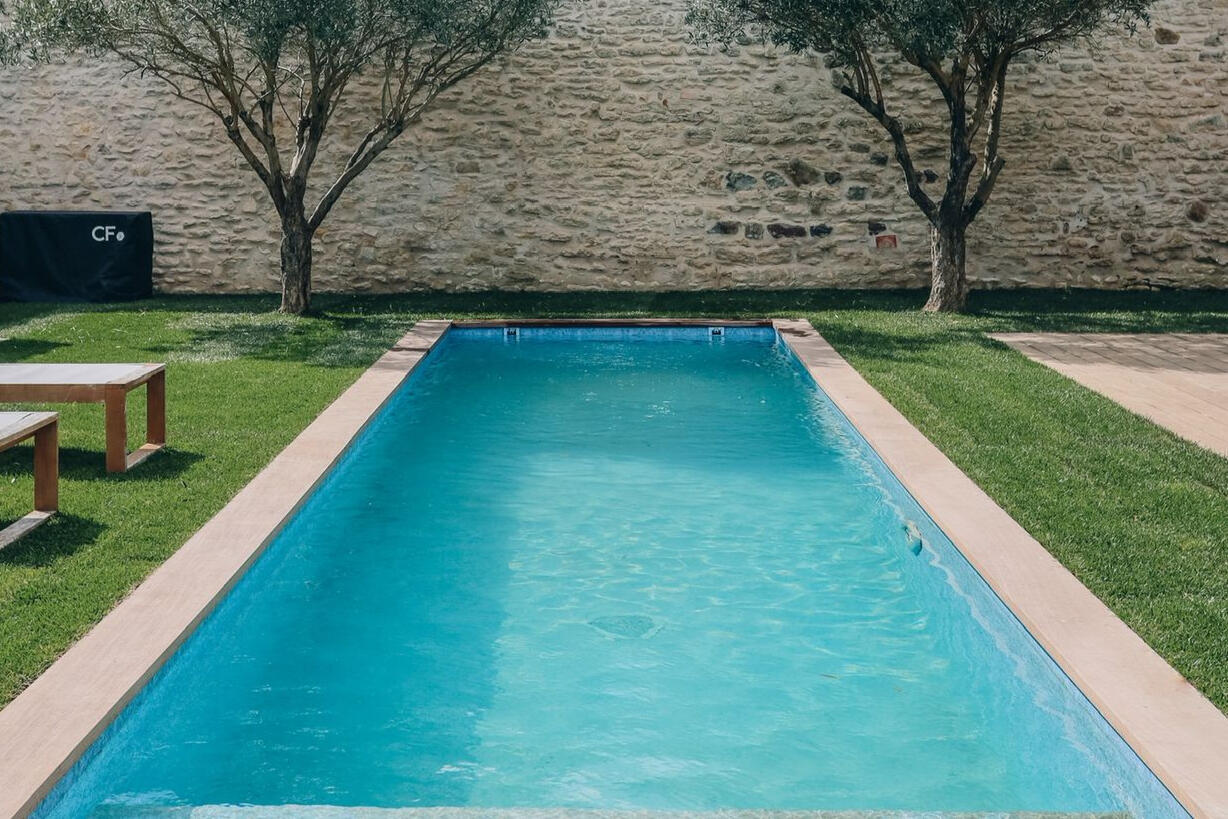
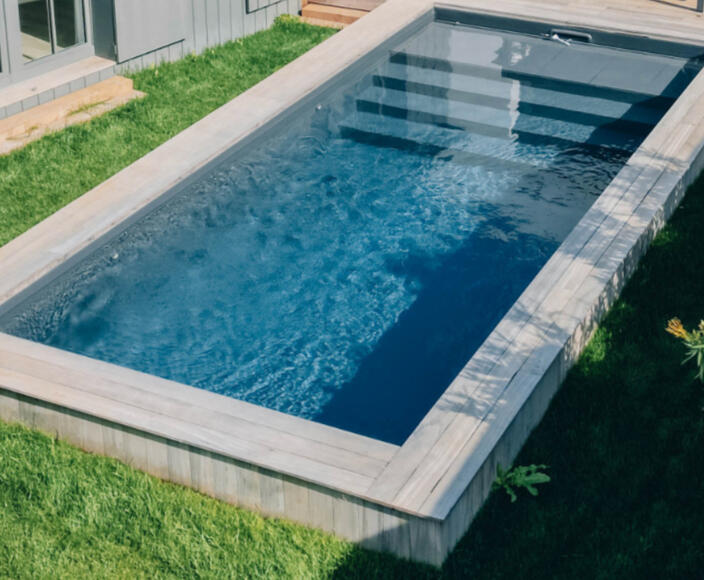
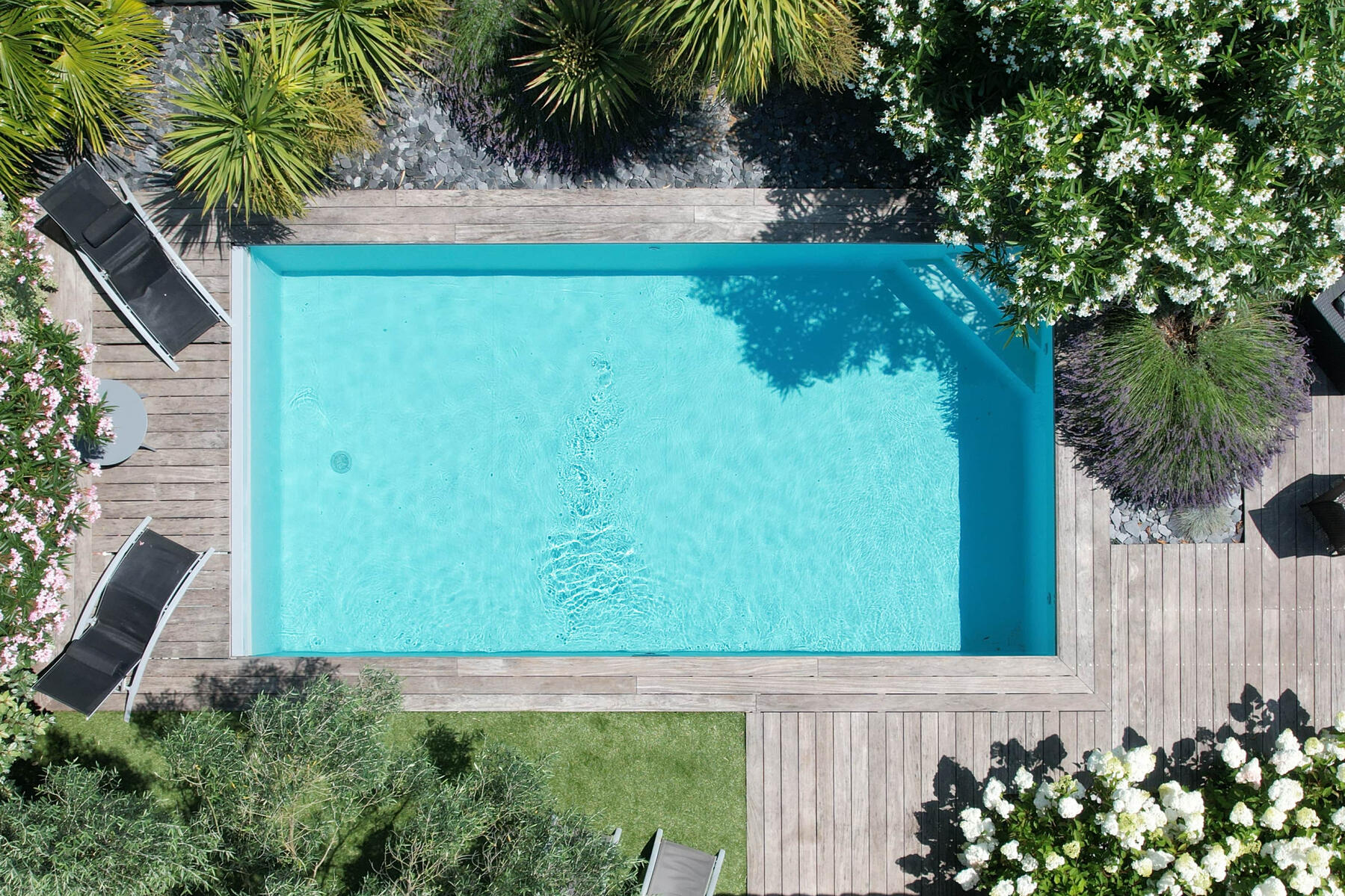
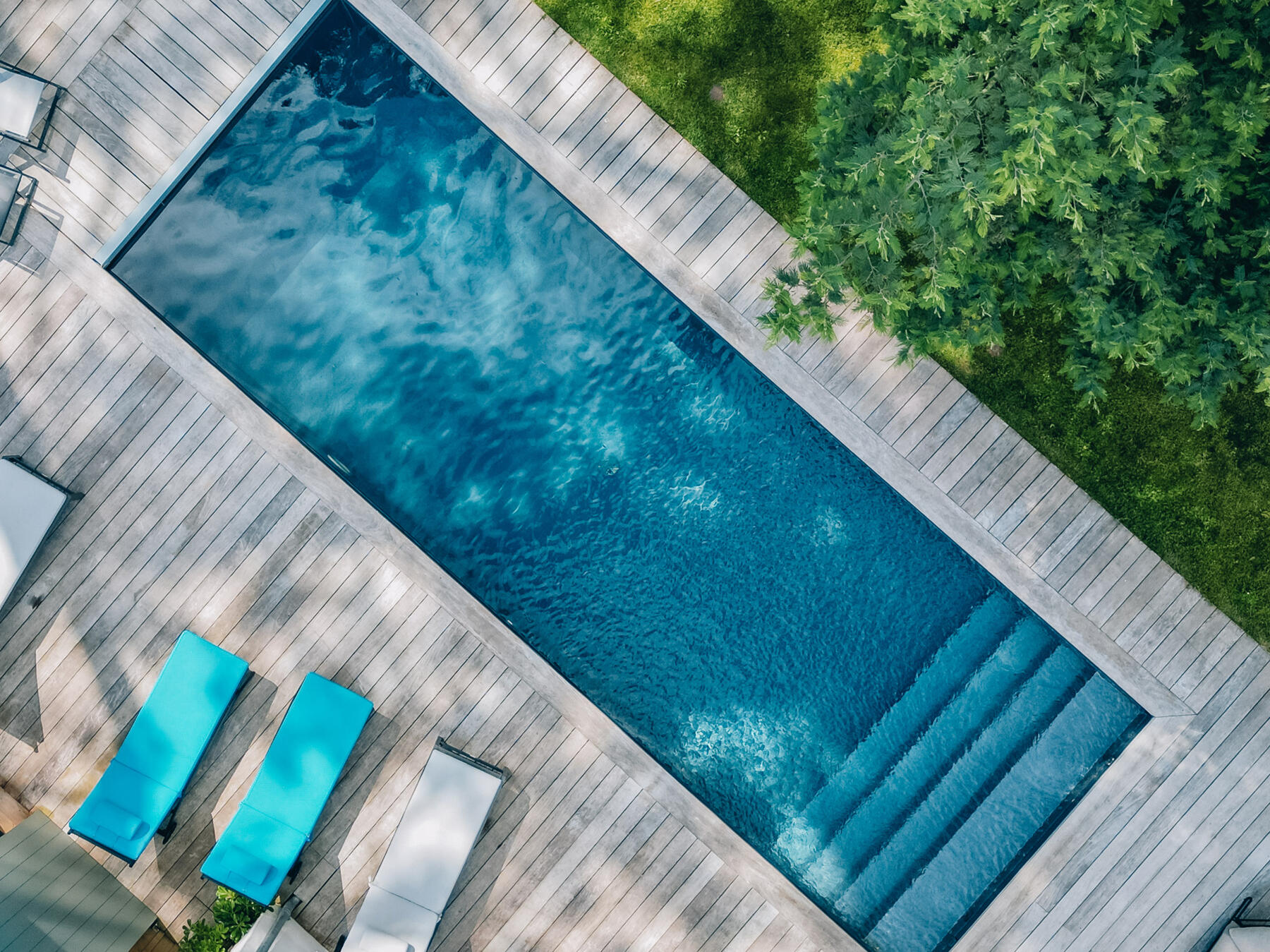
Our Creations
Every pool tells a story. Discover some of our creations across the Île de Ré.


THE BLOG OF THE ÎLE DE RÉ POOL SPECIALISTS
EVERYTHING YOU NEED TO KNOW ABOUT POOL MAINTENANCE, RENOVATION AND TRENDS
- Maintaining Your Pool on the Île de Ré : the Complete Season-by-Season Guide
- Green Water, Unbalanced pH, Limescale : Everything You Need to Know About Water Balance
- Having a Pool Built on the Île de Ré : Steps, Timescales and Budget
- Renovating Your Pool : When to Act and Where to Begin ?
- Pools on the Île de Ré : Planning Permission, Safety Standards and Administrative Procedures
- Heating, Lighting, Robotic Cleaners, Covers : Which Features Are Truly Worth the Investment ?
- Pool Deck, Coping Stones, Planting : Landscaping Your Pool Surrounds in the Style of the Île de Ré
- Buying a Property with a Pool on the Île de Ré: What to Check Before You Sign
- How to Repair Your Pool Liner ? Complete Guide
- Swimming pool and sandy soil: what you need to know before building
- Inground VS Semi-Inground Pool: How to Choose According to Your Plot ?
- How much does swimming pool maintenance really cost per year ?
- Choosing a Local Pool Builder Over a National Chain: Why It Makes All the Difference ?
- Salt Chlorinator or Chlorine: Which Treatment Should You Choose for Your Swimming Pool ?
- 5 Questions to Ask Your Pool Builder Before Signing a Quote
- Swimming Pools and Sea Air: How to Protect Your Equipment from Corrosion
- Which Pool to Choose for a Rental Villa on the Île de Ré?

Maintaining Your Pool on the Île de Ré: the Complete Season-by-Season Guide
From the spring opening to winterisation, your pool deserves regular attention. Our complete guide takes you through it week by week.
The Île de Ré offers an exceptional setting in which to enjoy a private pool. But this privilege comes with its demands. Between the sea salt carried on the air, the Atlantic temperature swings and the intensity of the summer sun, a pool on the Île de Ré requires careful, regular attention. This guide takes you through the full year.
SPRING: THE REOPENING
The reopening is the most important stage of the year. Done poorly, it can have a negative impact on the entire season ahead.From mid-April, as soon as the water temperature exceeds 12°C, it is time to act.Steps to follow:
Begin by removing the winter cover or the winterising plugs fitted to the jets and skimmers. Clean them thoroughly before putting them away. Reinstall any equipment that was stored over winter, pump, filters, accessories, and carry out a general check of all fittings after several months of inactivity.Restart the filter and carry out an extended backwash to remove the residue that has accumulated over winter.Check the water level and top up if necessary, it should sit at mid-height on the skimmers.Then carry out a full water analysis: pH, TAC, TH and chlorine level.
On the Île de Ré, the water is often hard and slightly saline, which calls for specific adjustments.Carry out a chlorine shock treatment to eliminate all dormant bacteria and algae, then leave the filtration running for 24 hours before anyone swims.
SUMMER: REGULAR UPKEEP
This is the season when your pool is under the greatest strain, and at its most vulnerable. Intense sunshine, high bather numbers, elevated temperatures: all of these factors throw the water off balance rapidly.The golden rule of summer: test the water at least twice a week, ideally in the morning before the heat of the day builds.Parameters to monitor:The pH should remain between 7.2 and 7.4. On the Île de Ré, heat and evaporation tend to push it up quickly. A pH that is too high renders chlorine ineffective; too low, and it irritates the eyes and mucous membranes.The free chlorine level should sit between 1 and 1.5 mg/L under normal use. In intense heat or after heavy use, do not hesitate to carry out a weekly chlorine shock treatment.The TAC (Total Alkalinity) should remain between 80 and 120 mg/L. This is what stabilises the pH and prevents sudden fluctuations.
Mechanical cleaning:
Vacuum the floor two to three times a week depending on usage. Brush the walls and the waterline every week — this is where grease, sun cream and the first traces of algae collect. Empty the skimmer baskets every two days.Filtration: in summer, the filtration duration should correspond to half the water temperature in degrees. At 28°C, filter for 14 hours a day, preferably in two cycles: one in the morning and one in the evening
AUTUMN: PREPARING FOR WINTERISATION
From mid-September on the Île de Ré, the nights begin to cool and pool use starts to tail off. This is the time to begin preparing gradually for winterisation.Reduce the filtration duration progressively as the temperature drops. Continue to test the water, though treatments will be needed less frequently. Take the opportunity to clean the filter, skimmers and jets thoroughly.When the water temperature falls consistently below 12°C, generally in October or November on the island, it is time to carry out the winterisation.
WINTER: ACTIVE OR PASSIVE WINTERISATION?
This is the question our clients on the Île de Ré ask us most frequently. The answer depends on your installation and how you use your pool.Passive winterisation involves partially draining the pool, fitting plugs to the inlets and outlets, adding a winterising algaecide product and switching off the filtration. This is the least costly option, but it carries risks in the event of frost.Active winterisation keeps the filtration running at a reduced rate (a few hours per night) and maintains a minimal water treatment. The pool remains filled to its normal level, protected by a winterising product. This is the solution we recommend on the Île de Ré: the mild climate allows the installation to be kept running without risk, and the spring reopening is far quicker.In either case, protect your pool with a good-quality winter cover, it limits evaporation, prevents leaves from falling in and protects the lining
THE MOST COMMON MISTAKES
Through our work across the Île de Ré, we regularly observe the same mistakes:Treating the water without testing it first. Adding chlorine "by eye" is both ineffective and costly. Without knowing the actual pH, chlorine can be entirely inactive.Under-filtering in summer. Many owners reduce filtration to save on electricity. This is a false economy: poorly filtered water turns green within 48 hours and requires a shock treatment that is far more expensive.Neglecting skimmer cleaning. Full baskets reduce filtration flow and can damage the pump over time.Forgetting the waterline. This is the area most exposed to grease and limescale deposits. A weekly clean prevents stubborn marks that will require aggressive descaling at the end of the season.
OUR PROFESSIONAL ADVICE
On the Île de Ré, the specific nature of the maritime climate calls for particular vigilance. The iodine-rich, mildly salty air accelerates the oxidation of metal fittings and can disrupt the chemical balance of the water. We recommend that all our clients have their water analysed by a professional at least twice per season: in spring for the reopening, and in July for a mid-season adjustment.Regular, well-managed maintenance represents a modest outlay compared to the remedial work that a neglected pool demands. It is also the guarantee of enjoyable, safe swimming throughout the summer.

Green Water, Unbalanced pH, Limescale: Everything You Need to Know About Water Balance
Green water, stinging eyes, limescale deposits… Water problems are the most common issues, and often the simplest to prevent once you understand how it all works.
Pool water is not simply a blue expanse. It is a living environment, in constant equilibrium, which heat, bathers, sunlight and the surrounding conditions are continually disrupting. On the Île de Ré, the sea air and the quality of the mains water add further parameters to keep an eye on. Understanding these mechanisms means preventing 90% of problems before they arise.
THE FOUR PARAMETERS TO MONITOR
pH: between 7.2 and 7.4, this is the conductor of the orchestra. Too high, and chlorine becomes inactive while algae proliferates. Too low, and the water irritates the eyes and attacks the fittings. On the Île de Ré, it naturally tends to rise in the heat: check it twice a week during the season.TAC (Total Alkalinity): between 80 and 120 mg/L, this stabilises the pH and prevents sudden fluctuations. It is the most frequently overlooked parameter, and yet the most fundamental. When a pH no longer responds to corrections, the TAC is almost always the culprit.TH (Total Hardness) measures the hardness of the water. Too high, and it causes limescale deposits on the walls and waterline, a common issue on the Île de Ré where the mains water is moderately hard.Free chlorine: between 1 and 1.5 mg/L, this disinfects the water.However, it is only effective when the pH is correct. Always check and correct the pH before adjusting the chlorine, never the other way around
THE MOST COMMON PROBLEMS
Green water signals an algae bloom: pH too high, insufficient chlorine, filtration running for too short a time. The remedy: correct the pH, carry out a heavy chlorine shock treatment, leave the filtration running continuously for 24 hours and brush the walls.Cloudy, milky water points to a clogged filter or insufficient filtration. A backwash followed by a flocculant will resolve the problem within 24 hours in most cases.Limescale deposits on the waterline are common on the Île de Ré. A liquid anti-limescale product added weekly during the season will significantly reduce them.Stinging eyes are not caused by excess chlorine, contrary to popular belief, but by an unbalanced pH or chloramines formed by impurities from bathers. The remedy: correct the pH and carry out a chlorine shock treatment.
THE SPECIFIC CONDITIONS OF THE ÎLE DE RÉ
The iodine-rich, salty air accelerates chlorine consumption in windy conditions. Mains water quality varies between communes, always test the water whenever a significant top-up is carried out. In July and August, the intense heat makes twice-weekly monitoring an absolute necessity.
OUR PROFESSIONAL ADVICE
Regularity is worth far more than large-scale remedial treatments. Small, frequent corrections cost little; dealing with green water means time, products and frustration. Record your parameters at every test, this simple log allows you to spot trends before they become problems.

Having a Pool Built on the Île de Ré: Steps, Timescales and Budget
Having a pool built on the Île de Ré is a life project. Here is everything you need to know before taking the plunge.
Building a pool is a significant decision. On the Île de Ré, it is even more so, given the architectural constraints, the specific planning regulations and the need to integrate the pool into an exceptional natural and heritage environment. Here is the complete guide to approaching your project with confidence.
STEP 1: FEASIBILITY
Before any plans or quotes, a site visit is essential. The nature of the ground, sandy, clay or rocky, directly determines the type of construction and the cost of the works. Orientation, sunlight exposure, proximity to trees and underground services are all parameters that must be assessed at the outset.On the Île de Ré, certain areas are subject to specific rules: conservation zones, flood-risk areas and listed perimeters. Checking the PLU (Local Urban Planning Scheme) for your commune is an absolute necessity before going any further.
STEP 2: THE ADMINISTRATIVE PROCEDURES
A pool with a surface area exceeding 10 m² requires a prior declaration of works. Above 100 m², a full planning permission is mandatory. On the Île de Ré, due to the strict architectural rules linked to the Coastal Law and protected zones, the processing times can be longer than elsewhere, allow between one and three months.The colour of the lining, the shade of the coping stones and even the shape of the pool may be subject to architectural requirements depending on your commune. We guide our clients through all of these procedures to avoid any unwelcome surprises.
STEP 3: THE DESIGN
Once administrative approval has been obtained, the design phase begins. Technical drawings, 3D modelling, choice of lining, fittings, coping stones and the landscaping of the surrounds, everything is defined at this stage in consultation with you.This is the moment to consider the actual use of your pool: family bathing, serious swimming, hydrotherapy relaxation? Each intended use shapes the technical choices: dimensions, depth, fittings and heating.
STEP 4: THE CONSTRUCTION
The construction of a sprayed concrete pool, the benchmark technique on the Île de Ré for its strength and freedom of form, unfolds in several phases.Groundworks open the site. The excavated soil must be removed, so plan for this access from the outset. Next comes the steel reinforcement framework that structures the future pool, followed by the gunite concrete spraying that gives it its definitive shape. Once dry, the finish is applied: tiling, liner or marble render depending on your choice.In parallel, the plumbing, filtration and electrical fittings are installed. The coping stones and pool deck are then completed before the pool is filled.
THE TIMESCALES
From the first meeting to your first swim, allow an average of three to five months on the Île de Ré, including the administrative procedures. During the summer period, local contractors' schedules fill up quickly, plan your project from the preceding autumn to be able to enjoy your pool the following summer.
THE BUDGET
The cost of a bespoke gunite concrete pool on the Île de Ré generally falls between €25,000 and €60,000, depending on the dimensions, the chosen finish and the fittings. The exterior landscaping, pool deck, terrace, fencing, plant room, represents an additional budget line to factor in.A word of advice: be wary of very low quotes. On the Île de Ré, the logistical constraints, the quality of materials needed to withstand the maritime climate and the local architectural requirements all come at a real cost. A well-built pool lasts 30 years; a poorly built one will cost you far more in renovation.
OUR PROFESSIONAL ADVICE
The best time to launch your project is now, whatever the season. Administrative procedures take time, schedules fill up quickly and a well-conceived design cannot be rushed. The further ahead you plan, the more choice you have and the more time there is to do things properly.

RENOVATING YOUR POOL: WHEN TO ACT AND WHERE TO BEGIN?
An ageing pool is not a lost cause. Knowing when and how to act means giving it
a new lease of life.
A well-built pool can last 30 years and more. But without regular maintenance, or after several decades of use, signs of wear inevitably appear. Worn lining, cracks, obsolete equipment, outdated safety standards, these are all signals that renovation is called for. The good news: in the vast majority of cases, renovating costs considerably less than rebuilding.
THE TELLTALE SIGNS
The lining is often the first to show its age. A discoloured, detached or punctured liner, cracked tiles with blackened grouting, a rough and stained render, these are clear signals. Beyond aesthetics, a deteriorated lining compromises the watertightness of the pool and the quality of the water.Cracks are a more serious matter. A fine surface crack is not necessarily cause for alarm, it may be limited to the lining. However, a crack running through the concrete structure signals a genuine watertightness problem, sometimes aggravated by ground movement. On the Île de Ré, sandy soils can cause differential settlement. Never leave a crack without having it surveyed.Filtration has a lifespan of 10 to 15 years. A noisy pump, insufficient flow, abnormally high electricity consumption, these are all signs that it is time to modernise the installation. New variable-speed pumps consume up to 60% less energy.Safety is a non-negotiable point. The law has required a certified safety device since 2004: a barrier, alarm, cover or enclosure. If your pool lacks one, or if the existing equipment is no longer compliant, upgrading to current standards is mandatory.
THE MOST COMMON WORKS
Liner replacement is the most common intervention. A liner lasts on average 10 to 15 years. Replacing it gives the pool a visual refresh and restores a perfect watertight seal. It is a relatively swift operation, allow three to five days on site.Waterproofing restoration on a cracked concrete pool requires a full drain-down, a precise survey of the cracks and an appropriate treatment: resin injection, concrete repair or application of a waterproofing render. This is specialist work that admits no approximation.Equipment modernisation, pump, filtration, LED lighting, automatic treatment system, improves comfort of use and reduces running costs. It is often an ideal opportunity to switch to salt or UV treatment, which is gentler and more economical than traditional chlorine.Pool deck and coping stone renovation visually transforms the entire pool area. Natural stone, exposed aggregate concrete, composite timber, the options are plentiful for restoring character to your pool whilst remaining in keeping with the style of the Île de Ré
WHERE TO BEGIN?
The first step is always the survey. Before any quote, a professional must inspect the pool: structure, lining, plumbing, fittings and safety. This survey establishes a list of priorities and avoids spending money on a new lining applied to a structure that is not watertight.Next comes the itemised costing of the works. A partial renovation, lining and equipment, may fall between €5,000 and €15,000. A full renovation with structural repairs, new equipment and exterior landscaping can reach €25,000 to €35,000. But in every case, this is considerably less than a complete rebuild.
THE RIGHT TIME TO RENOVATE
Autumn and winter are the best seasons to undertake renovation works on the Île de Ré. Contractors' schedules are more available, lead times are shorter and you are guaranteed to have a pool as good as new from the very first fine days of spring.
OUR PROFESSIONAL ADVICE
Do not put off a necessary renovation indefinitely. An untreated crack worsens over time. A punctured liner encourages water infiltration. Ageing equipment wastes energy needlessly. Every season of delay comes at a cost: in comfort, in energy and sometimes in structural damage.

Pools on the Île de Ré: Planning Permission, Safety Standards and Administrative Procedures
Planning permission, prior declaration, safety standards… The regulations surrounding pools are stricter than many people realise, and even more so on the Île de Ré. We explain everything.
Building a pool on the Île de Ré is not something to be undertaken without preparation. Between the Coastal Law, local planning regulations, the architectural requirements of individual communes and mandatory safety standards, the regulatory framework is extensive. Understanding it thoroughly from the outset avoids unwelcome surprises, and sometimes costly fines or compliance obligations.
PLANNING AUTHORISATIONS
Prior declaration or planning permission ?The type of authorisation required depends on the surface area of the pool.A pool with a surface area of between 10 and 100 m² requires a prior declaration of works, to be submitted to the mairie before work begins. Below 10 m², no formalities are required, though this is rarely the case for a family pool.Above 100 m², or if the pool is covered by an enclosure of more than 1.80 m in height, a full planning permission is mandatory.The specific conditions of the Île de RéThe Île de Ré is subject to particularly strict planning regulations, for several reasons.
The Coastal Law governs construction in the vicinity of the shoreline and in areas close to the coast. Depending on the location of your plot, certain zones may be non-constructible or subject to specific requirements.Conservation areas and heritage protection zones, present in several communes on the island such as Saint-Martin-de-Ré and Ars-en-Ré, impose strict architectural rules. The colour of the lining, the shade of the coping stones and the materials used may all be subject to the approval of the Architecte des Bâtiments de France.The PLU (Local Urban Planning Scheme) of each commune sets out the rules applicable to your plot: maximum ground coverage, distances from property boundaries, fence heights. Before any project, consulting the PLU and arranging a meeting at the mairie are essential steps.Processing timescalesOn the Île de Ré, processing times are often longer than in ordinary areas. Allow one to two months for a prior declaration, two to three months for a planning permission, and potentially longer if the opinion of the ABF is required. Always factor these timescales into your planning.
SAFETY STANDARDS
Since the law of 3 January 2003, every private in-ground pool intended for individual or collective use must be fitted with at least one certified safety device. This obligation applies to all pools, both new and existing.The four approved devicesThe safety barrier must completely surround the pool, be at least 1.10 m in height and withstand a force of 50 kg. It must be fitted with a self-closing gate that opens away from the pool. This is the most reliable and most recommended device, particularly for families with young children.The pool alarm must be certified to the NF P90-307 standard. It detects either the immersion of a body (immersion alarm) or the approach of the pool (perimeter alarm). Please note: an alarm alone is not sufficient to prevent drowning, it signals the accident; it does not prevent it.The safety cover must be capable of supporting the weight of an adult and comply with the NF P90-308 standard. It must be correctly fitted every time the pool is not in use. Rigid-bar covers and motorised roller covers meet this standard.The pool enclosure must completely cover the pool and comply with the NF P90-309 standard. This is the most comprehensive solution: it combines safety, thermal protection and reduced maintenance costs.PENALTIESThe absence of a safety device is punishable by a fine of up to €45,000. In the event of an accident, the absence of a certified device engages the civil and criminal liability of the owner
OTHER REGULATORY OBLIGATIONS
Plot surveying: if your plot has not been formally surveyed and marked, it is advisable to engage a land surveyor before work begins, to avoid any boundary disputes.Underground services: before any groundworks, a project works declaration (DT) and a declaration of intention to commence works (DICT) must be submitted via the reseaux-et-canalisations.ineris.fr portal. This is a legal obligation designed to prevent accidents during excavation.Declaration to the mairie: once the works are complete, a declaration of completion and compliance (DAACT) must be submitted to the mairie within one month of the end of the project.Taxation: a pool increases the cadastral rental value of your property and therefore your taxe foncière. A new construction declaration (form H1) must be submitted within 90 days of the completion of the works. A temporary two-year exemption may apply depending on your commune.
OUR PROFESSIONAL ADVICE
The regulations on the Île de Ré are complex, but they are not an obstacle, they are a framework that protects property owners, neighbours and the island's exceptional heritage alike. When properly anticipated, they do not significantly extend the timescales of a well-prepared project.At Les Bassins de Ré, we handle all administrative procedures on behalf of our clients: prior declaration, planning permission, ABF consultation, DICT and declaration of completion.You have nothing to manage.

Heating, Lighting, Robotic Cleaners, Covers: Which Features Are Truly Worth the Investment?
Robotic cleaner, heat pump, LED lighting, automatic cover… The pool equipment market has never been so well stocked. Here is what is truly worth the investment.
A well-equipped pool is a more enjoyable, more economical and easier to maintain pool. But faced with the sheer range of available equipment, it can be difficult to distinguish the essential from the superfluous. As professionals, here is our honest assessment of the equipment that truly makes a difference, and that which you can do without.
HEATING: EXTEND YOUR SEASON
On the Île de Ré, the swimming season without heating runs from mid-June to mid-September. With a suitable heating system, you can easily gain six to eight additional weeks, from as early as April through to October.The heat pump is today's benchmark solution. It draws heat energy from the outside air to warm the water and delivers a remarkable coefficient of performance: for every 1 kWh of electricity consumed, it produces between 4 and 6 kWh of heat. On the Île de Ré, where temperatures remain mild even in the shoulder season, it operates optimally from 10°C of ambient air. This is the equipment we recommend as a priority to our clients.Solar heating is an economical and environmentally friendly alternative. Panels installed on the roof or on the ground capture solar energy to preheat the water. On the Île de Ré, the exceptional sunshine makes this solution particularly well suited. That said, it depends on weather conditions and is not sufficient on its own during cooler periods.The electric heater is straightforward to install but costly to run. Best reserved for small volumes or occasional supplementary use.
FILTRATION: THE HEART OF THE INSTALLATION
The filtration pump is the piece of equipment that runs the longest, up to 12 hours a day in summer. The choice of pump therefore has a direct impact on your electricity bill.The variable-speed pump is the major development of recent years. By modulating its speed according to demand, it consumes up to 60% less energy than a conventional pump.The investment, between €500 and €1,000, is recouped within two to three seasons. It is now an essential feature for any new or renovated installation.The cartridge filter offers better filtration quality than the traditional sand filter, with less water consumption during cleaning. It does, however, require more regular maintenance.
LED LIGHTING: AESTHETICS AND SAVINGS
Underwater lighting transforms a pool into a nocturnal living space. Today's LED projectors offer an unlimited palette of colours and lighting programmes, at a consumption level ten times lower than older halogen projectors.On the Île de Ré, where summer evenings are mild and long, well-considered LED lighting allows you to enjoy the pool well after sunset. This is one of the pieces of equipment with the best pleasure-to-cost ratio, allow between €300 and €800 per projector, including installation.Connected systems allow you to control colours and intensity from your smartphone. A genuine advantage for creating different atmospheres to suit the occasion.
THE ROBOTIC POOL CLEANER: EVERYDAY COMFORT
The robotic pool cleaner has become the most popular piece of equipment among pool owners. It automatically cleans the floor, walls and sometimes the waterline, without any manual intervention.The electric robot, autonomous, with its own motor and its own filter, is the most effective and most comfortable solution. It operates independently of the filtration system and can be programmed. Allow between €500 and €2,000 depending on the model. An investment quickly recouped in time saved.The hydraulic robot, connected to the filtration system, is less expensive to purchase but less effective and more cumbersome in use. We advise against it for new installations.Our recommendation: a mid-range electric robot covers the needs of a standard family pool perfectly. There is no need to aim for the top of the range unless the pool is of a particularly large surface area.
THE COVER: SAFETY, SAVINGS AND COMFORT
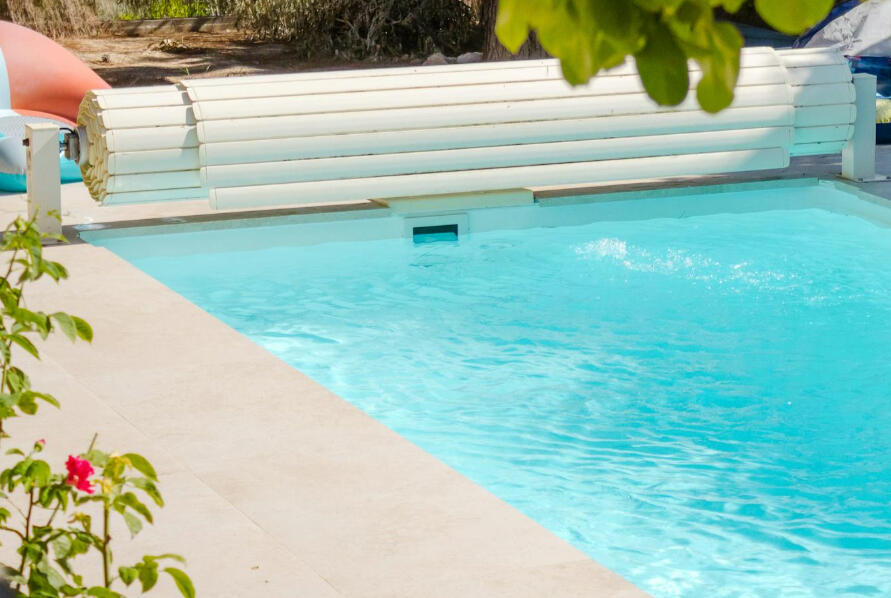
The cover is the most versatile piece of pool equipment. It combines three essential functions: safety, reduction of heat loss and limitation of evaporation and debris.The bar cover is the most reliable and most economical safety solution. It meets NF standards and can support the weight of an adult. Simple to put in place, it is ideal for families with young children.The roller cover, manual or motorised, offers the greatest ease of use. In a matter of seconds, the pool is protected. A bubble thermal cover combined with a roller reduces heat loss by 30 to 50% and decreases the consumption of treatment products. This is the piece of equipment we recommend as a priority for its combination of safety, savings and comfort.The pool enclosure, low, mid-height or full height, goes even further. It transforms the pool into a covered space usable in all weathers, considerably extends the season and drastically reduces maintenance and heating costs. On the Île de Ré, where the wind can be brisk, a well-designed enclosure radically changes the comfort of use.
AUTOMATIC TREATMENT: NO MORE CHEMICAL CHORES
Automatic water treatment systems represent a genuine revolution for pool owners.The salt electrolyser produces chlorine naturally from the salt dissolved in the water. The water is softer, less irritating to the eyes and skin, and the running costs are considerably lower than those of traditional chlorine. This is now our first recommendation for new pools.Automatic pH/chlorine regulation continuously analyses the water parameters and automatically injects the necessary products. Combined with an electrolyser, it delivers perfectly balanced water at all times, with no manual intervention whatsoever. Absolute comfort for owners who wish to enjoy their pool without worrying about water chemistry.
OUR PROFESSIONAL ADVICE
If we were to choose three priority pieces of equipment to maximise comfort and reduce costs, they would be: the variable-speed pump, the thermal roller cover and the salt electrolyser. These three items transform the day-to-day pool experience and pay for themselves relatively quickly.The rest, robotic cleaner, LED lighting, enclosure, heat pump — comes at a second level depending on your budget and how you use your pool. But every piece of equipment has its own logic and return on investment. We are here to help you make the right choices for your installation and your lifestyle

Pool Deck, Coping Stones, Planting: Landscaping Your Pool Surrounds in the Style of the Île de Ré
A beautiful pool does not stop at the water's edge. It is an entire living space that
takes shape around it.
On the Île de Ré, a pool is never conceived in isolation. It is set within a garden, an environment, an architecture, and must enter into dialogue with all of them. The white stone, the hollyhocks, the discreet gardens tucked behind boundary walls: the island has its own aesthetic language. Landscaping your pool surrounds in this spirit means creating a space that is coherent, elegant and deeply rooted in its territory.
THE COPING STONES: THE FIRST VISIBLE CHOICE
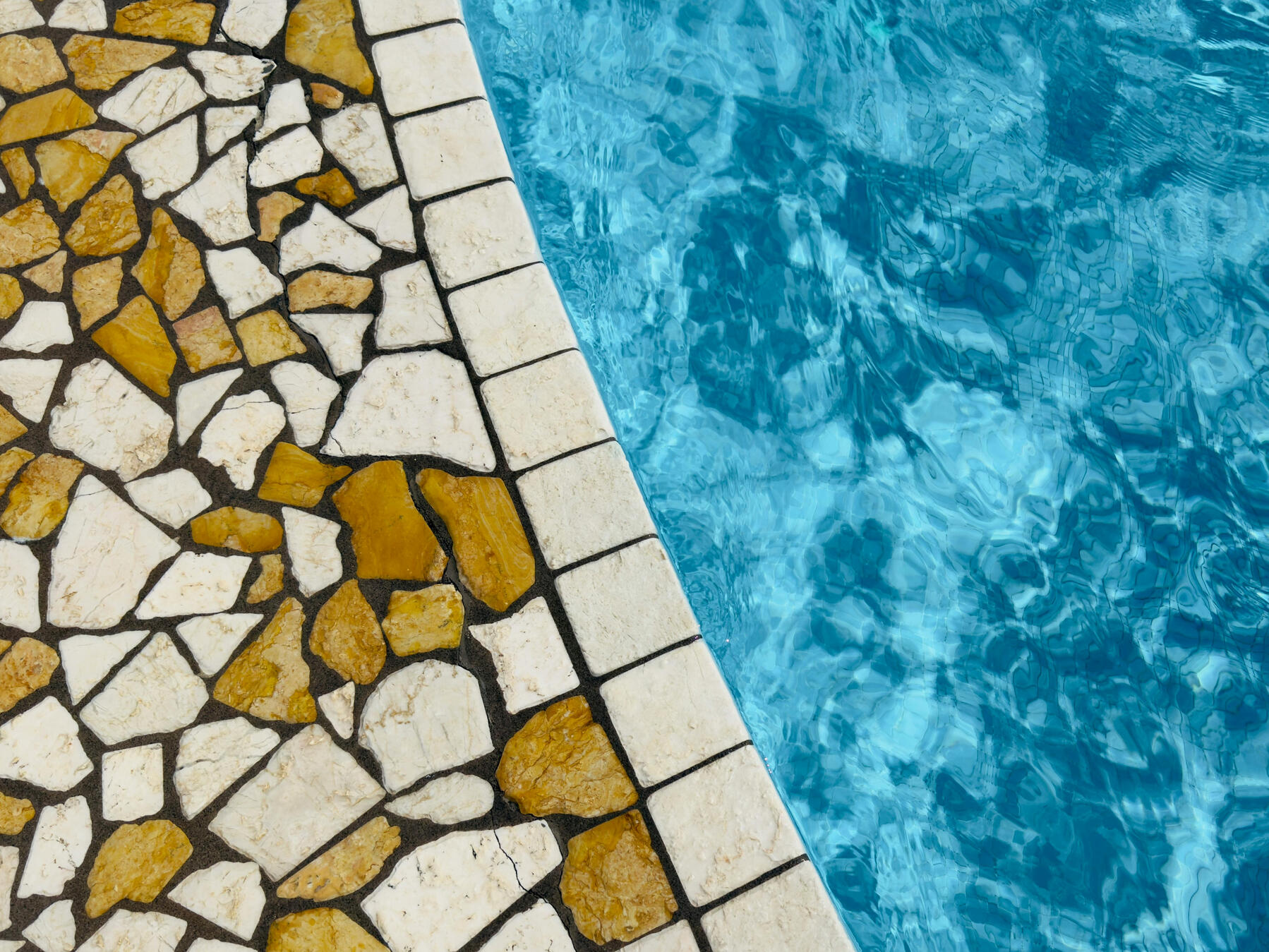
Coping stones are the slabs that frame the pool directly. They define the pool visually, ensure safety at the water's edge and must withstand constant moisture and wet feet.Natural stone is the benchmark material on the Île de Ré. Beige or white limestone, travertine, Burgundy stone, all evoke the soft, warm tones of the island's buildings. Non-slip, pleasant underfoot and ageing gracefully, it integrates naturally into the local landscape. This is our priority recommendation for projects on the island.Exposed aggregate concrete offers an excellent quality-to-price ratio. Its granular texture is naturally non-slip and its colour can be adjusted to approach the sandy tones of the island. It is a solid, durable and easy-to-maintain solution.Composite timber brings a contemporary and warm touch. Unaffected by moisture, it does not warp and remains cool underfoot even in full sun. Best suited to projects with a more modern aesthetic.Porcelain stoneware tiling offers great freedom of design with impeccable finishes. Take care to choose a format and shade that harmonises with the surroundings.
THE POOL DECK: THE LIVING SPACE AROUND THE POOL
The pool deck refers to the entire surfaced area around the pool: sunbathing zone, circulation area and relaxation space. Its design deserves as much attention as the pool itself.The width is often underestimated. A deck of less than 1.50 m is uncomfortable, sun loungers end up positioned just centimetres from the edge. Allow a minimum of 2 metres on the main sides, and more if you wish to install fixed sunbathing areas.The gradient should slope gently away from the pool, 1 to 2%, to facilitate water drainage and avoid puddles. A discreet perimeter channel can complement this arrangement.Orientation determines comfort. On the Île de Ré, a south or south-westerly aspect maximises sunshine whilst remaining sheltered from the prevailing north-westerly winds. Bear in mind the shadows cast by the house and vegetation at different times of day.
PLANTING: DRESSING THE SPACE WITHOUT OVERWHELMING IT
The choice of planting around a pool is a strategic matter. Plants must bring aesthetic appeal, privacy and shade without generating too many falling leaves that end up in the pool.Ornamental grasses and marram grass are perfectly suited to the maritime climate of the Île de Ré.
They bring movement and lightness without polluting the water, withstand the wind and salt, and evoke the island's natural landscape.Lavender and rosemary are staples of the Île de Ré garden. Low-maintenance and fragrant, they tolerate summer drought and the proximity of salt air.Laurels and pittosporums make excellent windbreak and privacy hedges, compact and easy to trim. They create the necessary seclusion without taking up too much space or producing problematic foliage.To avoid: conifers that shed their needles, willows and poplars with invasive roots, fruit trees that attract insects and wasps. As a general rule, any deciduous tree planted on the windward side will inevitably end up depositing much of its foliage in your pool.
THE RELAXATION AREA: THINK USAGE BEFORE STYLE
Before choosing materials, define the actual use of your pool area. Outdoor dining, sunbathing, children's play, entertaining, each intended use shapes the landscaping choices.A pergola or shade sail has become indispensable on the Île de Ré. Summers are sunny and warm, and a comfortable shaded area allows you to enjoy the pool space during the hottest hours of the day. A pergola in timber or white lacquered aluminium integrates perfectly into the style of the island.The plant room must be considered from the design stage. Often relegated to a corner, it deserves to be harmoniously integrated, a small structure in stone or white render, discreet and functional, that sits naturally within the garden.Exterior lighting extends the life of the pool area into the evening. Low bollard lights along the pathways, spotlights recessed into the coping stones, string lights beneath the pergola, lighting creates atmosphere and ensures safe movement after dark.
THE STYLE OF THE ÎLE DE RÉ: A FEW GUIDING PRINCIPLES
The Île de Ré has a strong architectural identity: low houses, lime-washed white walls, green or blue shutters, discreet gardens. Designing a pool in this spirit means respecting a few simple principles.Soft tones predominate: white, beige, sand, pearl grey. Vivid colours are rare in traditional Île de Ré gardens.Natural materials, stone, timber, render, are favoured over bright synthetic ones.Discretion is a deeply held local value. A pool that reveals itself gradually, sheltered behind a wall or a hedge, is more in keeping with the spirit of the island than an ostentatious pool visible from the street.Restraint in visible fittings: no garish slides, colourful plastic structures or excessive ornamentation. The elegance of the Île de Ré is precisely what goes unnoticed.
OUR PROFESSIONAL ADVICE
The landscaping of the surrounds often represents 30 to 40% of the total budget of a pool project, and yet this is where the essential part of the visual experience and comfort of use is determined. Do not neglect it in favour of the pool alone. A beautiful pool in a poorly designed space remains a missed opportunity.On the Île de Ré, we always advise thinking of the pool project and its exterior landscaping as a coherent whole, from the design stage, not as an afterthought once the pool has been built.

Buying a Property with a Pool on the Île de Ré: What to Check Before You Sign
A property with a pool on the Île de Ré, it is the dream. But behind the initial attraction, there are essential technical points to verify before you sign.
On the Île de Ré, a pool can tip the scales in a property purchase decision. It represents an undeniable comfort asset and genuine added value in a market where quality properties sell quickly. But a poorly maintained, non-compliant or ageing pool can rapidly become a significant financial burden. Here are the essential points to verify before you sign.
THE GENERAL CONDITION OF THE POOL
The first thing to do during a viewing is to observe the pool carefully, even if the water is clear and blue, it can conceal significant structural problems.The lining must be inspected thoroughly. A discoloured, detached or wrinkled liner indicates an imminent replacement, allow between €3,000 and €6,000. Cracked tiles or blackened, detached grouting signal a potential watertightness issue. A rough, stained or blistered render requires restoration.Cracks are the most critical point. If necessary, ask to see the pool drained if at all possible, this is the only way to detect them with certainty. A surface crack in the lining is not serious. A crack running through the concrete structure is considerably more so and may require significant works.The waterline reveals a great deal about past maintenance. Ingrained limescale deposits, persistent green marks or a heavily stained waterline indicate neglected maintenance and potentially underlying problems.
THE TECHNICAL EQUIPMENT
The condition of the equipment is often a reliable indicator of the pool's general maintenance. Ask to see everything running during the viewing.The pump and filtration system should run silently and without vibration. An abnormal noise, insufficient pressure at the jets or weak flow at the skimmers are warning signs. Find out the age of the installation, a pump over ten years old is nearing the end of its life.The filter must be in good condition. A sand filter that has become clogged and has not been replaced for a long time loses its effectiveness and can damage the pump. Ask for the date of the last sand replacement, it should be renewed every five to seven years.The treatment system, chlorinator, electrolyser, automatic regulation, must be functioning correctly. Check the condition of the probes and electrolysis cells, which are often costly to replace.The heating, if present, should be tested. A heat pump nearing the end of its life represents an investment of between €3,000 and €8,000 depending on its output
REGULATORY COMPLIANCE
This is the point most frequently overlooked by buyers, and yet it can generate legal obligations from the moment of signing.The safety device has been mandatory since 2003 for all private in-ground pools. Verify that one exists and that it is certified: NF barrier, NF P90-307 alarm, NF P90-308 cover or NF P90-309 enclosure. In the absence of a compliant device, bringing the pool up to standard falls to you from the moment of purchase. The fine in the event of an inspection can reach €45,000.Planning authorisations must have been obtained when the pool was built. Ask the vendor for the relevant documents: prior declaration or planning permission, and declaration of completion of works. A pool built without authorisation can, in the most serious cases, be subject to a demolition order.The tax declaration must have been made. The pool must be declared to the tax authorities and factored into the calculation of the taxe foncière. An undeclared pool can result in a backdated tax reassessment, which falls to the new owner if the limitation period has not expired.
THE SPECIFIC CONDITIONS OF THE ÎLE DE RÉ
On the Île de Ré, a few points merit particular attention due to the local context.The sea air accelerates the corrosion of metal fittings: reinforcement, screws, embedded fixtures. An older pool on the island may present more significant oxidation issues than one in an inland location. Inspect the visible metal components : skimmers, jets, projectors, and ask for the history of works carried out.The sandy soil characteristic of the island can cause differential settlement beneath the pool, particularly in areas close to the marshes or the coastline. Recurring cracks despite repeated repairs may indicate a foundation problem, in which case a structural survey by a professional is essential.The surrounding vegetation, pines, holm oaks, tamarisks, may have developed roots beneath the pool if it is an older installation. Invasive roots can weaken the structure and the buried pipework.
HOW TO GO ABOUT IT IN PRACTICE
The best step to take before signing is to commission a full technical survey from a professional pool specialist. For a few hundred euros, you obtain a precise assessment of the pool, the equipment and regulatory compliance, along with a costed estimate of any works that may be required.This survey can be incorporated into the purchase price negotiation. A pool requiring €10,000 worth of renovation works is a solid negotiating argument, provided you know about it before signing, not after.Also ask the vendor for the following documents: maintenance invoices from recent years, contracts with pool specialists who have worked on the pool, equipment manuals, planning authorisations and tax declaration.
COSTS TO ANTICIPATE
To budget comfortably for the purchase of a property with a pool on the Île de Ré, here are the main potential expenditure items to factor in.Liner replacement comes to between €3,000 and €6,000. Render restoration between €8,000 and €15,000. Filtration replacement between €1,500 and €4,000. Safety compliance upgrade between €500 and €5,000 depending on the device chosen. A full renovation : structure, lining, equipment, surrounds, can reach €20,000 to €35,000.These figures should be put into perspective with the property price and the value the pool represents in the transaction. On the Île de Ré, a pool in good condition adds on average 15 to 25% to the value of a property, a pool in need of renovation can be an opportunity if the purchase price reflects this correctly.
OUR PROFESSIONAL ADVICE
Do not allow emotion to override reason. A pool in poor condition is not necessarily a deal-breaker, but it must be identified, costed and factored into the negotiation before signing. Too many buyers discover the true state of their pool after the purchase, with no recourse available.Call upon a local professional who knows the specific conditions of the island: the soil types, the equipment suited to the maritime climate, the local regulatory requirements. This preventive survey is the best investment you can make before signing.

How to Repair Your Pool Liner ? Complete Guide
Is your pool liner damaged ? Discover how to repair it easily, step by step. Practical advice and recommended products from Bassin de Ré.
Has your pool liner developed a crack or a tear ? Don't panic. In most cases, a quick repair is all that's needed. This way, you avoid a complete drain and significant costs. This guide explains everything, step by step.
WHY DOES A POOL LINER DETERIORATE ?
Over time, a liner can wear out for several reasons. First of all, temperature variations weaken the material. Furthermore, poorly dosed chemicals accelerate ageing. In addition, mechanical impacts (vacuum cleaners, toys) can cause tears. Finally, incorrect installation sometimes leads to creases that crack over time.It is therefore essential to regularly monitor the condition of your liner. Indeed, the earlier a leak is detected, the simpler and more cost-effective the repair will be.
HOW TO DETECT A LEAK IN YOUR POOL LINER ?
Before carrying out any repair, the leak must be located precisely. To do so, follow these steps:Firstly, observe the daily drop in water level. A drop of more than 2 cm per day is cause for concern. Secondly, switch off the filtration system and check whether the loss continues. If so, the leak is not coming from the hydraulic circuit.Thirdly, use food colouring near the suspected areas. The colouring will be drawn towards the crack. This simple yet effective method allows you to target the repair quickly and accurately.
REPAIRING A LINER OUT OF THE WATER : STEP-BY-STEP GUIDE
If the leak is located above the waterline, the repair is straightforward. Here is how to proceed, step by step:Step 1 – Clean the area. Degrease the surface around the tear thoroughly using isopropyl alcohol. The area must be completely dry.Step 2 – Cut the patch. Use a specialist liner patch, cut into a rounded shape. Indeed, straight-edged patches tend to peel off far more quickly.Step 3 – Apply the adhesive. Spread neoprene adhesive onto both the patch and the liner. Wait a few minutes before applying the patch.Step 4 – Press firmly. Apply firm pressure for 2 to 3 minutes. Then, leave to dry for at least 24 hours before refilling with water.
REPAIRING A LINER UNDERWATER : IS IT POSSIBLE ?
Yes, it is perfectly possible to repair a liner without draining the pool. Underwater repair kits are specially designed for this purpose. They contain a patch and a waterproof adhesive that polymerises underwater.To begin with, clean the area using a soft brush. Then, cut your patch into an oval shape. After that, apply the adhesive generously to the patch. Dive in and press firmly for 2 to 3 minutes. This technique is particularly useful in the middle of the season, when draining the pool is simply not an option.
WHEN SHOULD YOU REPLACE THE LINER RATHER THAN REPAIR IT ?
A repair is not always sufficient. Here are the signs that indicate a replacement is necessary:The liner is more than 10 to 15 years old
Repairs have been carried out on multiple occasions
The liner has become brittle or discoloured
Significant peeling has appeared in the cornersIn these situations, it is best to contact a professional. A new liner guarantees a watertight seal and long-lasting durability for many years to come.
OUR TIPS FOR EXTENDING THE LUIFE OF YOUR POOL LINER
To avoid overly frequent repairs, it is important to adopt the right habits. First of all, maintain a pH level between 7.2 and 7.4. An unbalanced pH attacks the liner from within. Furthermore, avoid toys or accessories with sharp edges. In addition, make sure to winterise your pool properly every autumn.Moreover, use a protective mat beneath the feet of the ladder. These small, simple steps can effectively double the lifespan of your liner.
CONCLUSION
Repairing a pool liner is well within the reach of any homeowner. By following the steps outlined in this guide, you can act quickly and effectively. However, if in doubt, do not hesitate to call in a specialist.Do you need personalised advice? The Bassin de Ré team is at your disposal to assist you with all your pool projects.

Swimming pool and sandy soil: what you need to know before building
Sandy, sometimes damp, and crossed by the water table in certain areas, sandy soil imposes real technical constraints that any future pool owner must be aware of before taking the plunge. The good news is that these constraints are not obstacles. They can be managed,
provided they are anticipated.
WHY SANDY SOIL CHANGES EVERYTHING WHEN BUILDING A SWIMMING POOL
Sandy soil is inherently unstable. Unlike clay or rocky ground, it cannot bear the load of a heavy structure without prior treatment. A swimming pool, even a modest one, represents several tens of tonnes of concrete, water, and equipment. Built on unprepared sandy ground, it can shift.
The specific risks are as follows:Differential settlement: the ground subsides unevenly beneath the structure and can cause cracks in the shell, misalignment of the coping stones, or even ruptures in buried pipework.
Hydrostatic pressure: when the water table rises, the pressure exerted by groundwater can spectacularly lift an empty swimming pool.
Localised weak spots: without prior analysis, pockets of loose sand can create failure points beneath the floor of the pool.These problems are not inevitable. They are simply the consequence of construction that is ill-suited to the local conditions. Tradespeople who know the terrain factor in these parameters from the design stage, and that is precisely what sets an experienced local pool builder apart from a generalist passing through.
SOIL SURVEY: AN ESSENTIAL STEP ON THE ÎLE DE RÉ
Before any project, a geotechnical survey of the land is essential. It is a modest expense, a few hundred pounds, that can save you far more costly remedial work further down the line.
This survey makes it possible to:Determine the exact nature of the soil at construction depth
Identify the depth of the water table (which varies depending on the location on the island, the season, and rainfall)
Detect any potential backfill areas or heterogeneous ground
Correctly size the foundations and the excavation baseAt Les Bassins de Ré, an on-site feasibility study is the systematic first step of every project. It is what determines all the technical choices that follow.
CONSTRUCTION TECHNIQUES SUITED TO SANDY SOIL
Once the soil survey has been carried out, the pool builder adapts the construction technique accordingly. Several solutions exist depending on the results of the analysis.Reinforcing the excavation baseThis is the first line of defence. The loose sand is replaced or compacted, a layer of compacted hardcore creates a stable base, and a blinding concrete is poured before the reinforcement is laid. This methodical preparation is standard practice on all our sites on the island.Reinforced gunite concreteGunite concrete is the benchmark technique for difficult soils. Sprayed concrete, combined with a dense and well-sized reinforcement framework, creates a monolithic shell that withstands the compressive and tensile stresses induced by ground movement. This is precisely why we favour gunite on the Île de Ré, where a polyester shell or a liner laid on concrete blocks offers fewer guarantees of longevity. All our in-ground pool projects are built using this method.Thickened base slabs and strip footingsThese devices distribute the load of the pool over a larger surface area, thereby reducing the risk of localised settlement. On the most unstable ground, a network of piles or micropiles may also be considered to anchor the structure into a more stable soil horizon.Managing the water tableThis is a critical point that is often underestimated. An empty pool, when drained for renovation, for example, is particularly vulnerable to hydrostatic pressure. On sites with a high water table, a perimeter drainage system and anti-flotation devices (base ballasting, pressure relief valves) are incorporated into the design.
THE PARTICULAR CHARACTERISTICS OF THE ÎLE DE RÉ
Beyond general geotechnics, the Île de Ré has a number of local characteristics that deserve particular attention.The proximity of marshland and wetlandsCertain parts of the island, particularly around Loix, Ars-en-Ré, and the low-lying areas of Saint-Martin, have an especially high and variable water table. On such ground, building a swimming pool requires specific expertise and heightened vigilance during the earthworks and construction phases. The construction stages and timescales may be slightly extended as a result.Seasonal variationsThe island's sandy soil absorbs winter rainfall quickly and dries out rapidly in summer. These cycles of wetting and drying can exacerbate differential settlement on insufficiently sized foundations. A build carried out in summer on dry ground must anticipate how the terrain will behave after the first autumn rains, which is one of the reasons we recommend launching projects the previous autumn.Roots and vegetationThe pine trees, holm oaks, and tamarisks that are characteristic of the Ré landscape develop extensive root systems in sandy soil as they seek out water. Invasive roots can weaken buried pipework and exert pressure on the pool structure over time. An analysis of the existing vegetation is systematically incorporated into our feasibility study, and also influences the choice of planting around the pool.Sea air and corrosionThe island's iodine-laden, salty air accelerates the corrosion of metal components: reinforcement bars, fixings, and cast-in fittings. This demands the use of suitable materials, marine-grade stainless steel, anti-corrosion treatments, from the construction phase onwards. A detail that pool builders unaccustomed to the Atlantic coast tend to overlook.
BUDGET AND TIMESCALES: WHAT IT MEANS IN PRACTICE
Construction adapted to sandy soil represents an additional cost compared to building on favourable ground, typically between £2,000 and £8,000, depending on the exact nature of the soil and the technical solutions chosen. This additional cost covers:- The preliminary geotechnical survey
- The reinforced excavation base and reinforced steel framework
- Perimeter drainage, where necessary
- Any anti-flotation devices requiredThis is not an optional expense. It is what guarantees that your pool will be in the same condition in 30 years as it is on the first day. As a point of reference, the budget for a bespoke gunite concrete pool on the Île de Ré generally falls between £25,000 and £60,000. The additional cost related to the soil therefore represents a modest share of the total investment, for a guarantee of durability that is well worth it.As regards timescales, the geotechnical survey adds a few weeks to the schedule. It should be factored in from the very start of the project, running alongside the administrative procedures, not as an afterthought once planning permission has been granted.
OUR PROFESSIONAL ADVICE
Building a swimming pool on sandy soil is entirely possible. We do it regularly, with results that stand the test of time. The key is anticipation: a thorough soil survey, foundations sized accordingly, and a local tradesperson who knows the specificities of the area better than anyone.
If you have a pool project in mind, let us start with a site visit. It is the only way to assess your land precisely and propose a solution tailored to your needs, not an off-the-shelf offer that takes no account of what lies beneath your feet.

Inground VS Semi-Inground Pool: How to Choose According to Your Plot ?
You dream of having a pool in your garden, but you're unsure whether to go for a fully inground or semi-inground model? This choice depends far more on your plot than on your aesthetic preferences. Soil type, topography, local regulations, budget… here is a comprehensive guide to help you make the right decision according to your territory.
INGROUND VS SEMI-INGROUND POOL: WHAT ARE THE DIFFERENCES?
Before comparing, let us establish the basics.An inground pool (also called a dug pool) is entirely buried in the ground. Its coping sits level with the surrounding terrain, giving it an elegant finish and seamless integration into the landscape. It is the most widespread solution in France for flat or gently sloping gardens. A semi-inground pool is only partially buried in the ground, generally between 50% and 75% of its height, with the remainder of the structure rising above the natural ground level. It is often chosen as a more affordable alternative or as a solution suited to specific geological constraints. These two options differ in terms of construction technique, cost, aesthetics, and compatibility with various types of terrain.
THE DETERMINING ROLE OF SOIL TYPE
CLAY AND EXPANSIVE SOILSClay soils have a particularly challenging characteristic: they swell when wet and shrink during dry periods. This phenomenon, known as clay shrink-swell, can cause significant cracking in inground structures. In this case, an inground pool remains possible, but it requires reinforced foundations and steel-reinforced concrete treated to withstand ground movement. A semi-inground pool may be a less risky alternative if it is laid on a suitable slab.ROCKY SOILSRocky subsoil considerably complicates excavation works for an inground pool. Clearance costs can soar, as specialist machinery is required, and in extreme cases even explosives. A semi-inground pool then becomes a very attractive option: it limits the depth of excavation needed and mechanically reduces the volume of rock to be removed.SANDY OR UNSTABLE SOILSSandy soils or those made up of recently deposited fill have a low load-bearing capacity. They can give way under the weight of a water-filled inground pool. A geotechnical survey is essential. If the ground is too unstable, an inground pool will require special foundations (strip footings, micropiles). A semi-inground pool with a steel or shell structure may be considered with appropriate adaptations.WELL-DRAINED AND STABLE SOILSThis is the ideal scenario for an inground pool. Homogeneous, well-compacted ground, with no rising water table and no expansive clay, allows for standard construction with no additional costs. Both options are technically viable in this case. The choice is then made on other criteria (topography, budget, aesthetics).
TOPOGRAPHY: SLOPES, ELEVATION CHANGES, AND PLOT CONFIGURATION
The natural shape of your plot is a decisive factor in choosing between an inground and a semi-inground pool.FLAT PLOTOn perfectly level ground, an inground pool is the premium solution. It integrates naturally, without complex excavation works, and delivers the most refined aesthetic result. Costs remain manageable.GENTLY SLOPING PLOT (LESS THAN 15%)A slight incline does not compromise the feasibility of an inground pool, but it does require levelling works and asymmetric excavation. Depending on the orientation of the slope, the pool may be fully buried on the higher side and slightly visible on the lower side. When handled well, this configuration can become an aesthetic asset, with stepped terraces or landscaped decking.STEEPLY SLOPING PLOT (MORE THAN 15%)A significantly inclined plot makes a fully inground pool more costly and technically complex. Retaining works are often necessary to stabilise the ground. It is in this configuration that a semi-inground pool truly comes into its own. It can make use of the natural slope, limit excavation, and integrate elegantly into the landscape with timber, stone, or architectural concrete cladding.TERRACED PLOT OR PLOT WITH SIGNIFICANT ELEVATION CHANGESSome homeowners have tiered gardens with existing retaining walls. In this case, a semi-inground pool can be installed on an intermediate terrace, creating a result that is both functional and visually striking.
LOCAL REGULATIONS: A FRAMEWORK NOT TO BE OVERLOOKED
Before embarking on any project, it is essential to check the regulations applicable in your local area.THE LOCAL URBAN PLANNING SCHEME (PLU)Your local authority's PLU may impose restrictions on the height of above-ground structures, setback distances from property boundaries, or the materials permitted. A semi-inground pool whose above-ground portion exceeds a certain height may be subject to a prior declaration of works, or even require full planning permission.PROTECTED AREASIf your property is located within a conservation area, a heritage protection zone, or in the vicinity of a listed building, additional constraints apply. The Architecte des Bâtiments de France (ABF) may need to be consulted.FLOOD-PRONE AREASIn flood-risk zones (identified in the Risk Prevention Plan, or PPR), the construction of an inground pool may be subject to strict rules or outright prohibited. A semi-inground pool may sometimes offer an acceptable alternative, depending on local requirements.Good to know: A pool with a surface area greater than 10 m² and less than 100 m² requires a prior declaration of works. Beyond 100 m², full planning permission is mandatory.
COST COMPARISON BY TERRAIN TYPE
Budget is often the deciding factor. Here is a comparative estimate by terrain type:On stable ground with a flat plot, expect to pay between €25,000 and €50,000 for an inground pool, compared to €15,000 to €35,000 for a semi-inground model. This is the most favourable configuration, where both options remain accessible without any particular additional cost.On clay soil, the reinforced foundations required for an inground pool push the bill up by 10 to 20%. A semi-inground pool fares better, with a more limited additional cost of around 5 to 10%.On rocky terrain, the gap widens further. Excavation for an inground pool can represent up to 20 to 50% in extra costs, depending on the hardness of the rock. A semi-inground pool, which requires shallower excavation, limits this additional cost to between 5 and 15%.On a steeply sloping plot, the retaining works essential for an inground pool increase the budget by 15 to 30%. A semi-inground pool takes full advantage of the topography here and often proves to be the least costly solution.Finally, in a flood-risk zone, an inground pool requires reinforced waterproofing and anti-flotation devices, which generate significant additional costs. A semi-inground pool, by virtue of its design, offers a technically simpler and more affordable solution in this context.These figures are provided as a guide only and may vary depending on the region, materials, and complexity of the project.
AESTHETICS AND LANDSCAPE INTEGRATION: EVERY PLOT HAS ITS OWN STYLE
The choice between an inground and a semi-inground pool also has a strong visual impact on your outdoor space.An inground pool blends seamlessly into the landscape. It creates a visual continuity with the garden, adds value to the property, and suits flat plots with good sun exposure. It is often the most significant added value when reselling a property.A semi-inground pool can become a fully-fledged architectural feature in its own right. Clad in exotic timber, natural stone, polished concrete, or composite resin, it asserts a contemporary, natural, or Mediterranean style. On a sloping plot, it can even create a belvedere effect, offering an open view from within the pool.
THE 5 QUESTIONS TO ASK YOURSELF BEFORE CHOOSING
What is the nature of my soil? → Commission a geotechnical survey if you have any doubts.Is my plot flat, gently sloping, or steeply sloping? → The topography will naturally steer you towards one solution or the other.What local regulations apply? → Consult your local council or a professional before committing.What is my overall budget? → Include excavation, construction, decking, filtration, and equipment.What aesthetic result am I looking for? → Discreet integration or a bold architectural statement?
CONCLUSION: THE RIGHT CHOICE DEPENDS ON YOUR PLOT
There is no universal answer when choosing between an inground and a semi-inground pool. The best choice is always the one that adapts to the reality of your plot, your budget, and your lifestyle plans.A flat plot with stable soil will naturally favour an inground pool for an optimal result. An uneven, rocky, or steeply sloping plot will encourage you to opt for a semi-inground pool, which is often more affordable and just as aesthetically pleasing when well designed.In all cases, call upon a qualified pool professional who will carry out a site visit before proposing a solution tailored to your needs. A well-prepared project means a pool that stands the test of time, and a fully worthwhile investment.

How much does swimming pool maintenance really cost per year ?
Installing a swimming pool at home is a real pleasure, but it also involves a maintenance budget that should not be overlooked. Many homeowners wonder how much swimming pool maintenance really costs per year, and above all how to anticipate these expenses
over the long term.Contrary to popular belief, the cost of swimming pool maintenance remains relatively stable and predictable. On average, you should expect to pay between €500 and €1,500 per year, which is around €40 to €125 per month. However, this budget depends on many factors, such as the size of the pool, the type of treatment chosen, the equipment installed,
and the frequency of use.To understand precisely the price of swimming pool maintenance, it is essential to break
down each expense.
WHAT IS THE COST OF THE SWIMMING POOL MAINTENANCE PRODUCTS ?
Swimming pool maintenance products are essential to ensure clean, clear and safe water for bathers. This expense is directly linked to water quality and how regularly the pool is maintained.ESSENTIAL WATER TREATMENT ALL YEAR ROUNDWater treatment relies on several complementary actions: disinfection, pH regulation, algae prevention and water clarification. Chlorine remains the most widely used solution because it is effective and affordable. Bromine, on the other hand, offers greater comfort for swimmers, especially for sensitive skin, but it is more expensive. Finally, salt treatment is becoming increasingly popular among homeowners due to its automated nature and lower long-term cost.A BUDGET THAT VARIES DEPENDING ON THE TREATMENT USEDIn practice, a chlorine pool costs between €150 and €300 per year in products. A bromine pool can reach between €200 and €400, while a saltwater pool generally requires between €100 and €200 per year, excluding cell replacement.It is important to note that poor water management can quickly drive up this budget. Unbalanced water leads to overconsumption of products and can even cause algae growth, requiring costly shock treatments.HOW TO REDUCE THE COST OF POOL PRODUCTS ?To optimise the cost of swimming pool maintenance, it is essential to test the water regularly and adjust the pH. Balanced water maximises product efficiency and reduces the quantity needed. In addition, regular cleaning limits the build-up of impurities and reduces the need for chemical treatment.
WHAT IS THE ELECTRICITY CONSUMPTION OF A SWIMMING POOL ?
The electricity consumption of a swimming pool is often underestimated. However, it represents one of the largest expenses in the annual budget, mainly due to the filtration system.THE CENTRAL ROLE OF FILTRATIONThe filtration pump is the heart of the system. During the summer period, it runs for several hours a day, usually depending on the water temperature. The warmer the water, the longer the filtration time needs to be.Other energy-consuming equipment may also be involved, such as a heat pump to warm the water, a salt chlorinator or even a counter-current swimming system.A VARIABLE COST DEPENDING ON EQUIPMENTFor a pool without heating, the annual electricity cost is generally between €150 and €300. However, if the pool is heated, the bill can quickly rise to between €300 and €800 per year, or even more with intensive use.WAYS TO REDUCE ELECTRICITY COSTSThere are several ways to limit swimming pool electricity consumption. Installing a variable-speed pump allows you to adjust power according to needs and significantly reduce energy use. Likewise, covering your pool helps retain heat and reduces the required filtration time.
HOW MUCH DOES A SWIMMING POOL COST IN WATER CONSUMPTION ?
The water cost of a swimming pool is often overestimated. Contrary to common belief, a pool does not need to be completely emptied every year.WHY DOES A POOL CONSUME WATER ?Water consumption mainly comes from three factors: natural evaporation, splashing during swimming, and filter cleaning (backwashing). These losses require regular topping up, but remain limited.A RELATIVELY LOW ANNUAL COSTOn average, water consumption for a swimming pool represents a budget of between €50 and €150 per year. This cost may vary depending on the climate, pool size and frequency of use.HOW TO REDUCE WATER CONSUMPTION ?Using a cover, rolling shutter or thermal blanket significantly reduces evaporation. In addition to saving water, these solutions also help maintain the pool temperature and reduce the need for chemical products.
WHAT BUDGET IS NEEDED FOR CLEANING A SWIMMING POOL ?
Cleaning is an essential step in swimming pool maintenance. It helps preserve water quality and prevents the build-up of dirt in the pool.REGULAR MAINTENANCE IS ESSANTIALCleaning involves removing debris from the surface, brushing the walls and vacuuming impurities from the bottom of the pool. Regular maintenance helps limit algae growth and keeps the water clear.MANUAL MAINTENANCE OR POOL ROBOT ?Manual maintenance remains the most economical solution, with an annual cost of €50 to €100. However, it requires time and consistency.A pool robot, on the other hand, automates this task. Although it represents a higher initial investment, its amortised cost is between €100 and €300 per year. It provides more efficient cleaning and helps reduce the use of chemicals.A DIRECT IMPACT ON OVERALL COSTProper cleaning helps prevent filter clogging and optimises water treatment. In the long term, this reduces maintenance costs and extends the lifespan of equipment.
WHAT IS THE COST OF SWIMMING POOL MAINTENANCE AND REPAIRS ?
Even with proper care, a swimming pool requires technical maintenance and occasional repairs. The maintenance cost of a swimming pool is often underestimated, but it is essential to plan for it.EQUIPMENT THAT NEEDS REGULAR REPLACEMENTOver time, certain components naturally wear out. Filter sand needs to be replaced every 3 to 5 years, the salt cell has a limited lifespan, and the pump may require repairs. The liner, meanwhile, usually needs replacing every 10 to 15 years.A BUDGET SPREAD OVER SEVERAL YEARSOn average, maintenance costs represent between €100 and €300 per year. This is an annualised estimate, as some expenses are occasional but can be significant.THE IMPORTANCE OF PREVENTIVE MAINTENANCERegular maintenance helps detect issues early and avoid costly repairs. Checking equipment and carrying out recommended servicing is essential to keep costs under control.
SWIMMING POOL MAINTENANCE COST PER YEAR : OVERALL BUDGET
When all expenses are combined, the annual cost of swimming pool maintenance is generally between €500 and €1,500.This budget includes:Maintenance products
Electricity
Water
Cleaning
Repairs and maintenanceThis amount may vary depending on equipment and usage habits, but it remains affordable for most homeowners.
HOW TO REDUCE THE COST OF SWIMMING POOL MAINTENANCE ?
Reducing the price of swimming pool maintenance is possible by adopting good practices. Proper filtration management, regular pH monitoring and using a cover help limit expenses.Investing in efficient equipment, such as a variable-speed pump or a pool robot, may involve a higher initial cost but leads to savings in the long run.
CONCLUSION : A COST THAT CAN BE ANTICIPATED
The annual cost of swimming pool maintenance is often lower than expected. With a budget between €500 and €1,500, it is possible to maintain clean water and a pool in excellent condition throughout the year.Good planning and regular maintenance are the keys to controlling expenses and fully enjoying your pool without unpleasant surprises.

Choosing a Local Pool Builder Over a National Chain: Why It Makes All the Difference ?
When a pool project starts to take shape, the question often arises in the same way: should you trust a large national chain, reassuring in its reputation, or turn to a local pool-building craftsman? On the Île de Ré, this question takes on a particular dimension. Because here, more than anywhere else, the territory has its own rules, and your pool deserves someone who
knows them inside out.
LOCAL KNOWLEDGE THAT CANNOT BE IMPROVISED
THE ÎLE DE RÉ : A TERRITORY WITH UNIQUE DEMANDSThe Île de Ré is not like any other territory. Sandy soil, a water table that sometimes sits close to the surface, salt-laden sea air, architectural constraints tied to the Loi Littoral, protected heritage zones, reviews by the Architect of Historic Buildings (ABF)… The list of local specificities is long, and each one can directly impact the design, construction or maintenance of your pool.WHAT A LOCAL CRAFTSMAN KNOWS THAT OTHERS SIMPLY DON'TA national pool company sends teams that move from site to site, region to region. They apply a standardised process, sometimes effective on ordinary ground, but rarely suited to what lies beneath your feet on the Île de Ré.
A local craftsman, on the other hand, has built dozens of pools on this island. He knows what sandy soil does to foundations, what salt air does to metal fittings, what local councils require in terms of surface finishes or coping stone colours. This knowledge cannot be found in a manual. It is earned on the ground, year after year.
A SINGLE POINT OF CONTACT, AVAILABLE AND ACCOUNTABLE
THE VERY REAL PROBLEM WITH LARGE CHAINSThis is perhaps the most concrete argument, and often the most painful to discover too late: with a large national chain, you have a salesperson at the point of sale, a fitting team you have never met, an after-sales service centralised hundreds of miles away, and a contact form when something goes wrong.-LOCAL REPONSIVENESS : A NECESSITY ON THE ISLANDWith a local pool builder, you have a phone number. That of a professional who knows your pool, who built it, who knows exactly what lies beneath your coping stones.
On the Île de Ré, where pool projects are often part of a holiday home or a prestigious villa, this availability is not a luxury. It is a necessity. A filtration breakdown 48 hours before a July weekend, green water before the guests arrive, a planning query to resolve before exchange of contracts, these are situations that demand a quick, local and competent response.
A POOL DESIGNED FOR YOUR ENVIRONMENT, NOT FOR A CATALOGUE
STANDARD RANGES VERSUS AN EXCEPTIONAL TERRITORYLarge chains sell ranges. Pre-built models, recurring configurations, options to tick on a form. That is not necessarily poor practice, but it is not what the Île de Ré deserves.INTEGRATING THE REETAIS STYLE : A LOCAL EXPERTISEHere, a pool must fit into a typical Réétais garden, in harmony with lime-washed white walls, blue shutters, and plantings of marram grass and lavender. It must withstand marine corrosion, adapt to sandy ground, and meet the sometimes exacting requirements of local planning authorities.
A local craftsman conceives your pool from the outset as a unique project. He knows which materials hold up on the island, which finishes will satisfy the ABF, which forms sit naturally within the Réétais aesthetic. He does not sell you a pool. He builds your pool.
PLANNING AND ADMINISTRATION : A LABYRINTH THE LOCAL EXPERT KNOWS BY HEART
A PARTICULARLY DENSE REGULATORY FRAMEWORK ON THE ISLANDOn the Île de Ré, having a pool built involves far more than simply breaking ground. Prior declaration of works or full planning permission, consultation of your commune's local urban plan (PLU), a possible review by the Architect of Historic Buildings for protected zones, underground service declaration (DICT) prior to excavation, declaration of completion of works…THE DECISIVE ADVANTAGE OF A LOCALLY ROOTED POOL BUILDERA national chain will direct you towards its administrative teams, when it has them. A local pool builder on the Île de Ré knows the processing times of each local planning office, the right contacts to approach, the wording that works and the wording that does not. He has already submitted dozens of applications across the island's communes. He knows how to navigate this system, and spares you weeks of unnecessary delays.
A LONG-TERM COMMITENT, NOT A ONE-OFF TRANSACTION
THE LOGIC OF LARGE GROUPS : SELL AND MOVE ONA large national chain has one objective: to sell as many pools as possible across as many geographical areas as possible. Once the project is delivered and the invoice settled, they move on to the next one.LOCAL REPUTATION : A NATURAL AND LASTING DEMAND FOR EXCELLENCEA local craftsman, on the other hand, builds his reputation project by project, in a territory he cannot simply leave behind. On an island, recommendations travel fast, and so do disappointments. This context creates a natural sense of responsibility and a standard of excellence that large organisations simply do not possess.
Your local pool builder will still be there in ten years' time for the renovation of your finish, the replacement of your heat pump, or a survey if you purchase a new property with an existing pool. He knows the history of your installation. He does not disappear.
THE REAL COST : DON'T COMPARE QUOTES, COMPARE PROJECTS
WHY A LOW QUOTE CAN END UP COSTING FAR MOREThe price argument is often put forward in favour of large chains. And it is true that national quotes can appear attractive at first glance. But look more closely.
A low quote on the Île de Ré that fails to account for sandy soil, the need for reinforced foundations, materials suited to the marine climate, or local architectural constraints is not a good quote. It is an incomplete quote, one that will catch up with you mid-construction, through additional costs and poor workmanship, or a few years down the line through premature renovation.THE RIGHT INVESTMENT FOR A POOL THAT LASTSA pool properly built by a professional who knows the island will last thirty years. A pool built quickly by passing teams, without knowledge of the territory, may cost you far more in the long run. The true calculation is not the price of the initial quote, it is the total cost over the lifetime of the pool.
WHAT IT ACTUALLY ON THE ÎLE DE RÉ
The 5 Key Advantages of a Local Pool Builder- Mastery of the territory. A professional rooted in the island knows the soils, the marine climate, the planning constraints and the expectations of local authorities better than anyone.
- Genuine availability. A reachable point of contact who knows your installation and can respond quickly during the season.
- A bespoke project. A pool conceived for your Réétais garden, your wishes and your ground — not a standardised configuration.
- Full administrative management. All formalities handled from start to finish, by someone who understands the local specificities.
- A lasting relationship. A trusted partner for the maintenance, renovation and ongoing management of your installation for years to come.
CONCLUSION
On the Île de Ré, choosing a local pool builder is not a matter of economic loyalty. It is simply common sense. The specificities of the territory, geological, climatic, architectural and regulatory, demand a local expertise that national chains simply cannot offer.
Building a pool on the island is an investment for decades. It deserves someone who will still be there in ten years' time, who knows your pool as though they built it with their own hands, because that is precisely the case.

Salt Chlorinator or Chlorine: Which Treatment Should You Choose for Your Swimming Pool?
Between swimming comfort, ease of maintenance and budget, choosing the right water treatment is an essential step to fully enjoy your swimming pool. Today, two solutions dominate the market: traditional chlorine treatment and salt chlorination. But which one
is best suited to your pool?In this article, we compare the advantages, disadvantages and costs of each solution to help you make the right choice for your swimming pool.
CHLORINE TREATMENT : THE TRADITIONAL SOLUTION
Chlorine has long been the most widely used treatment for disinfecting swimming pool water. Available in tablets, powder or liquid form, it effectively eliminates bacteria, algae and impurities.THE ADVANTAGES OF CHLORINE- Highly effective against micro-organisms
- Low installation cost
- Easy to purchase commercially
- Suitable for all swimming poolsChlorine remains a simple and accessible solution, particularly suitable for smaller budgets or pools used occasionally.THE DISAVANTAGES OF CHLORINEDespite its effectiveness, chlorine has several drawbacks:- Sometimes strong odour
- Risk of eye and skin irritation
- Requires regular handling
- Dosage must be monitored frequently
- Sensitive to UV rays and temperature variationsPoor balance can quickly make the water uncomfortable or encourage algae growth.
SALT CHLORINATOR : A MODERN AND AUTOMATED SOLUTION
Salt treatment works on a simple principle: salt is added to the water, then the chlorinator converts this salt into natural chlorine through an electrolysis cell.Contrary to popular belief, a saltwater pool does contain chlorine, but it is produced automatically and in controlled quantities.THE ADVANTAGES OF SALT ELECTROLYSISImproved Swimming Comfort, the water is often softer and more pleasant:- Less odour
- Fewer irritations
- A more natural feel on the skin
- Easier MaintenanceThe chlorinator automatically produces the required disinfectant. As a result:- Fewer chemical handling requirements
- More stable treatment
- Time saved on a daily basisAs the salt is recyclable within the treatment cycle, the use of chemical products is reduced.THE DRAWBACKS OF A SALT CHLORINATORAlthough increasingly popular with pool owners, salt chlorinators do have some limitations.HIGHER INSTALLATION COSTSPurchasing a salt chlorinator represents a greater initial investment than a traditional chlorine treatment system.ONGOING MONITORING REQUIREDThe system requires:- Salt level monitoring
- Maintenance of the electrolysis cell
- Regular pH checksBEWARE OF CORROSIONSalt can accelerate the corrosion of certain unsuitable equipment:- Ladders
- Metal components
- Sensitive coping stonesIt is therefore essential to install compatible equipment.
CHLORINE OR SALT CHLORINATOR : WHICH COSTS LESS ?
SHORT TERMTraditional chlorine is generally less expensive to install.LONG TERMA salt chlorinator can become more economical thanks to:Reduced chemical consumption
Less manual maintenance
Better treatment stabilityFor a frequently used swimming pool, the investment is often recouped over several years.
WHICH TREATMENT SHOULD YOU CHOOSE ACCORDING TO YOUR NEEDS ?
CHOOSE CHLORINE IF :You have a limited budget
Your swimming pool is small or rarely used
You are looking for a simple solution to implementCHOOSE A SALT CHLORINATOR IF :You want to automate maintenance
You prioritise swimming comfort
You use your swimming pool regularly
You are looking for a durable and modern solutionOUR ADVICE FOR MAKING THE RIGHT CHOICEThe best treatment above all depends on your needs, your budget and the amount of time you wish to devote to maintaining your swimming pool.For regular family use, a salt chlorinator now offers an excellent compromise between comfort, efficiency and simplicity. However, chlorine remains a reliable option for smaller pools or tighter budgets.At Bassins de Ré, we support our customers in choosing the treatment system best suited to their swimming pool and swimming habits.

5 Questions to Ask Your Pool Builder Before Signing a Quote
You've received a quote. The figures are there, the lines all add up, and yet something is holding you back from signing. That's perfectly normal, and actually a very good sign.
A pool project is an investment of between £22,000 and £52,000 for a bespoke construction. It's 30 years of swimming, memories, and added value to your property. It's not a decision to be made on the strength of a well-presented spreadsheet.At Les Bassins de Ré, before we even hand you a quote, we always begin with an on-site visit. Because a serious pool project simply cannot be built any other way. Here are the 5 questions we recommend you ask any pool builder.
QUESTION 1 : DID YOU VISIT MY PLOT BEFORE DRAWING UP THIS QUOTE ?
This is the question that immediately reveals how serious a professional really is.WHY THE PLOT MAKES ALL THE DIFFERENCE ON THE ÎLE DE RÉOn the Île de Ré, sandy soils, the proximity of the water table in certain areas, and the sectors close to the marshes around Loix or Ars-en-Ré all fundamentally change how a pool must be built. A quote drawn up without a prior site visit takes no account of your reality. It's designed to win you over.WHAT WE DO BEFORE EVERY QUOTEAt Les Bassins de Ré, the on-site feasibility visit is the first systematic step of every project. We assess the nature of the soil, the orientation, underground utilities, existing vegetation and the topography, before writing a single line of a quote. This is what allows us to propose a construction that is truly suited to your situation, with no unpleasant surprises mid-build.
QUESTION 2 : WHO HANDLES THE PLANNING PERMISSIONS, AND HOW DO YOU MANGE THE SPECIFIC REQUIREMENTS OF THE ÎLE DE RÉ
A PARTICULARLY STRICT LOCAL REGULATORY FRAMEWORKBuilding a pool on the Île de Ré is not the same as building a pool anywhere else in France. The Coastal Law (loi Littoral), the conservation areas of Saint-Martin-de-Ré or Ars-en-Ré, the heritage protection zones, and the approval sometimes required from the Architect of Listed Buildings (Architecte des Bâtiments de France) regarding the colour of the finish or the materials used for the coping, the local regulatory framework is complex, and it governs your project from start to finish.PRIOR DECLARATION, PLANNING PERMISSION : WHAT IS COMPULSORYA prior declaration of works is compulsory for any pool over 10 m². Beyond 100 m², full planning permission is required. Processing times can reach 2 to 3 months on the island, sometimes longer. If not properly anticipated, this step alone can push your first swim back by an entire season.OUR COMPLETE MANAGEMENT OF ALL ADMINISTRATIVE PROCEDURESAt Les Bassins de Ré, we handle all of these procedures in full: prior declaration or planning permission, consultation with the listed buildings architect where necessary, underground utility surveys (DICT) before excavation, and the declaration of completion of works. You have nothing to manage. It is included in the quote, not charged as an extra, and it guarantees that your project is fully compliant from the outset.
QUESTION 3 : WHICH CONSTRUCTION METHOD DO YOU USE AND WHY IS IT RIGHT FOR MY PROJECT ?
THE THREE MAIN POOL CONSTRUCTION METHODSNot all pools are built the same way. A prefabricated fibreglass shell, a block-and-liner structure, or a bespoke gunite concrete build, each method has its advantages, its limitations, and its specific conditions of use. A serious professional must be able to explain why they recommend one solution over another, based on your plot, your wishes, and your long-term budget.WHY WE WORK EXCLUSIVELY WITH GUNITE CONCRETEAt Les Bassins de Ré, we build exclusively in gunite concrete, sprayed, reinforced concrete cast in a single monolithic mass. Not out of dogma, but because it is the method best suited to the constraints of the Île de Ré: sometimes unstable sandy soils, a marine climate that puts materials under strain, and the bespoke shapes our clients want in order to blend into the Rétais landscape.AN INVESTMENT THAT LASTS 30 YEARSA well-built gunite shell lasts 30 years or more. It adapts to any shape, withstands ground movement, and offers total freedom of design. It is the investment that stands the test of time, and it is what we offer every one of our clients.If a pool builder proposes a kit or liner without explaining why it is suited to your specific situation, that is a one-size-fits-all answer to a project that is anything but.
QUESTION 4 : WHO MANAGES MY BUILD, AND WHO IS MY SINGLE POINT OF CONTACT FROM START TO FINISH ?
COORDINATING THE TRADES : THE BLING SPOT OF MANY PROJECTSA pool build involves several different trades: groundworkers, bricklayers, pool fitters, electricians, and landscapers. Coordinating all of these contractors is a skill in its own right, and the lack of it is the primary cause of delays, poor workmanship, and disputes.Ask the question directly: who is my project manager? Who do I call if a problem arises? Is there a single point of contact, or will I be left to fend for myself between trades who never speak to one another?A SINGLE POINT OF CONTACT, FROM START TO FINISHAt Les Bassins de Ré, you have one point of contact throughout. From the first meeting to the handover, our team coordinates everything, groundworks, civil engineering, finishes, filtration, plumbing, coping, and landscaping. You don't need to act as site manager. We take care of that.HONEST TIMESCALES, NOT EMPTY PROMISESOn timescales, we don't promise the impossible. From the first meeting to your first swim, allow an average of 3 to 5 months on the Île de Ré. Schedules fill up from spring onwards, if you want your pool ready for next summer, launch your project in the autumn. It's the advice we give every client, and it is simply the reality on the ground.
QUESTION 5 : WHAT DOES YOUR DECENNIAL GUARANTEE COVER, AND WHAT ARE THE EXACT TERMS ?
This is often the question people hesitate to ask, and yet it is one of the most important.THE THREE LEGAL GUARANTEES YOU ARE ENTITLED TOEvery pool construction is subject to the legal guarantees applicable to building works:The decennial guarantee covers for 10 years any damage that compromises the structural integrity of the construction or renders it unfit for purpose, structural cracking, major waterproofing failures. It is compulsory for all building professionals. Always ask for an up-to-date certificate of insurance. Any serious professional will produce it without hesitation.The biennial guarantee covers for 2 years all separable equipment: pump, filtration system, lighting, and water treatment systems.
The perfect completion guarantee protects you for 1 year against any defects noted at handover or reported within the following year.LOCAL AFTER-SALES SERVICE : A REAL DIFFERENCE IN PRACTRICEBeyond the legal obligations, ask your pool builder about their after-sales service in practice. Are they available for prompt call-outs? Do they offer an annual maintenance contract? Do they know the equipment they install well enough to fix it outside of office hours?At Les Bassins de Ré, we provide a full after-sales service: diagnostics, parts, call-outs, and seasonal care. We are on the island. When you have a problem, we are there, not 200 kilometres away.A pool builder who dodges questions about guarantees, or who cannot produce their decennial insurance certificate, is a pool builder to avoid, regardless of how attractive their price may appear.
3 WARNING SIGNS IN A POOL QUOTE
Before you sign, here are three signals that should give you pause:1. AN ABNORMALLY LOW PRICEOn the Île de Ré, the logistical constraints, the quality of materials suited to a marine climate, and the local architectural requirements all come at a real cost. A quote significantly below the market rate is hiding savings somewhere, in the foundations, the materials, or the finishes. You will pay for it in renovation costs within five years.2. NO SITE VISIT BEFORE THE QUOTEThis is an immediate disqualifier. It is simply impossible to quote accurately for a pool project without seeing the soil, the orientation, the access points, and the vegetation. A quote produced without a site visit is little more than guesswork.3. AN UNREALISTIC PROGRAMMEPromising a completed pool in six weeks on the Île de Ré, planning permissions include, is simply not credible. A professional who gives you honest timescales is doing you a favour, even if it is not what you were hoping to hear.
WHAT WE DO DIFFERENTLY AT LES BASSINS DE RÉ
We are a local, passionate team, rooted on the island from the very beginning. We don't treat our projects like an assembly line. Every pool we build is unique, designed to blend into the architecture and landscape of the Île de Ré, conceived around your wishes and the specific characteristics of your plot.Our promise is a simple one: personalised support from start to finish, carefully selected materials, deadlines that are kept, and genuine attentiveness at every stage. We build our reputation one project at a time.If you have a pool project on the Île de Ré, let's begin by meeting on your plot. It's free. It's without obligation. And it's the only way to propose a project that truly reflects who you are.

Swimming Pools and Sea Air: How to Protect Your Equipment from Corrosion
It is one of the least visible aspects of a seaside pool project, and yet one of the most decisive in the long run. On the Île de Ré, sea air doesn't simply ruffle your shutters and nip at your balustrades. It also attacks, silently and methodically, every single piece
of equipment in your pool.At Les Bassins de Ré, we design every project with this reality in mind from the very outset. Not as an optional extra, not as an add-on: it is built into the way we work. Here is what you need to know, and what we put in place for you.
WHY SEA AIR IS YOUR POOL'S SILENT ENEMY
SALT : AN INVISIBLE BUT RELENTLESS AGGRESSORSea air contains suspended salt particles, chlorides, primarily, that settle on every exposed surface. This phenomenon, known as saline atmospheric corrosion, is up to 10 times more aggressive than in a standard urban environment. On the Île de Ré, the proximity of the ocean, the prevailing westerly winds, and the frequent exposure to sea spray make this one of the most demanding environments for materials of any kind.DEGRADATION THAT ACCELERATES WITH HEAT ANS HUMIDITYThe problem is not limited to salt alone. It is the combination of salt + heat + humidity that creates the most corrosive conditions. In summer, as temperatures rise and humidity lingers around the pool, chemical reactions accelerate. Metals oxidise more quickly, seals age prematurely, and paintwork begins to blister.THE DOUBLE ATTACK OF POOL WATEROn top of the marine assault comes that of the pool water itself. Chlorine, pH levels, treatment chemicals: the water in a pool is chemically active. Metallic elements that are submerged or regularly splashed, ladder frames, return jets, spotlights, are subjected to a double attack: saline from the air, chemical from the water. Without the right materials, deterioration is rapid and costly.
THE EQUIPMENT MOST VULNERABLE TO MARINE CORROSION
THE PUMP AND FILTRATION UNITThe filtration unit is the heart of your pool. It runs for several hours a day, often in the open air, exposed to sea spray and temperature fluctuations. Metal casings, screws, fixings: anything that has not been treated for a coastal environment deteriorates quickly.THE ROLLER COVER AND ITS MOTORThe pool roller cover is one of the most heavily used pieces of equipment in a marine environment. Polycarbonate or foam slats cope well with water, but the side runners, lateral fixings, and above all the motor are points of vulnerability. A standard motorisation unit, designed for an inland environmen, can break down within two or three seasons on the Île de Ré.UNDERWATER LIGHTING AND ELECTRICAL FITTINGSSaline humidity is particularly damaging to anything electrical. Submerged spotlights, control panels, electrical enclosures: even those protected by high IP ratings must be specifically selected for use in a coastal setting. A standard electrical enclosure installed a few feet from a seaside pool is a guaranteed repair job within three years.METAL FITTINGS, LADDERS AND COPINGElements in direct contact with the water, ladders, return jets, skimmers, as well as pool-surround fixtures, coping, paving, furniture, are permanently exposed. Standard stainless steel (grade 304) is simply not sufficient in a marine environment. Only grade 316L stainless steel, known as marine grade, offers genuine resistance to chlorides.
WHAT WE DO TO PROTECT YOUR EQUIPMENT FOR THE LONG TERM
SELECTING THE RIGHT MATERIALS AT THE DESIGN STAGEAt Les Bassins de Ré, protection against marine corrosion begins at the point of equipment selection, not after installation. We work exclusively with products designed for coastal environments:- Marine grade 316L stainless steel for all sealed fittings, return jets, ladders and metal frames
- IP68-rated roller cover motors for complete resistance to saline humidity
- Pumps and filters with resin or polymer casings rather than untreated metal housings
- Polyester electrical enclosures with reinforced seals, positioned away from direct sea spray
- 316L brushed stainless steel LED spotlights with double O-ring sealsTREATING EXPOSED SURFACESFor unavoidable metallic elements, fixings, brackets, structures, we apply appropriate surface treatments: hot-dip galvanisation, epoxy primers, two-component polyurethane coatings. These treatments create a physical barrier between the metal and the salt air, considerably slowing the progression of corrosion.THINKING CAREFULLY ABOUT ARCHITECTURAL DESIGNA well-protected piece of equipment is also a well-positioned one. At Les Bassins de Ré, we think carefully about the orientation of plant rooms, the ventilation of electrical enclosures, the height of installations relative to ground level, and the direction of the prevailing winds. A well-oriented plant room means less direct spray, less stagnant humidity, and equipment that lasts significantly longer.BUILDING PREVENTIVE MAINTENANCE INTO YOUR ROUTINEThe best protection against marine corrosion is also regular maintenance. A fresh-water rinse of pool-surround equipment at the end of each season, an annual check of seals and fixings, a review of electrical connections: these simple habits can double or even triple the service life of your installations.
THE RIGHT APPROACH : ANTICIPATE RATHER THAN REPAIR
THE HIDDEN COST OF AN ILL-SUITED INSTALLATIONStandard equipment costs less to purchase than a marine grade equivalent. But it costs far more over time. Replacing a roller cover motor, a pump, or an electrical enclosure amounts to between £450 and £2,600 depending on the components, not including labour and the downtime while the pool is out of use.Over 10 years, an installation correctly specified for a coastal environment is almost always less expensive than a standard installation replaced two or three times over.BUYING A PROPERTY WITH AN EXISTING POOL ON THE ÎLE DE RÉIf you have recently purchased or are considering purchasing a property with a pool on the Île de Ré, we strongly recommend commissioning a full installation survey before committing to any works. Some pools built without regard for marine constraints may require a partial or complete replacement of the technical equipment.At Les Bassins de Ré, we offer a pool survey service that assesses the true condition of the installation, identifies vulnerability points, and proposes a prioritised remediation plan, without pushing you towards unnecessary work.
WHAT THE ÎLE DE RÉ DEMANDS THAT OTHER SETTINGS DO NOT
IRREPLACEABLE LOCAL EXPERTISEBuilding or maintaining a pool on the Île de Ré means working in an environment that the vast majority of mainland pool builders simply do not understand. Marine constraints, seasonal climate variations, the proximity of marshland in certain areas, the prevailing winds that vary from one village to the next: all of this is learnt on the ground, over years of work and completed projects.At Les Bassins de Ré, we know the island. We know that the conditions for a pool at La Flotte-en-Ré are not the same as at Rivedoux-Plage or Le Bois-Plage-en-Ré. We tailor our recommendations to each micro-environment, because that is what you deserve.OUR COMMITMENT : EQUIPMENT THAT LASTSOur reputation is built on the longevity of what we create, not on the frequency of our after-sales call-outs. That is why we invest from the outset in the right materials, the right techniques and the right equipment, even when this represents an additional upfront cost that some competing quotes choose to overlook.A pool properly built on the Île de Ré, with equipment suited to a marine environment, is a pool that holds up for 30 years without unwelcome surprises. That is our goal on every single project.

Which Pool to Choose for a Rental Villa on the Île de Ré ?
Investing in a pool for your rental villa on the Île de Ré is a strategic decision that can transform the profitability of your property. Between the constraints of the island's maritime climate, the strict urban planning regulations on this protected territory, and the expectations of holidaymakers, choosing the right pool deserves careful thought. A well-designed pool becomes a major commercial asset that stands out from the very first photo of your listing. Here is our complete guide to making the best investment.
WHY INSTALL A POOL IN YOUR HOLIDAY RENTAL ?
In a rental market as competitive as that of the Île de Ré, a pool often makes all the difference. Travellers frequently filter their searches by this criterion, and a villa equipped with a pool can justify a nightly rate that is 20 to 40% higher, while also renting out more quickly.Beyond profitability, a pool extends the rental season: it appeals to guests from spring right through to the late season, when swimming in the sea becomes cooler. Those weeks in May, June, September, and October, often difficult to fill, become far more attractive with a private and, ideally, heated body of water.
THE SPECIFIC CONSTRAINTS OF THE ÎLE DE RÉ
Before choosing your model, take into account the local particularities, as the Île de Ré presents a setting quite different from the mainland in terms of climate, environment, and regulations.SEA AIR AND SALTThe saline environment significantly accelerates the corrosion of materials. Sea spray constantly deposits a fine layer of salt on outdoor equipment. Therefore, opt for accessories, fixings, and coping stones that are resistant, such as marine-grade stainless steel or treated stone. This choice ensures the longevity of your installation and helps you avoid premature replacements.URBAN PLANNING REGULATIONSAs the island is classified and protected, urban planning is strictly regulated. Many municipalities impose aesthetic constraints (coping stone colours, landscape integration) and minimum distances from property boundaries. Before starting any project, contact your town hall's planning department to find out the necessary authorisations: a prior declaration of works, or even building permits depending on the size of the pool. Anticipating these procedures will help you avoid refusals and construction delays.EXPOSURE TO WINDThe wind, ever-present on the island, can cool the pool water and make the terrace less pleasant. Consider the pool's placement according to the prevailing winds and look into a shelter, a cover, or a windbreak. These features protect the swimming area, limit heat loss, and create a more intimate space that is greatly appreciated by holidaymakers.
THE TYPES OF POOLS TO CONSIDER
The right choice depends on the size of your plot, your budget, the level of standing you are aiming for, and your rental strategy.THE TRADITIONAL IN-GROUND POOLThis is the most value-enhancing option for an upscale villa. Robust and durable, it offers genuine added value to the property and complete freedom in terms of shape. Built in concrete, it allows for high-end finishes that blend in with the island's charm. In return, it is the largest investment, both in cost and timescale, but it remains the benchmark choice for a demanding clientele.THE POLYSTER SHELL POOLAn excellent compromise between cost, quality, and speed, the shell pool can be installed in just a few days. Its smooth surface resists deposits, slows the growth of algae, and makes maintenance easier between rentals. It also copes very well with the saline environment. The range of models and colours is now wide, making it a solution particularly well suited to a rental villa.THE SWIMMING LANEElegant and on-trend, the swimming lane suits the long, narrow plots found in certain island properties. It optimises space and brings a strong architectural touch. It appeals to a clientele that is both sporty and premium, and immediately sets your property apart from standard rentals, justifying a higher pricing position.THE MINI-POOLFor small plots or tighter budgets, the mini-pool is a clever solution. With a surface area of less than 10 m², it may, subject to local regulations, be exempt from a building permit. Despite its small size, it offers a strong rental appeal and fits easily into the modest-sized gardens typical of the island.
SAFETY, A LEGAL OBLIGATION
Any private pool that is rented out must be equipped with a standardised safety device: a barrier, an alarm, a cover, or a shelter. Failure to comply exposes the owner to penalties and to heavy liability in the event of an accident.Beyond the regulatory aspect, safety is a commercial argument. Many families with children choose their rental based on these guarantees. Highlighting a compliant cover or barrier in your listing reassures parents. An automatic cover offers a double advantage: it secures the pool while retaining the heat of the water.
HEATING AND COMFORT TO EXTEND THE SEASON
A heat pump keeps the water pleasant from April to October, turning quiet months into rentable periods. Economical to run, it is all the more effective when paired with an insulating cover that limits heat loss overnight.Salt treatment, through electrolysis, is now highly appreciated: gentler on the skin and eyes than chlorine, it produces fewer odours and reduces maintenance between stays. Highlighted in your listing, it sends a signal of quality to holidaymakers seeking a high-end experience.
OUR RECOMMENDATION
For a rental villa on the Île de Ré, the most relevant combination brings together a polyester shell pool, salt treatment, a heat pump, and an automatic safety cover. This package offers the best ratio between investment, profitability, and ease of maintenance: quick installation, resistance to the marine climate, guest comfort, and regulatory compliance.This configuration also limits the time spent on maintenance between rentals, an essential point during the high season. This choice remains a general recommendation: your budget, the layout of the plot, and the desired positioning may justify other options, such as a traditional in-ground pool for a very high-end property.
CALL ON A LOCAL SECIALIST
Every project is unique and deserves a personalised study. A professional based on the Île de Ré knows the regulatory constraints of the municipalities, the nature of the soil, and the specific features of the marine climate. They can support you from design to commissioning, including administrative procedures.Calling on a local specialist also means close-proximity follow-up for maintenance and winterising, as well as valuable responsiveness during the high season. This support is the guarantee of a successful and lasting investment, living up to the expectations of your guests.
Swimming every morning, in your own home, facing the Atlantic. The swimming lane is the pool for those who are serious about sport.
WHAT IS A SWIMMING LANE?
A swimming lane is a pool designed along its length, with a reduced width, allowing you to swim in optimal conditions. Its format makes it a particularly popular choice in contemporary projects.
THE ADVANTAGES OF A SWIMMING LANE
Sport even on smaller plots : A lane of 10 × 3 m occupies less than 30 m² of ground space, compared with 40 to 50 m² for a standard family pool. It is often the only viable solution for the smaller gardens found on the Île de Ré.The effectiveness of swimming against a current : With a counter-current system, you swim on the spot against an adjustable flow of water. The effect is comparable to an aquatic treadmill, you can swim indefinitely without ever touching the side.Simplified maintenance : Less water volume, less surface area to treat, the swimming lane is more economical to maintain than a large family pool.Elegant architectural integration : Its elongated form integrates perfectly alongside a façade, a hedge or a boundary wall. It can also become an architectural feature in its own right, with a striking mirror effect.A worthwhile investment in health : Swimming for 30 minutes a day is one of the most complete forms of exercise available, with no joint impact and accessible at any age. Having your own swimming lane at home removes every excuse.
POINTS TO BEAR IN MIND
Counter-current swimming does not replace length : For experienced swimmers who wish to work on their turning technique or build endurance over full lengths, a lane of at least 12 metres remains preferable.The power of the counter-current must be properly sized : An undersized system will be ineffective for accomplished swimmers. We always size the system according to the swimmer's profile and intended use.Width matters : A lane of less than 2.5 metres is too narrow to swim butterfly or breaststroke comfortably. We recommend a minimum of 3 metres for optimal comfort.
The in-ground pool is the choice of durability, freedom of form and genuine comfort. On the Île de Ré, it is also the solution best suited to the constraints of the terrain and the Atlantic climate.
WHAT IS AN IN-GROUND POOL?
An in-ground pool is fully integrated into the ground, allowing it to blend seamlessly into its surroundings. It can be built using different materials such as concrete or polyester shell, depending on your needs and budget.It offers great freedom of design, both in terms of dimensions and aesthetic choices or fittings.
THE ADVANTAGES OF AN IN-GROUND POOL
Longevity : A well-built gunite concrete in-ground pool lasts 30, 40, sometimes 50 years. It is a lasting patrimonial investment that endures across generations.Freedom of form : Unlike shell pools delivered in kit form, a bespoke in-ground pool can take any shape, dimension or depth according to your plot and your wishes. Olympic format, organic shape, variable depth, anything is possible.Resistance to challenging ground : On the Île de Ré, soils are often sandy or mixed. Gunite concrete adapts perfectly to these constraints and offers unrivalled structural strength.Total landscaping integration : Flush with the ground, the in-ground pool disappears into the garden and creates a seamless visual continuity with the surroundings: pool deck, terrace, planting.Added property value : In the premium market of the Île de Ré, a quality in-ground pool represents a major selling point
POINTS TO BEAR IN MIND
A higher construction budget : An in-ground pool requires significant groundworks and a complete structural build. This is to be expected, it is precisely what guarantees its longevity.Construction timescales to plan for : Between the administrative procedures, groundworks and construction, allow three to five months from decision to first swim. The project must be planned from the autumn to enjoy the pool the following summer.Mandatory administrative procedures : Prior declaration or planning permission depending on the surface area, on the Île de Ré, planning regulations are specific and must be anticipated
Your plot is not flat? This is often an advantage. The semi-recessed pool makes the most of the natural slope to create original pool spaces, blending water, stone and planting
in the style of the island.
WHAT IS A SEMI-RECESSED POOL?
A semi-recessed pool is partially integrated into the ground, allowing it to compensate for the irregularities of the terrain whilst maintaining an attractive aesthetic result. It can be finished with a variety of materials in order to blend harmoniously into your outdoor space.
THE ADVANTAGES OF A SEMI-RECESSED POOL
The ideal solution for sloping plots : Rather than costly and invasive groundworks, the semi-recessed pool adapts to the terrain as it is. Less excavation, less soil to remove, less impact on the existing garden.An original architectural result : The exposed portion of the pool can be clad in local natural stone, lime render or timber, materials that integrate perfectly into the style of the Île de Ré and create a pool space with genuine character.Often a lower cost : Less groundworks, less structural concrete at the base of the excavation, the semi-recessed pool can be more economical than a fully in-ground pool on challenging terrain.Enhanced accessibility : The exposed portion can naturally incorporate access steps, a raised pool deck or a belvedere relaxation area, all elements that enrich the experience around the pool.
POINTS TO BEAR IN MIND
The exposed walls must be robust : The above-ground portion is subject to significant stresses, water pressure, thermal variations and wind. On the Île de Ré, the maritime climate demands materials that are resistant to corrosion and moisture.A ground survey is essential : The nature of the soil, the management of surface water runoff and the stability of the exterior cladding must all be analysed before any project begins. A poor assessment can lead to structural problems in the medium term.The aesthetics of the cladding deserve careful attention : The visible portion of the pool is exposed to all eyes. The choice of materials and finishes is crucial for a harmonious result.
Water that disappears to the horizon. A pool that dissolves into the landscape. The infinity pool is the very pinnacle of aquatic luxury, and on the Île de Ré, it takes on a truly unique dimension.
WHAT IS AN INFINITY POOL?
An infinity pool is distinguished by its specific operating principle : water flows continuously over one or more sides of the pool, creating a striking visual effect in which the waterline appears to merge with the horizon. The water is then collected in a balance tank before being filtered and returned to the pool.On the Île de Ré, this type of pool finds its natural place, particularly on plots that benefit from an unobstructed view over the ocean, the marshes or the typical natural landscapes of the region.
THE ADVANTAGES OF AN INFINITY POOL
An unrivalled visual impact : The infinity pool is the most photographed, most memorable of all pool types. It instantly transforms an outdoor space into an exceptional setting.Perfect integration into the landscape : The overflow edge creates a visual continuity with the horizon : sea, marshes, sky, that erases the boundary between the pool and its surroundings. On the Île de Ré, this effect is particularly striking.Exceptional water quality : The constantly overflowing water carries away light surface impurities : sun creams, pollen, insects, that would ordinarily accumulate at the waterline. The surface remains permanently clean and clear.Significant property value enhancement : In a premium property market such as the Île de Ré, a well-executed infinity pool constitutes a powerful and distinctive selling point.
POINTS TO BEAR IN MIND
A suitable plot is essential : An infinity pool requires a natural or artificially created slope to accommodate the balance tank below. A completely flat plot can make construction more complex and costly.A higher construction cost : The technique is more complex than a standard pool, balance tank, water level regulation system, specific plumbing. Allow approximately 20 to 30% additional cost compared with a traditional pool of the same surface area.Specific maintenance requirements : The balance tank must be cleaned regularly. The water level must be monitored with precision, uncompensated evaporation can expose the pump. These points are managed effortlessly within the framework of a professional maintenance contract.High technical demands : The construction of an infinity pool admits no approximation whatsoever. The level of the overflow edge must be perfectly horizontal to the nearest millimetre. This is specialist work.
You do not need a large plot to enjoy the water. The plunge pool, compact and refined, finds its place in the smallest gardens of the Île de Ré, and transforms every summer into a
moment of pure pleasure.
WHAT IS A PLUNGE POOL?
A plunge pool is a small pool, generally under 10 m², designed to fit into limited spaces whilst offering genuine comfort of use.
THE ADVANTAGES OF A PLUNGE POOL
The solution for small spaces : A plunge pool of 3 × 4 m takes up less space than a car. It can be installed in a courtyard, a patio or a town garden, where a traditional pool would be out of the question.A lower installation cost : Less volume, less groundworks, fewer materials, a plunge pool is significantly less expensive to build than a standard family pool.Minimal running costs : Less water to treat, less energy for filtration, fewer chemicals, a plunge pool is very economical to maintain on a daily basis.A refined and contemporary design : The plunge pool is often the most carefully considered pool aesthetically : exceptional tiling, natural stone edging, integration into a terrace or timber deck. It becomes a fully fledged architectural feature of the garden.Instant refreshment : After a long summer's day on the Île de Ré, plunging into a cool plunge pool is one of the simplest and most precious pleasures. Certain models can be fitted with a cooling system to maintain deliciously cool water even during a heatwave.Daily wellbeing : Combined with hydromassage jets or a jet system, the plunge pool can be transformed into a private hydrotherapy space. The boundary with the outdoor spa disappears entirely.
POINTS TO BEAR IN MIND
This is not a swimming pool : A mini pool is designed for relaxation and cooling off, not for swimming. If you are looking to swim, you should consider a lap pool or a traditional swimming pool.Depth matters : For an optimal plunge pool experience, a depth of at least 1.5 metres is recommended. This depth is what ensures the water stays cool and allows for full immersion.Maintenance is still required : Even a small pool requires regular water maintenance, especially as a lower volume reacts more quickly to changes in water balance. A professional maintenance contract is particularly advisable for this type of pool.
Because some dreams don’t resemble anything that already exists. A bespoke pool is the perfect blend of your imagination and our expertise. A pool designed exclusively for you, one that will be unlike any other.
WHAT IS A BESPOKE POOL ?
A bespoke pool is a fully custom-designed project, conceived from start to finish around your land, your architecture, your lifestyle, and your most specific desires. Here, there is no catalogue, no standard model, and no compromise. Every detail, shape, depth, finish, features, and surroundings, is carefully imagined exclusively for you, in perfect harmony with the character of your property on Île de Ré. It is the pool you have never seen anywhere before, because it does not yet exist.
THE ADVANTAGES OF A BESPOKE POOL
A pool that reflects you : Not a fan of perfect rectangles ? Dreaming of a pool that follows the curve of a wall, wraps around a century-old tree, or fits seamlessly between two terraces? A bespoke pool makes all of this possible. The shape is entirely free, and the design fully tailored.Perfect architectural integration : On the Île de Ré, every property has its own character. Whether it’s a renovated fisherman’s house, a contemporary longère, or a refurbished 1970s villa, your bespoke pool is designed to blend into its surroundings as if it had always been there, never imposed, never generic.Exceptional materials : Handcrafted tiles, local natural stone, bespoke mosaic finishes, sculpted copings, a bespoke pool opens the door to the finest and rarest materials, carefully selected for their quality, durability, and aesthetic appeal.Unrivalled property value : A well-designed and expertly built bespoke pool becomes a true architectural feature that enhances your property over time. On the premium property market of the Île de Ré, it stands out as a powerful and distinctive selling point.The pride of true bespoke design : There is something deeply satisfying about owning a space that exists nowhere else in the world. A bespoke pool is also about that, the quiet yet genuine pleasure of having something that truly reflects who you are.
POINTS TO BEAR IN MIND
A project that takes time : Designing a bespoke pool is not a matter of a few weeks. Studies, back-and-forth discussions, adjustments, sourcing materials, the design process can take several months even before construction begins. This is the price of excellence.A budget that matches your ambitions : A bespoke pool involves rare expertise, carefully selected materials, and meticulous coordination. It is for those who do not wish to compromise on quality or originality. The budget is agreed upon together, from the outset, with complete transparency.A trusted point of contact is essential : A project this personalised cannot be improvised or delegated to just anyone. It requires an experienced pool specialist who can understand your vision, translate it technically, and execute it with precision. That is exactly what we do.
OUR OPTIONS
All our options are à la carte and fully customisable. Every project is unique, and if you have a particular idea or wish, even beyond our catalogue, we can look into it and bring it to life. Your imagination is the only limit, we always find a way to turn your desires into reality.
COUNTER-CURRENT SWIMMING
Counter-current swimming transforms your pool into a complete training space. It allows you to swim on the spot, build endurance and work your muscles, all whilst remaining in the comfort of your own pool.
LED LIGHTING
LED lighting enhances your pool or spa, creates atmospheres and extends your moments of relaxation well into the evening. You can choose colours, intensity and lighting effects to suit your preferences.
UNDERWATER SOUND SYSTEM
Enjoy your favourite music directly in the water with an underwater sound system, for a complete sensory experience.
HYDROMASSAGE JETS / HYDROTHERAPY
For spas or pools, hydromassage jets offer a relaxing or invigorating massage according to your needs, and can target different areas of the body.
DECORATIVE FOUNTAIN OR WATERFALL
A fountain or waterfall transforms your pool into a living and soothing space, with the relaxing sound of moving water.
COPING STONES AND BUILT-IN SEATING
Coping stones and built-in seating make the pool more comfortable and aesthetically pleasing, with adapted rest and circulation areas. Heated seating is also available as an option.
AIR BUBBLES OR AIR MASSAGE
Air bubbles create a sensory experience in your spa or pool, simulating a gentle and relaxing massage.
Water, all year round. Independent of the seasons, the whims of the wind and cool evenings. The indoor pool is the ultimate luxury for those who refuse to count their swimming days.
WHAT IS AN INDOOR POOL?
An indoor pool is a pool built sheltered from the elements, integrated into an existing building or a dedicated structure. Unlike an outdoor pool whose use is dependent on the weather and the seasons, an indoor pool can be used 365 days a year, in all weathers, at whatever time suits you. It fulfils a genuine logic of everyday comfort and wellbeing.
THE ADVANTAGES OF AN INDOOR POOL
Year-round use : This is the primary and decisive advantage. Whether it is raining, windy or freezing, your indoor pool is available at any time. A morning swim, an aqua aerobics session, an evening of relaxation, the weather no longer dictates your schedule.Constant water temperature : Without evaporation caused by the wind and without fluctuations in outside temperature, the water in an indoor pool is far easier to maintain at the desired temperature. Heating costs are significantly reduced compared to a heated outdoor pool.Less chemical maintenance : Protected from the sun, pollen, leaves and insects, the water in an indoor pool deteriorates far more slowly. The use of treatment products is reduced and water quality is more stable.A living space in its own right : A well-designed indoor pool is not simply a pool in a room, it is a living space, a place for relaxation and sport. Exceptional tiling, overhead natural light, glazed walls overlooking the garden, an adjoining lounge area, it can become the most beautiful room in your home.Absolute privacy : No neighbours, no prying eyes, no dress code concerns. An indoor pool offers complete intimacy that an outdoor pool can never guarantee, even when surrounded by hedging.An investment that transcends the seasons : Outdoor pools are often used only seasonally, an indoor pool represents an investment recouped over 12 months, rather than solely during the summer months.
THE ADVANTAGES OF AN INDOOR POOL
Humidity management is critical : This is the major technical challenge of an indoor pool. Water evaporation generates moisture which, if poorly managed, attacks structures, encourages mould and degrades materials. A properly sized, high-performance dehumidification system is essential, as is specific ventilation to prevent condensation.A more complex construction project : An indoor pool requires a comprehensive consideration of the building that houses it: structure, thermal and acoustic insulation, ventilation, and lighting. It is as much an architectural project as it is a pool project. It requires close coordination between the pool builder, architect and construction firms.A substantial budget : Between the construction of the enclosure, the dehumidification and ventilation systems, the appropriate materials and the pool itself, an indoor pool represents a significantly greater investment than an outdoor pool.

Create a true dedicated wellness space in your home, designed to offer you moments of relaxation, recovery and serenity every day.We design bespoke solutions, tailored to your environment and your lifestyle.

Enveloping warmth, deep relaxation, and tailored wellbeing: our traditional and infrared saunas transform every session into a true moment of relaxation and rejuvenation.
Because wellbeing begins with warmth. A sauna is an invitation to slow down, release tension, and rediscover deep balance, in a space designed exclusively for you.
WHAT IS A SAUNA ?
A sauna is a dry heat space, typically heated to between 70 and 100°C, designed to promote muscle relaxation and recovery. Inspired by Nordic traditions, it relies on a gradual increase in temperature, allowing the body to unwind deeply.
THE BENEFITS OF A SAUNA
Deep and immediate relaxation : Dry heat acts directly on the muscles, helping to release built-up tension. It is a true moment of pause, where body and mind reconnect.Optimal physical recovery : After physical activity or a demanding day, the sauna supports muscle recovery and helps reduce feelings of fatigue.A wellbeing ritual available at any time : Installing a sauna at home allows you to enjoy its benefits whenever you wish, in a private and controlled environment.A refined and elegant integration : Natural wood, soft lighting, clean lines, the sauna becomes a true design feature, bringing warmth and character to your space.
POINTS OF ATTENTION
A technical installation to anticipate : A sauna requires a suitable electrical supply, effective insulation, and well-controlled ventilation to ensure optimal and long-lasting performance.Heat management : High temperatures demand precise design to guarantee user comfort, particularly in terms of air circulation and even heat distribution.Usage to be adapted : While highly beneficial, a sauna should be used progressively and according to individual tolerance, in order to fully enjoy its effects in complete safety.
Because wellbeing can also be gentler, more targeted, and more modern. The infrared sauna offers a different approach to heat, more enveloping and gradual, ideal for deep
relaxation without any constraints.
WHAT IS A SAUNA INFRARED ?
The infrared sauna uses panels that emit infrared rays, which heat the body directly without warming the surrounding air. The temperature is more moderate, typically between 40 and 60°C, providing a gentler experience than a traditional sauna.
THE BENEFITS OF A SAUNA INFRARED
Deep and immediate relaxation : The dry heat works directly on the muscles, helping to release accumulated tension. It is a true moment of pause, where body and mind reconnect.Optimal physical recovery : After exercise or a busy day, the sauna aids muscle recovery and helps reduce feelings of fatigue.A wellbeing ritual available anytime : Having a sauna at home allows you to enjoy its benefits whenever you wish, in a private and controlled environment.Refined and elegant integration : With natural wood, soft lighting, and clean lines, the sauna becomes a genuine design feature, bringing warmth and character to your space.
POINTS OF ATTENTION
A different experience from a traditional sauna : Infrared heat does not produce the same intense warmth, which may not meet everyone’s expectations.A decisive choice of equipment : The quality of the infrared panels and overall design directly affects both effectiveness and comfort.Aesthetic integration to consider : Like any wellness equipment, it should fit harmoniously into your space.

Because wellbeing also comes through the gentle warmth of steam. A hammam offers an enveloping pause, a suspended moment where the body relaxes and the mind calms, in a space designed exclusively for you.
WHAT IS A HAMMAM ?
The hammam is a humid heat space, where warm steam, typically around 40 to 50°C, envelops the body to provide an immediate sense of relaxation. Inspired by Oriental rituals, it offers a gentle sensory experience, ideal for letting go and unwinding.
THE BENEFITS OF A HAMMAM
Gentle and deep relaxation : The humid heat works gradually on the body, promoting relaxation without any sense of intensity. It is an enveloping experience, ideal for unwinding gently.Benefits for skin and breathing : The steam helps open the pores and clear the respiratory passages, providing a feeling of lightness and purification.A true wellbeing ritual : The hammam is part of a holistic approach to relaxation and can be combined with other amenities, such as a sensory shower or a relaxation area.A space with unique character : Mosaic tiles, soft lighting, and a cosy atmosphere transform the hammam into a distinct place, designed to create a soothing and immersive environment.
POINTS OF ATTENTION
Precise humidity management : The hammam produces high humidity that must be carefully controlled. Waterproofing, ventilation, and the materials used are essential to ensure the long-term durability of the installation.A technically demanding design : Steam production, temperature regulation, and air circulation require meticulous installation to guarantee optimal comfort.Regular maintenance required : To preserve air quality and surfaces, appropriate maintenance is essential, particularly due to the constant humidity.

Because relaxation can also be instant. A spa is an invitation to slow down, release tension, and enjoy a moment of absolute comfort, alone or with others, in a space
designed for your wellbeing.
WHAT IS A SPA ?
The spa, also known as a jacuzzi, is a pool equipped with hydro-massage jets that release water and air under pressure to massage the body. The water temperature, typically between 34 and 38°C, provides an immediate feeling of relaxation.
THE BENEFITS OF A SPA
Immediate relaxing effect : From the very first minutes, the hydro-massage jets work on muscle tension, providing a deep sense of relaxation.A moment of togetherness : The spa is also a place for sharing, ideal for spending time with family or friends in a comfortable and inviting setting.Flexible installation : Unlike other wellness equipment, a spa can easily adapt to different spaces and layouts, making it a practical solution for many projects.Year-round comfort : With its controlled water temperature, the spa can be enjoyed in any season, offering a pleasurable wellness experience as enjoyable in winter as in summer.
POINTS OF ATTENTION
Regular water maintenance : To ensure perfect hygiene, the spa requires careful monitoring of water quality and the filtration system.Energy consumption to manage : Maintaining water temperature and operating the jets involves energy use, which should be optimised with suitable equipment.Thoughtful placement : The spa’s location should be carefully planned to ensure user comfort, privacy, and aesthetic integration within your space.Choosing the right equipment : Not all spas are created equal. The quality of materials, jet power, and system reliability are essential for a durable and satisfying experience.

Because wellbeing takes on a new dimension in contact with the outdoors. The Nordic bath invites you to slow down, reconnect with your surroundings, and enjoy an authentic moment of relaxation in warm water, immersed in nature.
WHAT IS A NORDIC BATH ?
The Nordic bath is an outdoor heated pool, traditionally made of wood, where the water is kept at a high temperature, typically around 37 to 40°C. Inspired by Scandinavian traditions, it offers a simple, warm, and deeply relaxing experience.
THE BENEFITS OF A NORDIC BATH
An immersive outdoor experience : The Nordic bath allows you to enjoy a moment of relaxation outdoors, in direct connection with your surroundings, throughout the year.Enveloping and soothing warmth : The hot water promotes muscle relaxation and provides an immediate sense of wellbeing, perfect for unwinding at the end of the day.A convivial and authentic spirit : The Nordic bath emphasises simplicity and sharing, creating a warm space ideal for moments with others.Natural integration : Thanks to its materials and design, it blends seamlessly into a variety of settings, particularly in carefully designed outdoor projects.
POINTS OF ATTENTION
Heating system to plan for : The Nordic bath can operate using wood or an electric system. The choice should be made according to your intended use and constraints.Regular maintenance required : Like any pool, it requires monitoring of water quality to ensure comfortable and long-lasting use.Careful placement : Location plays a key role in the experience. It should provide privacy, accessibility, and harmony with your outdoor design.Specific usage considerations : The Nordic bath offers a simpler, more natural approach to wellbeing, different from a more technical spa, which should align with your expectations.
Between enveloping warmth and invigorating coolness, the hot and cold baths form a true wellness ritual, where each contrast stimulates the body and soothes the mind.
Because warmth is a universal source of comfort. The hot bath provides a soothing immersion, a suspended moment where the body fully relaxes and…
WHAT IS A HOT PLUNGE POOL ?
The hot bath is a pool dedicated to relaxation, with water maintained at a high temperature, typically between 36 and 40°C. Unlike a spa, it does not necessarily rely on massage jets, but on a simple, enveloping immersion.
THE BENEFITS OF A COLD PLUNGE POOL
Deep and natural relaxation : The warmth of the water allows the body to unwind effortlessly, promoting an immediate sense of wellbeing.A moment of calm and letting go : Without excessive stimulation, the hot bath encourages slowing down, recentring, and enjoying a tranquil moment.Great design flexibility : Shape, size, finish, and integration into the landscape or architecture, the hot bath can be tailored to any desire.Perfect complementarity : It fits seamlessly into a wellness circuit, particularly when combined with a cold bath or a sauna.
POINTS OF ATTENTION
Precise temperature management : Maintaining consistently warm water requires a reliable and properly sized system.Energy consumption to plan for : Heating the water represents a significant energy demand that should be optimised from the design stage.Essential maintenance : Like any pool, the hot bath requires careful monitoring to ensure water quality.Design suited to usage : Whether used alone, as a pair, or by multiple people, the sizing should be considered from the outset.
Because contrast reveals all the body’s benefits. The cold bath provides an intense and revitalising experience, designed to stimulate, tone, and heighten the senses.
WHAT IS A COLD PLUNGE POOL ?
The cold bath is a pool in which the water is kept at a low temperature, typically between 8 and 15°C. It is often used in alternation with a heat source such as a sauna or hammam, as part of a wellness circuit.
THE BENEFITS OF A COLD PLUNGE POOL
Immediate bodily stimulation : Immersion in cold water produces a toning effect, ideal for energising the body.Enhanced physical recovery : Widely used after exercise, the cold bath helps relieve fatigue and improve recovery.A perfect complement to warm facilities : Alternating between hot and cold creates a rich experience, inspired by traditional thermal rituals.A lasting feeling of freshness : Beyond the moment of immersion, the cold bath leaves a sense of lightness and renewed energy.
POINTS OF ATTENTION
Immediate bodily stimulation : Immersion in cold water produces a toning effect, ideal for energising the body.Enhanced physical recovery : Widely used after exercise, the cold bath helps relieve fatigue and improve recovery.A perfect complement to warm facilities : Alternating between hot and cold creates a rich experience, inspired by traditional thermal rituals.A lasting feeling of freshness : Beyond the moment of immersion, the cold bath leaves a sense of lightness and renewed energy.
Because water can become a true experience. The sensory shower goes beyond the everyday act of showering to offer an immersive moment, where the sensations of water, light, and atmosphere combine to awaken the senses.
WHAT IS A SENSORY SHOWER ?
The sensory shower is a wellness space that combines different types of water jets with variations in temperature, lighting, and sometimes scents. The aim is to create a multisensory experience, inspired by thermal spa circuits.
THE BENEFITS OF A SENSORY SHOWER
A unique immersive experience : The combination of water, lighting, and atmosphere transforms a simple gesture into a true moment of relaxation.A perfect complement to other facilities : It integrates naturally into a wellness circuit, particularly between hot and cold phases.Sensory stimulation : Variations in jets and temperatures help awaken the body gently or extend a moment of relaxation.A modern and elegant space : Design, lighting, and finishes make it a visually striking element within your wellness area.
POINTS OF ATTENTION
Precise technical design : Managing the various jets, temperatures, and lighting effects requires meticulous installation.Water consumption to manage : Depending on the equipment chosen, usage should be optimised to balance comfort and efficiency.Coherent integration into the space : The sensory shower should fit into the overall design to ensure a seamless experience.Appropriate maintenance : Like any water-based facility, regular upkeep is essential to preserve performance and durability.
Because wellbeing doesn’t stop at the equipment. The relaxation area is the place where everything slows down, where the body extends its sensations, and where the
mind finally finds calm.
WHAT IS A RELAXATION AREA ?
The relaxation area is a space dedicated to rest, designed to complement a wellness circuit. It is carefully arranged, with comfortable seating, soft lighting, and a soothing atmosphere, in order to extend the benefits of the sauna, hammam, or baths.
THE BENEFITS OF A RELAXATION AREA
A natural extension of wellbeing : After a heat or immersion session, the body needs rest. This space allows sensations to stabilise and be fully enjoyed.An atmosphere conducive to letting go : Soft lighting, natural materials, silence… everything is designed to encourage relaxation and calm.A versatile space : Reading, resting, recovery, the relaxation area adapts to your habits and desires.A true high-end signature : Thoughtfully designed, it adds an extra dimension to your wellness space and enhances its exclusive character.
POINTS OF ATTENTION
A holistic design to plan for : The relaxation area should not be considered in isolation, but as a central element of the wellness project.Choice of materials and atmosphere : Comfort, durability, and aesthetics must be perfectly balanced to create a coherent environment.A space suited to your needs : Dimensions, circulation, seating capacity, everything should be designed to match your lifestyle.